
The 9-Day Philippines Island-Hopping Itinerary: The Health-Smart Version

A 9-day Philippines island-hopping route runs Manila to Bohol to El Nido to Coron, and almost every day involves a boat. The factor that shapes this trip is not altitude, it is the water and the crossings. Traveler's diarrhea risk is high, and CDC currently lists azithromycin as the first-line antibiotic for Southeast Asia because of fluoroquinolone resistance. Dengue is present year-round nationwide, with the Philippine Department of Health reporting more than 200,000 cases in 2024, so daytime bite protection matters every day. Most travelers on a standard town-and-resort route do not need malaria pills, but a scopolamine patch for the banca crossings and a clear plan for diarrhea are worth setting up before you fly.
Almost every day of a Philippines island-hopping trip puts you on a boat, and that single fact should shape how you prepare. As a PA-C who has treated plenty of travelers back home, the problems I see from this kind of trip are predictable: a rough banca crossing that wrecks an afternoon, a grilled-fish lunch that turns into two days in the bathroom, and the occasional fever that shows up after someone gets home. None of that is altitude or anything exotic. It is the water and the food. The good news is that all three are straightforward to plan around if you set things up before you fly.
Who this itinerary is for
This route suits first-time visitors who want the postcard version of the Philippines, the limestone lagoons of El Nido, the wrecks and lakes of Coron, and the easy beaches and countryside of Bohol, without a punishing pace. It is a beach-and-boat trip, not a trek. Fitness demands are modest: short swims, some clambering in and out of bangka outriggers, and a few early mornings.
What you do need is a tolerance for boats and a plan for them. Returning travelers who already know they get seasick should treat the crossings as the main medical event of the trip. Everyone should assume traveler's diarrhea is a real possibility and pack accordingly, because the regional risk is high and the antibiotic choice matters.
Comfort in the water helps too. Most island-hopping stops involve wading off a bangka into chest-deep water and snorkeling over reef, so basic swimming confidence makes the days far more enjoyable. The route works well for couples, friends, and reasonably active families with older children. It is less suited to travelers who want to stay on dry land, since the boats are not optional extras here, they are the whole point.
The route
The itinerary threads three areas that each earn their place: Bohol for countryside and gentle reef snorkeling, El Nido for the headline lagoons of Bacuit Bay, and Coron for its lakes and shipwreck dives. Manila is the international gateway and a sensible first-night reset rather than a destination in itself.
Movement is by short domestic flights and a few boats. Manila to Cebu is about a 1.5 hour flight, and the Cebu to Bohol fast ferry runs roughly 2 hours. From Bohol you connect to Palawan, then the trip's signature leg is the El Nido to Coron fast ferry, about 3.5 to 4 hours across open water and the roughest ride of the week. You can fly that segment instead if seas are bad or your stomach votes against it. Flights from Coron back to Manila run about an hour. Keeping the route west-to-east and ending in Coron means your home flight is a single short hop back to Manila.

Day-by-day plan
Day 1: Arrive Manila, reset and stock up
Land in Manila and keep the first night simple. After a long flight, rehydrate and buy an EPA-registered repellent with DEET 20-30 percent before you do anything else. Dengue mosquitoes bite during the day, so bite protection is a day-one habit, not a beach-day afterthought.
Day 2: Fly to Cebu, ferry to Bohol
A short morning flight to Cebu, then the fast ferry to Bohol and Panglao. The crossing is around 2 hours, which makes it your first test of the trip's defining theme. If you know you get seasick, this is the day to start using a scopolamine patch and to learn how your body responds before the longer crossings later.
Day 3: Bohol countryside
A land day exploring the Chocolate Hills, the Loboc River, and the tarsier sanctuary, then back to Panglao's beaches. Use the break from boats to lock in safe eating habits: bottled or treated water, hot and freshly cooked food, ice only from purified water, and skepticism toward anything lukewarm from a buffet. Peeled fruit you open yourself is safer than pre-cut. Traveler's diarrhea is far easier to avoid than to treat mid-trip, and the first few days set the pattern for the rest of the week.
Day 4: Panglao boat day
An early banca trip out to Balicasag for snorkeling and the dawn dolphin watch. This is a full day on a small boat under strong equatorial sun. Apply your scopolamine patch the night before, wear a rash guard, and use reef-safe high-SPF sunscreen. The sun near the equator is unforgiving, and sunburn ruins more beach trips than any tropical disease.
Day 5: Travel day to El Nido, Palawan
Connect through Cebu or Manila to reach El Nido, or fly via Puerto Princesa. This is mostly transit, and travel days are when people skip meals, get dehydrated, and let their guard down. Keep water and safe snacks with you, and keep your travel-medicine kit in your carry-on rather than checked luggage.
Want the health prep for Philippines?
Get a 60-second pre-trip check: the vaccines, prescriptions, and altitude/seasonality notes that change the plan — built for your exact dates.
Day 6: El Nido island hopping, Bacuit Bay
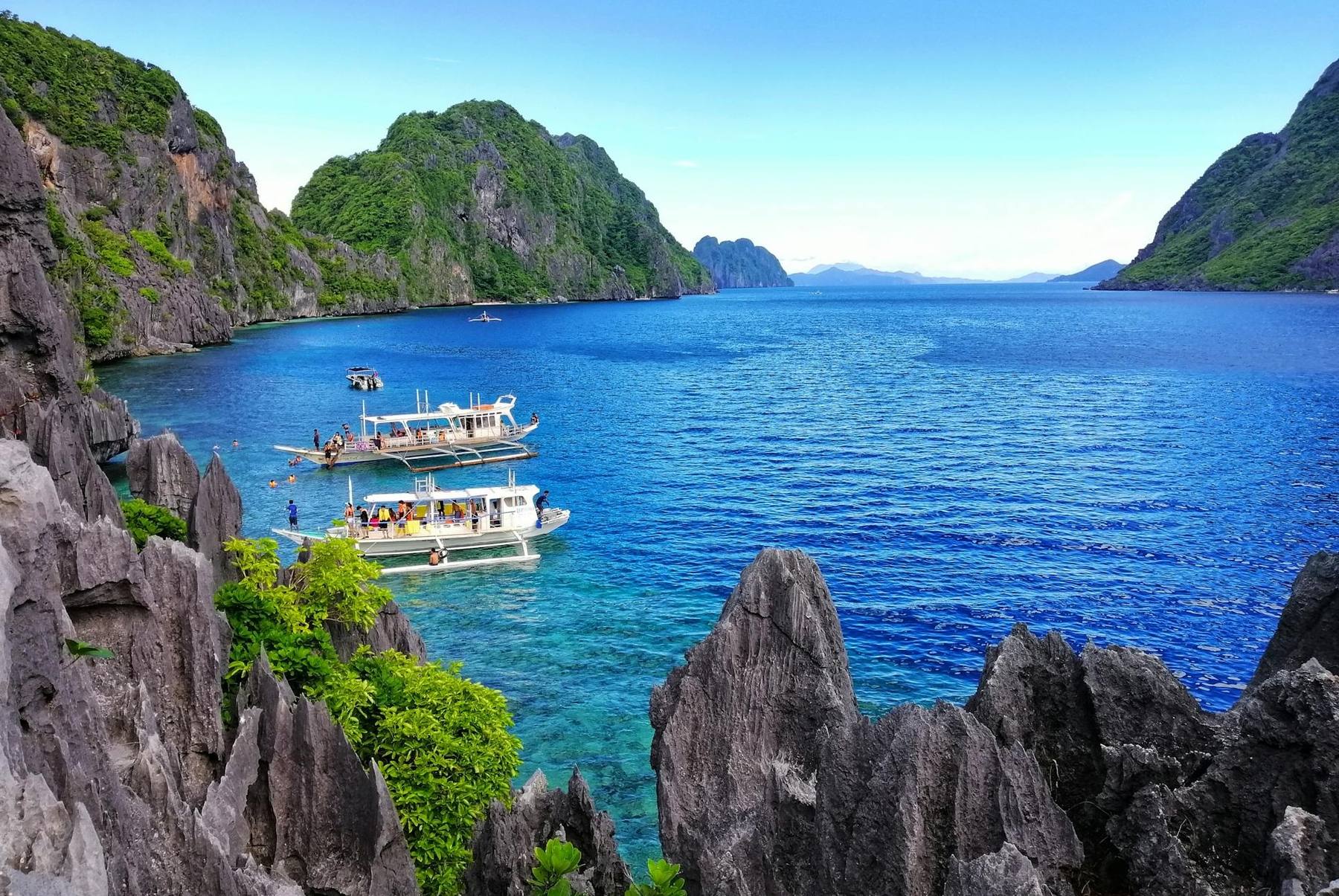
The classic Tour A loops the Big Lagoon, Small Lagoon, Secret Lagoon, and Seven Commandos Beach by bangka. It is another full day on open bay water, so patch on and hydrate early. The beach lunch of freshly grilled fish is a highlight and also a classic traveler's diarrhea trigger, so eat what is hot and freshly cooked and be cautious with anything that has been sitting out.
Day 7: El Nido to Coron by fast ferry
Spend the morning in El Nido, then take the afternoon fast ferry to Coron. At roughly 3.5 to 4 hours across open water, this is the roughest leg of the trip and the one most likely to cause trouble if you have not pre-medicated. Place your scopolamine patch well before boarding, sit mid-ship, and keep ondansetron within reach. If the forecast is genuinely bad, the short flight is a reasonable swap.
Day 8: Coron lakes and lagoons
Coron's banca day takes in Kayangan Lake, Twin Lagoon, Barracuda Lake, and the Siete Pecados snorkeling site. It is your last big day on the water, so finish your routine strong: patch still on if you are within the 72-hour window, ondansetron for any breakthrough nausea in the heat and chop, and steady hydration through the afternoon.

Day 9: Fly out via Manila
Fly from Coron's Busuanga airport back to Manila for your international connection. Domestic flights here are weather-sensitive, so leave a comfortable buffer before any international departure rather than booking a tight same-day connection. One last health note for the road: if diarrhea or fever begins now or in the days after you get home, write down your travel dates. A fever within 2 weeks of leaving the Philippines should prompt a dengue and malaria check with a clinician, so do not brush it off as jet lag, and tell the clinician exactly where you traveled.
Health prep for this trip
The plan is simple because the risks are predictable. About 4 to 6 weeks before you go, see a travel clinic. CDC currently recommends Hepatitis A and Typhoid for most travelers to the Philippines, both linked to contaminated food and water, plus staying current on routine vaccines. There is no yellow fever risk in the country. Review our Philippines travel health guide for the country-level picture.
About 2 weeks out, get your prescriptions sorted. For this boat-heavy route, that means azithromycin for bacterial traveler's diarrhea, a scopolamine patch for the crossings, and ondansetron for nausea and vomiting from any cause. Wandr's Philippines island-hopping travel pack bundles the three in a single telehealth visit. Set the patch up in advance: apply it several hours before your first crossing rather than as you board, since it works best with lead time. Keep the azithromycin paired with oral rehydration salts so you treat the dehydration alongside the infection.
Most travelers on the standard town-and-resort route do not need malaria pills. CDC currently limits meaningful malaria risk to rural parts of Palawan and Mindanao, with none in Manila or other urban areas, and in 2025 it raised a Level 1 watch urging Palawan visitors to take bite precautions. If your plan adds overnight stays in rural jungle Palawan or remote islands, raise atovaquone-proguanil with your provider before you go. Dengue cannot be pre-treated at all, so daytime bite avoidance is the prevention, every day of the trip.
What to pack
Keep the medical kit compact and in your carry-on: azithromycin, a scopolamine patch, ondansetron, oral rehydration salts, and any personal medications. Add EPA-registered repellent with DEET 20-30 percent, reef-safe high-SPF sunscreen, a rash guard for long boat days, a dry bag for the bangka tours, and water shoes for rocky lagoon entries. A wide-brim hat and polarized sunglasses make the long open-water hours far more bearable, and a small roll of electrolyte tablets covers the heavy sweating that tropical heat and sun guarantee. A reusable water bottle with a filter helps you stay hydrated without relying on single-use plastic, which matters on islands where refill stations are common but bottled-water waste is a real problem.
Best time to go and what to avoid
The dry season delivers the calmest seas and the most reliable boat days, which is the whole point of an island-hopping trip. The rainy season brings more cancellations and the daytime mosquitoes that drive dengue transmission.
Palawan and the central Visayas are historically less exposed to direct typhoon hits than the eastern Philippines, but no region is immune, and the El Nido to Coron ferry is the first thing to get canceled in heavy weather.
Cost expectations
The Philippines is affordable by regional standards, with the main variables being how often you fly between islands versus take ferries, and whether you choose simple guesthouses or resorts. Domestic flights and organized banca tours are the recurring costs; food and local transport are inexpensive. The island-hopping tours themselves are reasonably priced and usually include lunch and gear, though paraw and private-boat options cost more. Budgeting a buffer for a swapped ferry-to-flight on the El Nido to Coron leg is smart, since weather, not money, is what most often forces that change. Setting up your travel-medicine kit before you leave is a small fixed cost that protects the much larger sunk cost of the trip when a rough crossing or a bad meal would otherwise cost you a day.
Day-by-day plan
| Day | What you're doing | Health note |
|---|---|---|
| 1 | Arrive Manila, reset and stock up Land in Manila, the main international gateway, and settle in for one low-key night. | Hydrate after the long flight and buy an EPA-registered repellent (DEET 20-30 percent) on day one. Dengue mosquitoes bite in daylight, so protection starts immediately. |
| 2 | Fly to Cebu, ferry to Bohol Short domestic flight to Cebu (about 1.5 hours), then a fast ferry across to Bohol and Panglao. | The Cebu to Bohol crossing runs roughly 2 hours. If you are prone to seasickness, this is your first patch day. |
| 3 | Bohol countryside Chocolate Hills, the Loboc River, and the tarsier sanctuary, then back to Panglao's beaches. | A land day. Stick to bottled or treated water and hot, freshly cooked food to keep traveler's diarrhea risk down. |
| 4 | Panglao boat day Early banca trip to Balicasag for snorkeling and the dawn dolphin watch, then a slow afternoon. | An all-day small boat. Apply a scopolamine patch the night before; equatorial sun is intense, so reef-safe SPF and a rash guard matter. |
| 5 | Travel day to El Nido, Palawan Connect through Cebu or Manila to El Nido (Lio) or fly via Puerto Princesa. Mostly a transit day. | Long travel days invite skipped meals and dehydration. Carry water and safe snacks; keep your kit in your carry-on. |
| 6 | El Nido island hopping, Bacuit Bay The classic Tour A: Big Lagoon, Small Lagoon, Secret Lagoon, and Seven Commandos Beach. | Another full banca day across open bay water. Patch on, hydrate, and watch the grilled-fish beach lunch, a common diarrhea trigger. |
| 7 | El Nido to Coron by fast ferry Morning in El Nido, then the fast ferry to Coron in the afternoon. | The El Nido to Coron crossing is about 3.5 to 4 hours of open water and is the roughest ride of the trip. Pre-medicate for motion sickness well before boarding. |
| 8 | Coron lakes and lagoons Kayangan Lake, Twin Lagoon, Barracuda Lake, and Siete Pecados snorkeling by banca. | Your last big boat day. Keep ondansetron handy for breakthrough nausea in heat and chop, and finish your sun and hydration routine strong. |
| 9 | Fly out via Manila Fly from Coron (Busuanga) back to Manila for international connections home. | If diarrhea or fever starts now or after you return, note your dates. Fever within 2 weeks of travel needs a dengue and malaria check. |
Frequently Asked Questions
For a standard town-and-resort island-hopping route through Manila, Cebu, Bohol, El Nido town, and Coron town, most travelers do not. CDC currently limits meaningful malaria risk to rural areas of Palawan and Mindanao, with no risk in Manila or other urban areas. In 2025 CDC raised a Level 1 watch urging Palawan travelers to take bite precautions and consider prophylaxis. If your plan includes overnight stays in rural jungle Palawan or remote islands, talk to a provider about atovaquone-proguanil. On the resort-and-town route described here, bite avoidance is usually the main measure.
For most travelers, yes. CDC currently names azithromycin the first-line antibiotic for traveler's diarrhea in Southeast Asia because Campylobacter and other regional bacteria show high fluoroquinolone resistance. The typical course is 500 mg once daily for 3 days, started at the first signs of significant diarrhea, meaning three or more loose stools in 24 hours, or any diarrhea with fever, blood, or severe cramping. Most travelers improve within a day. Always confirm dosing and suitability with a provider, since antibiotics are not right for every case.
That crossing is about 3.5 to 4 hours of open water and is the roughest leg of this itinerary. A scopolamine patch placed behind the ear several hours before boarding covers up to 72 hours, which conveniently spans multiple boat days. Ondansetron can be added for breakthrough nausea. Sit mid-ship, keep your eyes on the horizon, and stay hydrated. Discuss scopolamine with a provider first, as it is not appropriate for everyone, including some people with glaucoma.
Dengue is present year-round across every region, including Manila, Cebu, Boracay, and Palawan, and the Philippine Department of Health reported more than 200,000 cases in 2024. Cases tend to spike during and after the rainy season, roughly June through November. There is no prescription that prevents dengue for the typical traveler, so protection is bite avoidance: EPA-registered repellent with DEET 20-30 percent, long sleeves at dawn and dusk, and screened or air-conditioned rooms. If you develop fever within 2 weeks of returning, see a doctor and mention your travel.
CDC currently recommends Hepatitis A and Typhoid for most travelers, both tied to contaminated food and water, plus staying current on routine vaccines. Longer or more rural trips may warrant Japanese encephalitis or rabies discussion. There is no yellow fever risk in the Philippines; a yellow fever certificate is only required if you are arriving from a country with risk. Book vaccines about 4 to 6 weeks before departure so they have time to take effect, and confirm your specific needs with a travel clinic.
The dry season, roughly December through May, gives the calmest seas and the most reliable boat days for El Nido, Coron, Bohol, and Boracay. The rainy season runs June through November, and the typhoon peak is September and October. Palawan and the central Visayas are historically less exposed to direct typhoon hits than the eastern seaboard, but crossings still get canceled in bad weather. Building a buffer day around the El Nido to Coron ferry protects your plan if seas are rough.
No. This is a sea-level, beach-and-boat itinerary with no significant elevation, so acetazolamide and other altitude measures are not relevant. The health planning here centers on the water instead: motion sickness on the crossings, traveler's diarrhea from food and water, and year-round dengue. If you later add a highland extension elsewhere in the country, reassess, but the standard island route stays low.
For a trip where nearly every day involves a boat, many travelers prefer the scopolamine patch because a single patch covers up to 72 hours, carrying you through back-to-back banca tours and the El Nido to Coron ferry without redosing. Shorter-acting oral options exist but require frequent timing. Ondansetron is a useful add-on for breakthrough nausea from heat, chop, or a rough meal. A provider can help you choose, since scopolamine has specific cautions and is not right for everyone.
For this route, a practical kit centers on three prescriptions: azithromycin for bacterial traveler's diarrhea, a scopolamine patch for the boat days, and ondansetron for nausea and vomiting from any cause. Add oral rehydration salts, EPA-registered repellent with DEET 20-30 percent, reef-safe high-SPF sunscreen, and any personal medications. Wandr's Philippines island-hopping pack bundles the three core prescriptions in one telehealth visit. Dengue cannot be pre-treated, so repellent does that job.
Mark Karam, PA-C is a board-certified Physician Associate with emergency and urgent care experience and co-founder of Wandr Health.