Wandr Health logo
GuidesMedicationsServicesHow It WorksPricing
Sign inGet Started
Wandr Health logo

Travel medicine should be as easy as booking the trip itself. Wandr is a physician-built online travel health platform that delivers prescriptions, vaccines, and pre-travel guidance to travelers across the country so they can leave home prepared.

Verify Approval for www.travelwithwandr.com

Browse

  • Home
  • Services
  • About Us
  • Partners
  • Pricing
  • Destinations
  • Medications
  • Travel Itineraries

Help

  • Blog
  • Newsroom
  • Roadmap
  • FAQ
  • Destination Check
  • Contact
  • Sign in

Policies

  • Privacy policy
  • Terms of service
  • Returns & refunds
  • Antibiotic stewardship

© 2026 Wandr Health. All rights reserved.

Wandr is not a complete substitute for in-person medical care.

Wandr Health logo
GuidesMedicationsServicesHow It WorksPricing
Sign inGet Started
Wandr Health logo

Travel medicine should be as easy as booking the trip itself. Wandr is a physician-built online travel health platform that delivers prescriptions, vaccines, and pre-travel guidance to travelers across the country so they can leave home prepared.

Verify Approval for www.travelwithwandr.com

Browse

  • Home
  • Services
  • About Us
  • Partners
  • Pricing
  • Destinations
  • Medications
  • Travel Itineraries

Help

  • Blog
  • Newsroom
  • Roadmap
  • FAQ
  • Destination Check
  • Contact
  • Sign in

Policies

  • Privacy policy
  • Terms of service
  • Returns & refunds
  • Antibiotic stewardship

© 2026 Wandr Health. All rights reserved.

Wandr is not a complete substitute for in-person medical care.

Travel Itineraries/Colombia
Beach7 daysColombia

The 7-Day Cartagena Itinerary: The Health-Smart Version

MK
Mark Karam, PA-C
PA-C, Emergency & Urgent Care
July 5, 2026·11 min read
ColombiaCartagenadengueCaribbean
The 7-Day Cartagena Itinerary: The Health-Smart Version
The short version

A 7-day Cartagena, Colombia itinerary runs the walled Old Town and Getsemaní for three days, a Rosario Islands and Playa Blanca boat day for snorkeling, then mangrove canoeing and a mud-volcano half-day before departure. The trip's real health factor isn't altitude, Cartagena sits at sea level, it's mosquito-borne dengue (Colombia logged over 9,000 suspected cases in the first weeks of 2026 per national health data) plus a high traveler's diarrhea risk from the street-food and ceviche circuit. Most travelers should pack daytime mosquito repellent and a same-day antibiotic rather than rely on a vaccine for either risk, says Wandr Health co-founder Mark Karam, PA-C.

Country
Colombia
Duration
7 days
Trip type
Beach
Health focus
dengue · travelers-diarrhea
Best time
December-March (dry season, lower rainfall and mosquito density)

Travel-health tips

Straight from our medical team.

Practical advice for healthier trips. No spam.

Cartagena is one of the easiest tropical trips to get to from the US and one of the easiest to get wrong from a health standpoint, mostly because travelers assume a Caribbean coastal city carries the same risks as an Andean or Amazon trip. It doesn't. There's no altitude here and, on the standard Old Town and Rosario Islands route, no meaningful malaria risk. The two things that actually derail a Cartagena trip are mosquito bites during the day and a ceviche stand that doesn't agree with you. This 7-day itinerary treats both as the structural risks they are rather than an afterthought, building repellent habits and a same-day treatment plan into the schedule instead of leaving them to chance. For a broader look at Colombia's overall travel-health picture, including the rural and Amazon-adjacent considerations that don't apply to a Cartagena-only trip, see Wandr's Colombia destination guide.

Who this itinerary is for

This trip suits first-time Cartagena visitors who want the full walled-city experience plus at least one real beach day, and it works equally well for returning travelers layering in the Rosario Islands or a mangrove tour they skipped the first time. It's also a reasonable long-weekend-plus stretch for a couple or small group who want a warm-weather escape without the logistics of an Andean altitude trip or a multi-country itinerary. Fitness demands are low: most days involve walking on flat, cobblestoned streets in serious heat rather than any physical exertion, so heat tolerance matters more than cardio fitness.

Expect daytime highs near 90°F with humidity in the 80-percent range most of the year, plus one full day on open water. Neither is dangerous with basic planning, but both call for a different packing list and a different mindset than a mountain or safari trip would. Travelers coming from a temperate climate in winter often underestimate how much the heat alone will slow their pace, building in a midday break each day (as this itinerary does) matters as much as any medication in your bag.

The route

This itinerary stays entirely within greater Cartagena, no long overland transfers, which keeps the health picture simple: one climate, one disease profile, one water/food-safety standard to maintain for the full week. Days 1-3 cover the city itself, from Getsemaní's street art to the Walled City's plazas and forts. Day 4 shifts to the water with a full-day Rosario Islands and Playa Blanca boat trip through Corales del Rosario National Park, roughly an hour each way by boat. Day 5 swaps the ocean for La Boquilla's mangrove channels just north of the city, a different mosquito-exposure environment worth planning around separately from the beach days. Day 6 is a deliberately lighter day, a half-day trip to the El Totumo mud volcano paired with market time or a cooking class, before departure on day 7.

Travelers with more time sometimes extend this route toward Santa Marta and Tayrona National Park, about a 4-hour drive northeast, but that's a distinct add-on with its own health profile (higher humidity rainforest, different terrain) rather than a Cartagena day trip.

The logic behind this sequencing is heat management as much as geography. The two most exposed, sun-heavy days (the forts on day 3, the boat day on day 4) sit back to back with a lighter city day ahead of them and a genuinely restorative day (the mangrove morning and beach afternoon on day 5) right after, so the itinerary never asks for three demanding outdoor days in a row. That pacing matters more in Cartagena's climate than it would in a cooler destination, where the same schedule might feel unnecessarily conservative.

Colorful colonial balconies draped in bougainvillea along a street in Cartagena's walled Old Town

Day-by-day plan

Day 1: Arrive Cartagena, settle into Getsemaní

Most international flights land at Rafael Núñez International Airport in the afternoon. Check into a hotel in Getsemaní or the Walled City, then use the evening for an easy orientation walk through Getsemaní's mural-covered alleys and a sunset stop on the city walls near Café del Mar. Keep the first dinner simple and skip ice in drinks until you know how your gut is handling the new water supply.

Day 2: The Walled City on foot

Spend the day inside Ciudad Amurallada: Plaza de los Coches, the Palace of the Inquisition, the Cathedral of Santa Catalina de Alejandría, and the vaulted shops of Las Bóvedas. Break for a long lunch indoors during the midday heat rather than pushing through it. Aedes aegypti, the mosquito that carries dengue, is a daytime biter that's most active in the early morning and a few hours before dusk, so this is the day to establish your repellent routine and stick with it for the rest of the trip.

Day 3: Castillo San Felipe and La Popa

Castillo San Felipe de Barajas is the largest Spanish fort built in the Americas, and its tunnel system is genuinely worth the visit, but there's almost no shade on the ramparts. Follow it with the Convento de Santa Cruz de la Popa on the city's highest hill for panoramic bay views. Both stops are more of a heat-management day than a walking-distance day: carry water, consider an electrolyte packet, and pace your climbing for the cooler morning hours.

Day 4: Rosario Islands and Playa Blanca boat day

A full-day boat trip through the Rosario Islands archipelago, Colombia's protected coral-reef national park, ending at Playa Blanca on Isla Barú for swimming, snorkeling, and a beachfront lunch. The boat crossing runs about an hour each way. If you're prone to motion sickness, take your medication before boarding rather than after symptoms start, an antiemetic like ondansetron works far better as prevention than as rescue.

Aerial view of a turquoise Caribbean archipelago near Cartagena, evoking a Rosario Islands day trip

Plan with Wandr

Want the health prep for Colombia?

Get a 60-second pre-trip check: the vaccines, prescriptions, and altitude/seasonality notes that change the plan — built for your exact dates.

Start the pre-trip checkBrowse all itineraries →

Day 5: La Boquilla mangroves and a beach afternoon

Spend the morning canoeing through La Boquilla's mangrove channels with a local Afro-Colombian fishing cooperative just north of the city, then shift to a slower beach-club afternoon at Bocagrande or Manga. Mangrove channels hold standing water and shade year-round, which makes them attractive mosquito habitat even during daylight hours. Reapply repellent before the canoe portion specifically, not just once in the morning.

Day 6: El Totumo mud volcano and market recovery

A half-day trip to the El Totumo mud volcano, followed by a lower-key afternoon at the Bazurto market or a hands-on Cartagena cooking class. Rinse mud-volcano residue off in the adjacent lagoon promptly and dry off completely. Prolonged humidity against skin that's already irritated from sun exposure or bug bites is exactly the setup for the tropical rashes that show up on this coast, a small tube of antifungal-steroid cream in your kit handles it faster than waiting it out.

Day 7: Depart Cartagena

A slower final morning in Getsemaní for coffee and last-minute shopping before heading to the airport. Traveler's diarrhea can have a delayed onset, so keep an eye on GI symptoms for 48 hours after you land even if you felt fine on the flight home.

Health prep for this trip

Cartagena's health profile is short and specific: no altitude concerns, no routine malaria risk on this route, and no yellow fever vaccine requirement, CDC guidance specifically excludes travel limited to Cartagena, Barranquilla, Cali, or Medellín from that recommendation. What does matter is confirming Hepatitis A/B and Typhoid coverage with a provider 4-6 weeks out, since both spread through the same food and water exposures that make Colombia a moderate-to-high traveler's diarrhea destination per CDC guidance.

Pack (or order ahead through Wandr's Cartagena travel pack) three things: azithromycin for bacterial TD, ondansetron for nausea from the boat day or a rough GI bug, and a clotrimazole-betamethasone cream for the humidity-driven skin issues this coast is known for. None of these require a diagnosis to start using appropriately, that's the point of carrying them rather than hunting for a pharmacy mid-trip.

Mosquito prevention deserves equal weight here even though it's not a prescription item. Because dengue-carrying Aedes mosquitoes bite during the day, a single evening dose of repellent doesn't cover you the way it would for a nighttime-biting malaria vector. Reapply after swimming or heavy sweating, and treat the boat day, mangrove morning, and any market walk as separate exposure windows each requiring their own application. There's no rescue medication for dengue itself, which is exactly why prevention carries more weight on this trip than it would on a malaria-risk itinerary where a pill covers the gap.

What to pack

  • EPA-registered mosquito repellent (start using it day 1, not just on the mangrove or beach days)
  • Reef-safe sunscreen and a wide-brim hat or UPF shirt for the exposed forts
  • Water shoes for Playa Blanca's mixed sand-and-rock shoreline
  • Electrolyte packets for the heat-heavy walking days
  • A dry bag for the boat day
  • Lightweight, breathable layers rather than heavy fabrics, humidity makes anything but quick-dry clothing uncomfortable by midday
  • A basic first-aid kit with adhesive bandages and antiseptic wipes for minor scrapes on cobblestones or reef entries
  • Azithromycin, ondansetron, and antifungal-steroid cream in your travel-medicine kit

Leave the standard antimalarial and altitude medications at home for this specific route, they don't apply to a Cartagena-only itinerary and just add weight and confusion to your kit.

Best time to go and what to avoid

MonthConditionsHealth notes
Dec-MarDry season, lower rainfallFewest mosquito breeding sites; still apply daytime repellent
Apr-MayTransitional, occasional rainStanding water starts to increase mosquito density
Jun-NovWetter, more humidPeak rainy season; higher dengue transmission risk per regional health data, heavier afternoon downpours can disrupt boat-day plans

Hurricane season technically runs June through November in the wider Caribbean, though Cartagena itself sits outside the most storm-prone corridor. The bigger practical concern in the wetter months is standing water collecting faster than it evaporates, which is exactly what expands Aedes mosquito habitat.

Cost expectations

Cartagena runs cheaper than most Caribbean beach destinations: boutique Old Town hotels, a shared Rosario Islands boat tour, and street-level dining keep a comfortable week well under what a comparable Caribbean-island trip would cost, with the Rosario Islands day trip and a private mangrove tour as the main add-on splurges most travelers budget for separately. A shared Playa Blanca boat tour with lunch typically runs in the range of tens of US dollars per person, plus a small cash park entry fee paid directly at the dock, while a private boat charter for a small group runs meaningfully more. Street food and local restaurants in Getsemaní stay inexpensive; the walled Old Town's waterfront restaurants price closer to US levels. Budget separately for the mud-volcano tour and any beach-club day passes at Bocagrande, both are typically add-ons rather than included in a base hotel rate.

Day-by-day plan

DayWhat you're doingHealth note
1
Arrive Cartagena, settle into Getsemaní
Land, check in, and ease into the heat with an evening walk through Getsemaní's street-art alleys and a sunset stop on the city walls (Las Murallas).
Skip the ice in your first drinks and stick to bottled or purified water while your gut adjusts to a new food and water supply.
2
The Walled City on foot
A full day inside Ciudad Amurallada: Plaza de los Coches, the Palace of the Inquisition, the Cathedral, and Las Bóvedas' vaulted shops, with a midday break to avoid peak heat.
Aedes mosquitoes that spread dengue bite mainly at dawn and dusk, apply EPA-registered repellent before your morning and evening walking blocks.
3
Castillo San Felipe and La Popa
Climb the tunnels of Castillo San Felipe de Barajas, then head up to the Convento de La Popa for the best panoramic view of the bay and Old Town.
Both sites are exposed with minimal shade. Carry electrolyte packets and a wide-brim hat, heat exhaustion is a more common trip-ender here than any infection.
4
Rosario Islands and Playa Blanca boat day
A full-day boat trip through Parque Nacional Natural Corales del Rosario to Playa Blanca on Isla Barú for snorkeling, swimming, and a beachfront lunch.
Open-water boat transfers can trigger motion sickness even on calm Caribbean days. Take an anti-nausea dose before boarding if you're prone to it.
5
La Boquilla mangroves and a beach afternoon
A morning canoe through La Boquilla's mangrove channels with a local Afro-Colombian fishing cooperative, then an afternoon at a Bocagrande or Manga beach club.
Standing water in mangrove channels is prime mosquito habitat even in daylight, keep repellent reapplied through the canoe portion.
6
El Totumo mud volcano and market recovery
A half-day trip to the El Totumo mud volcano followed by a slower afternoon at the Bazurto market or a Cartagena cooking class.
Rinse mud-volcano residue in the adjacent lagoon promptly and dry off well, humidity plus broken skin from sun or bug bites is the setup for the fungal rashes common on this coast.
7
Depart Cartagena
A slow morning in Getsemaní for last coffee and souvenirs before your flight home.
Watch for delayed-onset GI symptoms in the 48 hours after you land, traveler's diarrhea can surface after you're already home.
Travel medicine for this trip
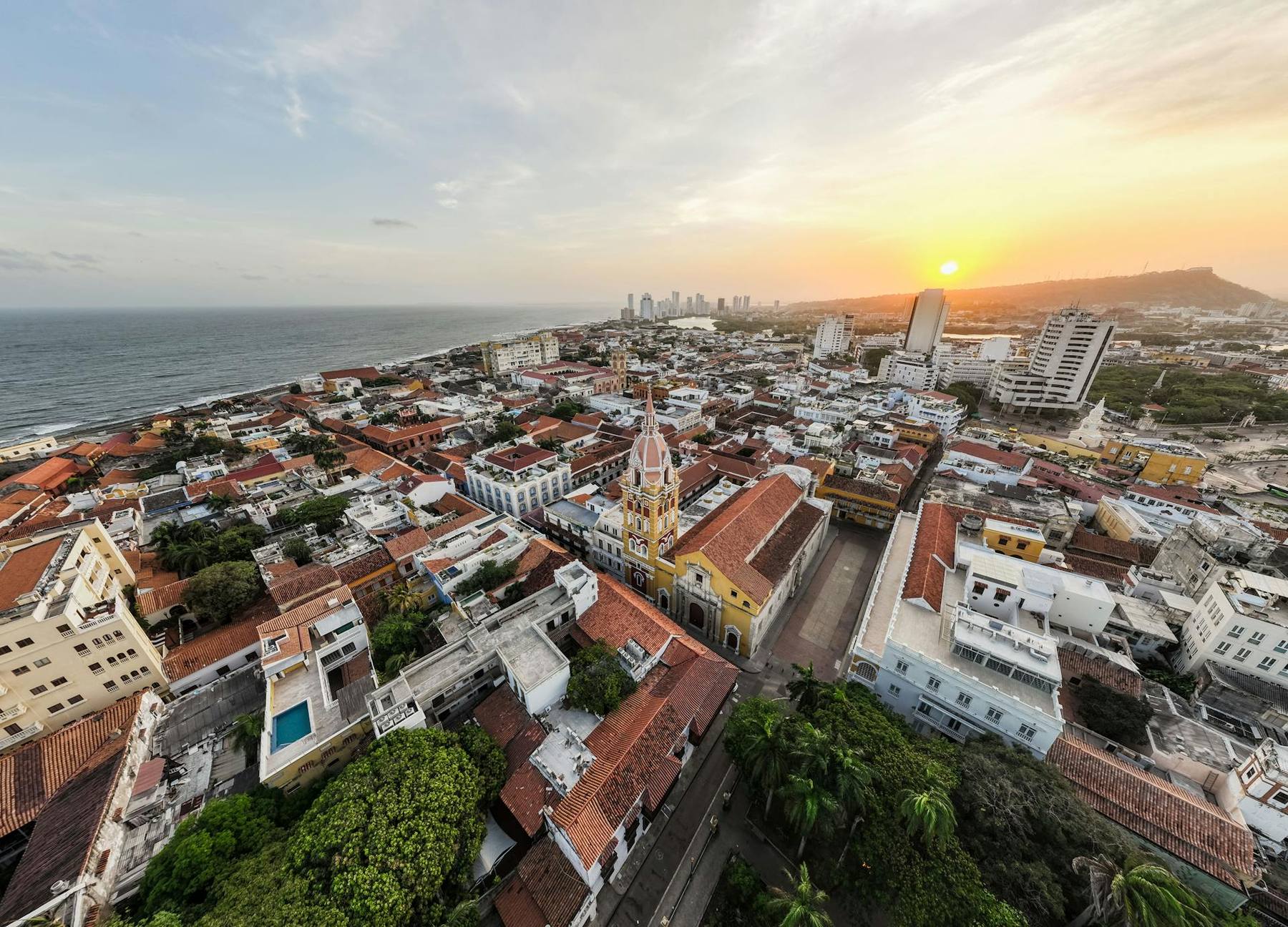
Sunset over the colorful colonial buildings and city walls of Cartagena's Old Town with the Caribbean Sea behind
Cartagena

Azithromycin, ondansetron, and a tropical-rash cream for Cartagena's heat-plus-street-food trifecta. Three Rx in one visit, ready at your pharmacy before you fly.

View the bundle →
Medications you may want
Azithromycin
Traveler's diarrhea
Learn more →
Ondansetron
Nausea & vomiting
Learn more →
Clotrimazole-Betamethasone
Rashes & skin issues
Learn more →

Travel-health tips

Straight from our medical team.

Practical advice for healthier trips. No spam.

Frequently Asked Questions

Most travelers to Cartagena city and the coast do not need antimalarial prophylaxis. CDC guidance places Colombia's malaria risk in specific rural and interior municipalities, not the standard Cartagena/Rosario Islands/Playa Blanca route. Confirm with a provider if you're extending inland.

Yes. Cartagena sits in Colombia's tropical lowlands where dengue is endemic, and national data logged thousands of suspected cases in the opening weeks of 2026. There's no antiviral treatment or widely available first-time-traveler vaccine, so daytime bite prevention (repellent, long sleeves at dawn/dusk, screened or air-conditioned rooms) is the main defense.

Colombia carries a moderate-to-high traveler's diarrhea risk per CDC guidance, and Cartagena's street-food and ceviche scene is part of the draw. Most travelers should pack a same-day antibiotic like azithromycin rather than wait to see a doctor abroad.

No. CDC guidance specifically states the yellow fever vaccine is not recommended for travel limited to Cartagena, Barranquilla, Cali, or Medellín. It only becomes relevant if you're continuing on to certain rural or Amazon-adjacent regions.

Reef-safe sunscreen, a dry bag, motion-sickness medication if you're prone to it, and water shoes for Playa Blanca's mixed sand-and-rock entry. Speak with a provider about scopolamine or ondansetron if open-water crossings typically bother you.

Yes, 7 days covers the Walled City, the forts, and a Rosario Islands boat day with room to spare for a slower recovery day. Most travelers pace it as 3 city days, 1 island day, and 2-3 lower-key days rather than packing every day back to back in the heat.

December through March is Cartagena's dry season, with lower rainfall generally meaning fewer mosquito breeding sites than the wetter months. Dengue and heat risk exist year-round regardless of season, so bite prevention still applies.

MK
Written by
Mark Karam, PA-C
Co-founder, Wandr Health

Mark Karam, PA-C is a board-certified Physician Associate with emergency and urgent care experience and co-founder of Wandr Health.

More itineraries

Beach9 days

The 9-Day Philippines Island-Hopping Itinerary: The Health-Smart Version

Safari7 days

The 7-Day Victoria Falls & Safari Itinerary: The Health-Smart Version

Cruise7 days

The 7-Day Alaska Cruise Itinerary: The Health-Smart Version

Travel-health tips

Straight from our medical team.

Practical advice for healthier trips. No spam.

Your trip-prep timeline
  1. 6 weeks out
    Confirm routine vaccines are current and discuss Hepatitis A/B and Typhoid with a licensed provider
  2. 2 weeks out
    Order azithromycin, ondansetron, and a tropical-rash cream before you fly
  3. Week of
    Pack a daytime EPA-registered repellent and a UPF sun shirt for the exposed forts and boat day
Travel Itineraries/Colombia
Beach7 daysColombia

The 7-Day Cartagena Itinerary: The Health-Smart Version

MK
Mark Karam, PA-C
PA-C, Emergency & Urgent Care
July 5, 2026·11 min read
ColombiaCartagenadengueCaribbean
The 7-Day Cartagena Itinerary: The Health-Smart Version
The short version

A 7-day Cartagena, Colombia itinerary runs the walled Old Town and Getsemaní for three days, a Rosario Islands and Playa Blanca boat day for snorkeling, then mangrove canoeing and a mud-volcano half-day before departure. The trip's real health factor isn't altitude, Cartagena sits at sea level, it's mosquito-borne dengue (Colombia logged over 9,000 suspected cases in the first weeks of 2026 per national health data) plus a high traveler's diarrhea risk from the street-food and ceviche circuit. Most travelers should pack daytime mosquito repellent and a same-day antibiotic rather than rely on a vaccine for either risk, says Wandr Health co-founder Mark Karam, PA-C.

Country
Colombia
Duration
7 days
Trip type
Beach
Health focus
dengue · travelers-diarrhea
Best time
December-March (dry season, lower rainfall and mosquito density)

Travel-health tips

Straight from our medical team.

Practical advice for healthier trips. No spam.

Cartagena is one of the easiest tropical trips to get to from the US and one of the easiest to get wrong from a health standpoint, mostly because travelers assume a Caribbean coastal city carries the same risks as an Andean or Amazon trip. It doesn't. There's no altitude here and, on the standard Old Town and Rosario Islands route, no meaningful malaria risk. The two things that actually derail a Cartagena trip are mosquito bites during the day and a ceviche stand that doesn't agree with you. This 7-day itinerary treats both as the structural risks they are rather than an afterthought, building repellent habits and a same-day treatment plan into the schedule instead of leaving them to chance. For a broader look at Colombia's overall travel-health picture, including the rural and Amazon-adjacent considerations that don't apply to a Cartagena-only trip, see Wandr's Colombia destination guide.

Who this itinerary is for

This trip suits first-time Cartagena visitors who want the full walled-city experience plus at least one real beach day, and it works equally well for returning travelers layering in the Rosario Islands or a mangrove tour they skipped the first time. It's also a reasonable long-weekend-plus stretch for a couple or small group who want a warm-weather escape without the logistics of an Andean altitude trip or a multi-country itinerary. Fitness demands are low: most days involve walking on flat, cobblestoned streets in serious heat rather than any physical exertion, so heat tolerance matters more than cardio fitness.

Expect daytime highs near 90°F with humidity in the 80-percent range most of the year, plus one full day on open water. Neither is dangerous with basic planning, but both call for a different packing list and a different mindset than a mountain or safari trip would. Travelers coming from a temperate climate in winter often underestimate how much the heat alone will slow their pace, building in a midday break each day (as this itinerary does) matters as much as any medication in your bag.

The route

This itinerary stays entirely within greater Cartagena, no long overland transfers, which keeps the health picture simple: one climate, one disease profile, one water/food-safety standard to maintain for the full week. Days 1-3 cover the city itself, from Getsemaní's street art to the Walled City's plazas and forts. Day 4 shifts to the water with a full-day Rosario Islands and Playa Blanca boat trip through Corales del Rosario National Park, roughly an hour each way by boat. Day 5 swaps the ocean for La Boquilla's mangrove channels just north of the city, a different mosquito-exposure environment worth planning around separately from the beach days. Day 6 is a deliberately lighter day, a half-day trip to the El Totumo mud volcano paired with market time or a cooking class, before departure on day 7.

Travelers with more time sometimes extend this route toward Santa Marta and Tayrona National Park, about a 4-hour drive northeast, but that's a distinct add-on with its own health profile (higher humidity rainforest, different terrain) rather than a Cartagena day trip.

The logic behind this sequencing is heat management as much as geography. The two most exposed, sun-heavy days (the forts on day 3, the boat day on day 4) sit back to back with a lighter city day ahead of them and a genuinely restorative day (the mangrove morning and beach afternoon on day 5) right after, so the itinerary never asks for three demanding outdoor days in a row. That pacing matters more in Cartagena's climate than it would in a cooler destination, where the same schedule might feel unnecessarily conservative.

Colorful colonial balconies draped in bougainvillea along a street in Cartagena's walled Old Town

Day-by-day plan

Day 1: Arrive Cartagena, settle into Getsemaní

Most international flights land at Rafael Núñez International Airport in the afternoon. Check into a hotel in Getsemaní or the Walled City, then use the evening for an easy orientation walk through Getsemaní's mural-covered alleys and a sunset stop on the city walls near Café del Mar. Keep the first dinner simple and skip ice in drinks until you know how your gut is handling the new water supply.

Day 2: The Walled City on foot

Spend the day inside Ciudad Amurallada: Plaza de los Coches, the Palace of the Inquisition, the Cathedral of Santa Catalina de Alejandría, and the vaulted shops of Las Bóvedas. Break for a long lunch indoors during the midday heat rather than pushing through it. Aedes aegypti, the mosquito that carries dengue, is a daytime biter that's most active in the early morning and a few hours before dusk, so this is the day to establish your repellent routine and stick with it for the rest of the trip.

Day 3: Castillo San Felipe and La Popa

Castillo San Felipe de Barajas is the largest Spanish fort built in the Americas, and its tunnel system is genuinely worth the visit, but there's almost no shade on the ramparts. Follow it with the Convento de Santa Cruz de la Popa on the city's highest hill for panoramic bay views. Both stops are more of a heat-management day than a walking-distance day: carry water, consider an electrolyte packet, and pace your climbing for the cooler morning hours.

Day 4: Rosario Islands and Playa Blanca boat day

A full-day boat trip through the Rosario Islands archipelago, Colombia's protected coral-reef national park, ending at Playa Blanca on Isla Barú for swimming, snorkeling, and a beachfront lunch. The boat crossing runs about an hour each way. If you're prone to motion sickness, take your medication before boarding rather than after symptoms start, an antiemetic like ondansetron works far better as prevention than as rescue.

Aerial view of a turquoise Caribbean archipelago near Cartagena, evoking a Rosario Islands day trip

Plan with Wandr

Want the health prep for Colombia?

Get a 60-second pre-trip check: the vaccines, prescriptions, and altitude/seasonality notes that change the plan — built for your exact dates.

Start the pre-trip checkBrowse all itineraries →

Day 5: La Boquilla mangroves and a beach afternoon

Spend the morning canoeing through La Boquilla's mangrove channels with a local Afro-Colombian fishing cooperative just north of the city, then shift to a slower beach-club afternoon at Bocagrande or Manga. Mangrove channels hold standing water and shade year-round, which makes them attractive mosquito habitat even during daylight hours. Reapply repellent before the canoe portion specifically, not just once in the morning.

Day 6: El Totumo mud volcano and market recovery

A half-day trip to the El Totumo mud volcano, followed by a lower-key afternoon at the Bazurto market or a hands-on Cartagena cooking class. Rinse mud-volcano residue off in the adjacent lagoon promptly and dry off completely. Prolonged humidity against skin that's already irritated from sun exposure or bug bites is exactly the setup for the tropical rashes that show up on this coast, a small tube of antifungal-steroid cream in your kit handles it faster than waiting it out.

Day 7: Depart Cartagena

A slower final morning in Getsemaní for coffee and last-minute shopping before heading to the airport. Traveler's diarrhea can have a delayed onset, so keep an eye on GI symptoms for 48 hours after you land even if you felt fine on the flight home.

Health prep for this trip

Cartagena's health profile is short and specific: no altitude concerns, no routine malaria risk on this route, and no yellow fever vaccine requirement, CDC guidance specifically excludes travel limited to Cartagena, Barranquilla, Cali, or Medellín from that recommendation. What does matter is confirming Hepatitis A/B and Typhoid coverage with a provider 4-6 weeks out, since both spread through the same food and water exposures that make Colombia a moderate-to-high traveler's diarrhea destination per CDC guidance.

Pack (or order ahead through Wandr's Cartagena travel pack) three things: azithromycin for bacterial TD, ondansetron for nausea from the boat day or a rough GI bug, and a clotrimazole-betamethasone cream for the humidity-driven skin issues this coast is known for. None of these require a diagnosis to start using appropriately, that's the point of carrying them rather than hunting for a pharmacy mid-trip.

Mosquito prevention deserves equal weight here even though it's not a prescription item. Because dengue-carrying Aedes mosquitoes bite during the day, a single evening dose of repellent doesn't cover you the way it would for a nighttime-biting malaria vector. Reapply after swimming or heavy sweating, and treat the boat day, mangrove morning, and any market walk as separate exposure windows each requiring their own application. There's no rescue medication for dengue itself, which is exactly why prevention carries more weight on this trip than it would on a malaria-risk itinerary where a pill covers the gap.

What to pack

  • EPA-registered mosquito repellent (start using it day 1, not just on the mangrove or beach days)
  • Reef-safe sunscreen and a wide-brim hat or UPF shirt for the exposed forts
  • Water shoes for Playa Blanca's mixed sand-and-rock shoreline
  • Electrolyte packets for the heat-heavy walking days
  • A dry bag for the boat day
  • Lightweight, breathable layers rather than heavy fabrics, humidity makes anything but quick-dry clothing uncomfortable by midday
  • A basic first-aid kit with adhesive bandages and antiseptic wipes for minor scrapes on cobblestones or reef entries
  • Azithromycin, ondansetron, and antifungal-steroid cream in your travel-medicine kit

Leave the standard antimalarial and altitude medications at home for this specific route, they don't apply to a Cartagena-only itinerary and just add weight and confusion to your kit.

Best time to go and what to avoid

MonthConditionsHealth notes
Dec-MarDry season, lower rainfallFewest mosquito breeding sites; still apply daytime repellent
Apr-MayTransitional, occasional rainStanding water starts to increase mosquito density
Jun-NovWetter, more humidPeak rainy season; higher dengue transmission risk per regional health data, heavier afternoon downpours can disrupt boat-day plans

Hurricane season technically runs June through November in the wider Caribbean, though Cartagena itself sits outside the most storm-prone corridor. The bigger practical concern in the wetter months is standing water collecting faster than it evaporates, which is exactly what expands Aedes mosquito habitat.

Cost expectations

Cartagena runs cheaper than most Caribbean beach destinations: boutique Old Town hotels, a shared Rosario Islands boat tour, and street-level dining keep a comfortable week well under what a comparable Caribbean-island trip would cost, with the Rosario Islands day trip and a private mangrove tour as the main add-on splurges most travelers budget for separately. A shared Playa Blanca boat tour with lunch typically runs in the range of tens of US dollars per person, plus a small cash park entry fee paid directly at the dock, while a private boat charter for a small group runs meaningfully more. Street food and local restaurants in Getsemaní stay inexpensive; the walled Old Town's waterfront restaurants price closer to US levels. Budget separately for the mud-volcano tour and any beach-club day passes at Bocagrande, both are typically add-ons rather than included in a base hotel rate.

Day-by-day plan

DayWhat you're doingHealth note
1
Arrive Cartagena, settle into Getsemaní
Land, check in, and ease into the heat with an evening walk through Getsemaní's street-art alleys and a sunset stop on the city walls (Las Murallas).
Skip the ice in your first drinks and stick to bottled or purified water while your gut adjusts to a new food and water supply.
2
The Walled City on foot
A full day inside Ciudad Amurallada: Plaza de los Coches, the Palace of the Inquisition, the Cathedral, and Las Bóvedas' vaulted shops, with a midday break to avoid peak heat.
Aedes mosquitoes that spread dengue bite mainly at dawn and dusk, apply EPA-registered repellent before your morning and evening walking blocks.
3
Castillo San Felipe and La Popa
Climb the tunnels of Castillo San Felipe de Barajas, then head up to the Convento de La Popa for the best panoramic view of the bay and Old Town.
Both sites are exposed with minimal shade. Carry electrolyte packets and a wide-brim hat, heat exhaustion is a more common trip-ender here than any infection.
4
Rosario Islands and Playa Blanca boat day
A full-day boat trip through Parque Nacional Natural Corales del Rosario to Playa Blanca on Isla Barú for snorkeling, swimming, and a beachfront lunch.
Open-water boat transfers can trigger motion sickness even on calm Caribbean days. Take an anti-nausea dose before boarding if you're prone to it.
5
La Boquilla mangroves and a beach afternoon
A morning canoe through La Boquilla's mangrove channels with a local Afro-Colombian fishing cooperative, then an afternoon at a Bocagrande or Manga beach club.
Standing water in mangrove channels is prime mosquito habitat even in daylight, keep repellent reapplied through the canoe portion.
6
El Totumo mud volcano and market recovery
A half-day trip to the El Totumo mud volcano followed by a slower afternoon at the Bazurto market or a Cartagena cooking class.
Rinse mud-volcano residue in the adjacent lagoon promptly and dry off well, humidity plus broken skin from sun or bug bites is the setup for the fungal rashes common on this coast.
7
Depart Cartagena
A slow morning in Getsemaní for last coffee and souvenirs before your flight home.
Watch for delayed-onset GI symptoms in the 48 hours after you land, traveler's diarrhea can surface after you're already home.
Travel medicine for this trip
Sunset over the colorful colonial buildings and city walls of Cartagena's Old Town with the Caribbean Sea behind
Cartagena

Azithromycin, ondansetron, and a tropical-rash cream for Cartagena's heat-plus-street-food trifecta. Three Rx in one visit, ready at your pharmacy before you fly.

View the bundle →
Medications you may want
Azithromycin
Traveler's diarrhea
Learn more →
Ondansetron
Nausea & vomiting
Learn more →
Clotrimazole-Betamethasone
Rashes & skin issues
Learn more →

Travel-health tips

Straight from our medical team.

Practical advice for healthier trips. No spam.

Frequently Asked Questions

Most travelers to Cartagena city and the coast do not need antimalarial prophylaxis. CDC guidance places Colombia's malaria risk in specific rural and interior municipalities, not the standard Cartagena/Rosario Islands/Playa Blanca route. Confirm with a provider if you're extending inland.

Yes. Cartagena sits in Colombia's tropical lowlands where dengue is endemic, and national data logged thousands of suspected cases in the opening weeks of 2026. There's no antiviral treatment or widely available first-time-traveler vaccine, so daytime bite prevention (repellent, long sleeves at dawn/dusk, screened or air-conditioned rooms) is the main defense.

Colombia carries a moderate-to-high traveler's diarrhea risk per CDC guidance, and Cartagena's street-food and ceviche scene is part of the draw. Most travelers should pack a same-day antibiotic like azithromycin rather than wait to see a doctor abroad.

No. CDC guidance specifically states the yellow fever vaccine is not recommended for travel limited to Cartagena, Barranquilla, Cali, or Medellín. It only becomes relevant if you're continuing on to certain rural or Amazon-adjacent regions.

Reef-safe sunscreen, a dry bag, motion-sickness medication if you're prone to it, and water shoes for Playa Blanca's mixed sand-and-rock entry. Speak with a provider about scopolamine or ondansetron if open-water crossings typically bother you.

Yes, 7 days covers the Walled City, the forts, and a Rosario Islands boat day with room to spare for a slower recovery day. Most travelers pace it as 3 city days, 1 island day, and 2-3 lower-key days rather than packing every day back to back in the heat.

December through March is Cartagena's dry season, with lower rainfall generally meaning fewer mosquito breeding sites than the wetter months. Dengue and heat risk exist year-round regardless of season, so bite prevention still applies.

MK
Written by
Mark Karam, PA-C
Co-founder, Wandr Health

Mark Karam, PA-C is a board-certified Physician Associate with emergency and urgent care experience and co-founder of Wandr Health.

More itineraries

Beach9 days

The 9-Day Philippines Island-Hopping Itinerary: The Health-Smart Version

Safari7 days

The 7-Day Victoria Falls & Safari Itinerary: The Health-Smart Version

Cruise7 days

The 7-Day Alaska Cruise Itinerary: The Health-Smart Version

Travel-health tips

Straight from our medical team.

Practical advice for healthier trips. No spam.

Your trip-prep timeline
  1. 6 weeks out
    Confirm routine vaccines are current and discuss Hepatitis A/B and Typhoid with a licensed provider
  2. 2 weeks out
    Order azithromycin, ondansetron, and a tropical-rash cream before you fly
  3. Week of
    Pack a daytime EPA-registered repellent and a UPF sun shirt for the exposed forts and boat day