Wandr Health logo
GuidesMedicationsServicesHow It WorksPricing
Sign inGet Started
Wandr Health logo

Travel medicine should be as easy as booking the trip itself. Wandr is a physician-built online travel health platform that delivers prescriptions, vaccines, and pre-travel guidance to travelers across the country so they can leave home prepared.

Verify Approval for www.travelwithwandr.com

Browse

  • Home
  • Services
  • About Us
  • Partners
  • Pricing
  • Destinations
  • Medications
  • Travel Itineraries

Help

  • Blog
  • Newsroom
  • Roadmap
  • FAQ
  • Destination Check
  • Contact
  • Sign in

Policies

  • Privacy policy
  • Terms of service
  • Returns & refunds
  • Antibiotic stewardship

© 2026 Wandr Health. All rights reserved.

Wandr is not a complete substitute for in-person medical care.

Wandr Health logo
GuidesMedicationsServicesHow It WorksPricing
Sign inGet Started
Wandr Health logo

Travel medicine should be as easy as booking the trip itself. Wandr is a physician-built online travel health platform that delivers prescriptions, vaccines, and pre-travel guidance to travelers across the country so they can leave home prepared.

Verify Approval for www.travelwithwandr.com

Browse

  • Home
  • Services
  • About Us
  • Partners
  • Pricing
  • Destinations
  • Medications
  • Travel Itineraries

Help

  • Blog
  • Newsroom
  • Roadmap
  • FAQ
  • Destination Check
  • Contact
  • Sign in

Policies

  • Privacy policy
  • Terms of service
  • Returns & refunds
  • Antibiotic stewardship

© 2026 Wandr Health. All rights reserved.

Wandr is not a complete substitute for in-person medical care.

Travel Itineraries/Fiji
Beach7 daysFiji

The 7-Day Fiji Islands Itinerary: The Health-Smart Version

AF
Alec Freling, MD
MD, Emergency Medicine
July 8, 2026·8 min read
FijiYasawa Islandsmotion sicknessisland hopping
The 7-Day Fiji Islands Itinerary: The Health-Smart Version
The short version

A 7-day Fiji itinerary that island-hops the Yasawa chain by ferry works best when it is built around the boat, not just the beach. The Yasawa Flyer runs roughly five hours from Port Denarau to the northern islands with fourteen open-water stops, and swell builds the farther north you go, especially June through September. CDC lists no malaria risk in Fiji, but traveler's diarrhea is the most common illness reported by visitors and a dengue outbreak has been active through 2026. The health-smart plan puts a scopolamine patch on before the long crossings, keeps azithromycin on hand for the gut, and treats mosquito bite avoidance as a daily habit, not an afterthought. One physician signal that changes the trip: apply the motion sickness patch at least four hours before boarding, not on the dock.

Country
Fiji
Duration
7 days
Trip type
Beach
Health focus
motion-sickness · travelers-diarrhea
Best time
May-October (dry season, calmer seas before the June-September trade winds build)

Travel-health tips

Straight from our medical team.

Practical advice for healthier trips. No spam.

Fiji rewards travelers who plan around the boat, not just the beach. This 7-day itinerary rides the Yasawa Flyer north from Port Denarau into the Yasawa Islands and back, the same route most first-time visitors take, but sequenced around the two long open-water crossings that actually shape how the week feels. CDC lists no malaria risk in Fiji, which simplifies the medical kit considerably, but traveler's diarrhea is the most commonly reported illness among visitors, and an active dengue outbreak has been running through 2026. The plan below treats the ferry days as the health-critical days they are, not an afterthought squeezed in around snorkeling.

Who this itinerary is for

This route suits first-time Fiji visitors who want the classic Yasawa Islands experience, turquoise water, reef snorkeling, a village visit, without renting a boat or improvising logistics. It works well for couples, small groups, and reasonably active travelers comfortable with a full day on a ferry twice during the week. If you want the broader country-level health picture before you commit to this specific route, our Fiji destination guide covers the general disease and safety landscape; this piece builds a trip plan on top of it.

It is not the itinerary for someone who gets severely seasick and has no interest in medicating for it, or for a traveler short on time who only wants a resort stay near Nadi. If either applies, a Mamanuca-only trip (closer, shorter transfers, calmer water) is the better starting point, and a provider conversation about motion sickness options should happen before booking either way.

Returning visitors who've already done the Mamanucas tend to push further into the Yasawa chain precisely because the water gets clearer and the crowds thinner the farther north the ferry goes. That trade-off is also the health trade-off: more time on open water, longer transfers between resorts, and less immediate access to medical care if something goes wrong mid-week. None of that should discourage a first-timer, it's a manageable trip with ordinary planning, but it's worth knowing the shape of the compromise before booking a week at the northernmost end of the chain.

The route

The route is simple in geography and demanding in duration: Nadi, out to the mid-Yasawas, a day trip further north to the Sawa-i-Lau caves, then back. The Yasawa Flyer, a catamaran operated by Awesome Adventures Fiji, departs Port Denarau each morning and works its way north through the Mamanuca Islands before crossing into the Yasawa chain proper, calling at more than a dozen stops along the way. The full run to the northern Yasawas takes roughly five hours one-way.

Most travelers do not ride the full run twice in one day. Instead, this itinerary rides north on day 2, bases at a mid-to-northern Yasawa resort for several nights, takes a shorter open-water day trip to the limestone caves at Sawa-i-Lau, then rides the return leg south on day 6. The open-ocean sections, particularly north of the mid-chain islands and across any exposed channel, produce real swell, and it tends to build through the winder months of June through September. That is the entire reason this itinerary exists in this shape: the crossing days need to be planned around, not squeezed between other plans.

Smaller boats handle the shorter inter-resort hops within the mid-Yasawas, generally calmer water close to shore, and a separate day-trip boat runs further north to the Sawa-i-Lau caves for travelers based mid-chain rather than at the very top of the archipelago. Weather can compress or reroute any of these legs on short notice, particularly outside the May-October dry season, so build a buffer day into your return flight home if your schedule allows it.

A hammock on the beach with palm trees in Korolevu, Fiji

Day-by-day plan

Day 1: Arrive Nadi, settle at Port Denarau

Land at Nadi International Airport and transfer to Port Denarau, the departure point for the Yasawa Flyer. Use the afternoon to adjust, walk the marina, and get an early night. Hydrate well after the flight and go easy on alcohol, both dehydration and a rough night's sleep make the next day's ferry crossing harder to tolerate.

Day 2: Yasawa Flyer north into the mid-Yasawas

The Yasawa Flyer departs Port Denarau around 8:30am and threads north through the Mamanucas before crossing into the Yasawa chain, with the swell increasing noticeably past the closer islands. If you have any history of seasickness, this is the day the whole trip's health plan centers on: apply a scopolamine patch behind the ear at least 4 hours before boarding so it has time to take effect, rather than putting it on at the dock. Arrive at your mid-to-northern Yasawa resort by early-to-mid afternoon and settle in.

Day 3: Snorkeling and a village visit in the mid-Yasawas

Shorter inter-resort boat transfers and reef time replace the long crossing today. Many resorts arrange a village visit with a sevusevu (kava ceremony) as a mark of respect, worth doing if offered. Near-shore water is calmer than yesterday's open crossing, but keep drinking bottled or treated water and reapply reef-safe sunscreen through the day.

Day 4: Day trip to Sawa-i-Lau limestone caves

A smaller boat runs further north to the limestone caves at Sawa-i-Lau, a highlight for most Yasawa itineraries, involving another stretch of open water. If a scopolamine patch alone didn't fully settle your stomach on day 2, this is a reasonable day to add an oral antiemetic before departure. Return to your resort by late afternoon.

Day 5: Free day at your northern Yasawa resort

A deliberately unscheduled day. Beach time, kayaking, reef snorkeling, or simply resting ahead of tomorrow's return crossing. It's also a sensible day to check your feet and any small cuts from reef walking or coral contact, since saltwater sores and minor wounds infect quickly in a hot, humid climate. Rinse any scrape with clean water, cover it, and keep an eye out for increasing redness or swelling over the next day or two, that's the signal to see a resort nurse or clinic rather than waiting it out.

This is also a good day to reset before the return crossing rather than schedule something new. Travelers who pack the free day with an extra boat excursion sometimes arrive at day 6 already fatigued, which makes any motion sickness or heat exposure that day harder to manage.

Day 6: Yasawa Flyer south, back to Port Denarau

The return run south tends to be the rougher of the two long crossings, since afternoon trade winds are typically building by the time the boat is in open water. Re-patch if your previous scopolamine patch has been on more than 72 hours, and eat something light before boarding rather than crossing on an empty stomach. Arrive back at Port Denarau by late afternoon and transfer to a Nadi-area hotel for your final night.

Plan with Wandr

Want the health prep for Fiji?

Get a 60-second pre-trip check: the vaccines, prescriptions, and altitude/seasonality notes that change the plan — built for your exact dates.

Start the pre-trip checkBrowse all itineraries →

Day 7: Nadi and Denarau, departure

A slow final morning, a market visit, a last swim, or simply resting before the flight home. If you developed any diarrhea symptoms during the week and haven't already started treatment, this is the day to begin an azithromycin course if one has been prescribed, rather than waiting until you're home to deal with it.

Health prep for this trip

Start routine vaccine review roughly six weeks out. CDC commonly recommends Hepatitis A and Typhoid vaccination for travel to Fiji given food and water exposure across resorts, day trips, and any village visits; a travel medicine provider can confirm what applies to your specific itinerary and health history. There is no malaria risk in Fiji per CDC, so antimalarial medication isn't part of the kit for this trip.

About two weeks out, get your motion sickness and gut-health medications sorted through Fiji-specific travel medicine: a scopolamine patch for the two long ferry crossings, azithromycin as a backup course for traveler's diarrhea (CDC's most commonly reported illness among Fiji visitors), and ondansetron for breakthrough nausea on rough crossing days. Pack the kit in your carry-on, not checked luggage, in case bags run behind on an inter-island transfer.

Fiji has also been dealing with an active dengue outbreak through 2026, with case counts well above prior years concentrated on the main islands. There's no approved antiviral treatment or vaccine most travelers would use for this trip, so the actual prevention plan is a daily habit: repellent with 20%+ DEET or picaridin, covering up around dawn and dusk when the mosquitoes that spread dengue tend to bite, and checking your accommodation for screens or mosquito nets.

Motion sickness deserves the same amount of planning as the medical kit, since it's the one health issue on this itinerary you can predict almost exactly which two days it will hit. Read the scopolamine patch instructions before you travel, not on the boat, timing and placement both matter for how well it works over a multi-hour crossing.

What to pack

Reef-safe sunscreen (many resorts and marine reserves require it), a wide-brim hat, water shoes for reef walking, mosquito repellent, a dry bag for boat days, and your travel-medicine kit. A basic first-aid kit with antiseptic for reef cuts is worth the small amount of luggage space.

Bring more cash than you think you'll need for inter-island stops, ATMs are scarce once you're past Nadi, and many smaller resorts run on cash or limited card processing. A dry bag also protects electronics on the open crossings, spray comes over the bow more often than first-timers expect. Lightweight, quick-dry clothing works better than anything heavy across a week of humidity, saltwater, and boat transfers.

Best time to go and what to avoid

MonthsConditionsWhat it means for this itinerary
May-OctoberDry season, generally calmer seasBest overall window for a ferry-heavy route like this one
June-SeptemberWindier within the dry seasonFerry swell increases, motion sickness planning matters most
November-AprilWet season, cyclone seasonRougher crossings and storm risk; less ideal for island-hopping by ferry

Outside of seasonal weather, the current dengue outbreak is the health factor most worth checking close to departure, since case counts and affected regions can shift. A quick look at CDC's Fiji page before you fly is a reasonable last step.

Cost expectations

A week built around the Yasawa Flyer and mid-range island resorts typically runs from budget dorm-style island hops to considerably more for private bungalow stays, with ferry passes, resort transfers, and day trips like Sawa-i-Lau adding up separately from accommodation. Meals are frequently bundled into resort rates on the outer islands since there's nowhere else to eat, which simplifies budgeting even if it narrows choice. Build in some buffer for weather-dependent schedule changes, boat cancellations happen more often in the windier months, and a missed connection can mean an unplanned extra night somewhere in the chain.

Day-by-day plan

DayWhat you're doingHealth note
1
Arrive Nadi, settle at Port Denarau
Land in Nadi, transfer to Port Denarau, and rest before an early ferry departure tomorrow.
Hydrate on the flight and skip alcohol tonight, dehydration makes tomorrow's crossing harder on your stomach and your inner ear.
2
Yasawa Flyer north into the mid-Yasawas
Board the Yasawa Flyer at Port Denarau and ride the full run into the mid-Yasawa chain, arriving by early-to-mid afternoon.
Apply the scopolamine patch at least 4 hours before the 8:30am departure, the swell builds noticeably once you clear the Mamanucas.
3
Snorkeling and a village visit in the mid-Yasawas
Short inter-resort boat transfers, reef snorkeling, and an optional village sevusevu ceremony.
Near-shore water is calmer than the open crossing, but reapply reef-safe sunscreen and keep drinking bottled or treated water.
4
Day trip to Sawa-i-Lau limestone caves
A longer open-water run by smaller boat to the limestone caves at the northern end of the chain, then back to your resort.
This is the roughest small-boat day of the trip; take an oral antiemetic before departure if the patch alone did not fully settle your stomach yesterday.
5
Free day at your northern Yasawa resort
Beach and reef time, kayaking, or simply resting before the return crossing.
Good day to check your feet and any cuts from reef walking, saltwater sores infect fast in the tropics.
6
Yasawa Flyer south, back to Port Denarau
Board the return Flyer run south, typically the rougher of the two crossings as afternoon trade winds build.
Re-patch if your last one has been on more than 72 hours, and eat a light breakfast rather than boarding on an empty stomach.
7
Nadi and Denarau, departure
A slow final morning near Nadi or Denarau, market browsing or a last swim, then transfer to the airport.
If you developed any diarrhea during the trip, start your azithromycin course now if you have not already, don't wait to be back home.
Travel medicine for this trip
A high-speed catamaran ferry crossing turquoise water with a forested Yasawa island in the background
Travel medicine for Fiji

Scopolamine patch for the Yasawa Flyer crossings, plus azithromycin and ondansetron for the TD and breakthrough nausea that round out a Fiji island-hopping week.

View the bundle →
Medications you may want
Scopolamine
Motion sickness
Learn more →
Azithromycin
Traveler's diarrhea
Learn more →
Ondansetron
Nausea & vomiting
Learn more →

Travel-health tips

Straight from our medical team.

Practical advice for healthier trips. No spam.

Frequently Asked Questions

Most travelers who are prone to seasickness benefit from one. The Yasawa Flyer's run to the northern islands takes roughly five hours with fourteen open-water stops, and the swell increases the farther north the boat travels, especially in the windier June-September months. A scopolamine patch applied at least 4 hours before boarding covers the whole crossing; talk with a provider about whether it's appropriate for you.

No. CDC does not list malaria transmission in Fiji, so antimalarial medication is not part of a standard Fiji trip.

Yes, and it's worth planning around. Fiji has reported an active dengue outbreak through 2026 with case counts well above prior years, concentrated on Viti Levu and Vanua Levu. There is no antiviral treatment or approved vaccine most travelers would use, so daily mosquito bite avoidance, repellent, covering up at dawn and dusk, is the actual prevention plan.

Speak with a travel medicine provider well before departure. These are commonly recommended for travel to Fiji given food and water exposure across resorts and villages, though individual recommendations depend on your itinerary and health history.

It's the single biggest health-planning variable on this trip. The Yasawa Flyer covers over a dozen stops and multiple hours of open water, and conditions get noticeably choppier past the mid-chain islands. Travelers with any seasickness history should plan medication timing around the two long crossing days (day 2 north, day 6 south) specifically.

Most resorts serve treated or bottled water, but community sanitation varies across the islands, and CDC flags traveler's diarrhea as the most common illness reported by visitors to Fiji. Stick to bottled or treated water and be cautious with ice and raw produce washed in tap water, especially in villages.

Reef-safe sunscreen, a wide-brim hat, mosquito repellent with 20%+ DEET or picaridin, water shoes for reef walking, a dry bag for boat days, and your travel-medicine kit (motion sickness, TD antibiotic, antiemetic). Pack meds in a carry-on, not checked luggage, in case bags are delayed on an inter-island leg.

Roughly November through April, overlapping with the wetter, hotter part of the year. The dry season, May through October, is generally the better window for ferry-dependent itineraries like this one, though seas can still build during the windier middle months.

AF
Written by
Alec Freling, MD
Co-founder, Wandr Health

Alec Freling, MD is a board-certified emergency medicine physician and co-founder of Wandr Health with ER experience treating returning travelers.

More itineraries

Beach7 days

The 7-Day Cartagena Itinerary: The Health-Smart Version

Beach9 days

The 9-Day Philippines Island-Hopping Itinerary: The Health-Smart Version

Adventure8 days

The 8-Day Cape Town & Garden Route Itinerary: The Health-Smart Version

Travel-health tips

Straight from our medical team.

Practical advice for healthier trips. No spam.

Your trip-prep timeline
  1. 6 weeks out
    Confirm routine vaccines are current and discuss Hepatitis A and Typhoid with a provider, both are commonly recommended for Fiji per CDC
  2. 2 weeks out
    Get your scopolamine patch, azithromycin, and ondansetron through the Fiji Islands Travel Pack
  3. Week of departure
    Pack a mosquito repellent with 20%+ DEET or picaridin, reef-safe sunscreen, and your travel-medicine kit
Travel Itineraries/Fiji
Beach7 daysFiji

The 7-Day Fiji Islands Itinerary: The Health-Smart Version

AF
Alec Freling, MD
MD, Emergency Medicine
July 8, 2026·8 min read
FijiYasawa Islandsmotion sicknessisland hopping
The 7-Day Fiji Islands Itinerary: The Health-Smart Version
The short version

A 7-day Fiji itinerary that island-hops the Yasawa chain by ferry works best when it is built around the boat, not just the beach. The Yasawa Flyer runs roughly five hours from Port Denarau to the northern islands with fourteen open-water stops, and swell builds the farther north you go, especially June through September. CDC lists no malaria risk in Fiji, but traveler's diarrhea is the most common illness reported by visitors and a dengue outbreak has been active through 2026. The health-smart plan puts a scopolamine patch on before the long crossings, keeps azithromycin on hand for the gut, and treats mosquito bite avoidance as a daily habit, not an afterthought. One physician signal that changes the trip: apply the motion sickness patch at least four hours before boarding, not on the dock.

Country
Fiji
Duration
7 days
Trip type
Beach
Health focus
motion-sickness · travelers-diarrhea
Best time
May-October (dry season, calmer seas before the June-September trade winds build)

Travel-health tips

Straight from our medical team.

Practical advice for healthier trips. No spam.

Fiji rewards travelers who plan around the boat, not just the beach. This 7-day itinerary rides the Yasawa Flyer north from Port Denarau into the Yasawa Islands and back, the same route most first-time visitors take, but sequenced around the two long open-water crossings that actually shape how the week feels. CDC lists no malaria risk in Fiji, which simplifies the medical kit considerably, but traveler's diarrhea is the most commonly reported illness among visitors, and an active dengue outbreak has been running through 2026. The plan below treats the ferry days as the health-critical days they are, not an afterthought squeezed in around snorkeling.

Who this itinerary is for

This route suits first-time Fiji visitors who want the classic Yasawa Islands experience, turquoise water, reef snorkeling, a village visit, without renting a boat or improvising logistics. It works well for couples, small groups, and reasonably active travelers comfortable with a full day on a ferry twice during the week. If you want the broader country-level health picture before you commit to this specific route, our Fiji destination guide covers the general disease and safety landscape; this piece builds a trip plan on top of it.

It is not the itinerary for someone who gets severely seasick and has no interest in medicating for it, or for a traveler short on time who only wants a resort stay near Nadi. If either applies, a Mamanuca-only trip (closer, shorter transfers, calmer water) is the better starting point, and a provider conversation about motion sickness options should happen before booking either way.

Returning visitors who've already done the Mamanucas tend to push further into the Yasawa chain precisely because the water gets clearer and the crowds thinner the farther north the ferry goes. That trade-off is also the health trade-off: more time on open water, longer transfers between resorts, and less immediate access to medical care if something goes wrong mid-week. None of that should discourage a first-timer, it's a manageable trip with ordinary planning, but it's worth knowing the shape of the compromise before booking a week at the northernmost end of the chain.

The route

The route is simple in geography and demanding in duration: Nadi, out to the mid-Yasawas, a day trip further north to the Sawa-i-Lau caves, then back. The Yasawa Flyer, a catamaran operated by Awesome Adventures Fiji, departs Port Denarau each morning and works its way north through the Mamanuca Islands before crossing into the Yasawa chain proper, calling at more than a dozen stops along the way. The full run to the northern Yasawas takes roughly five hours one-way.

Most travelers do not ride the full run twice in one day. Instead, this itinerary rides north on day 2, bases at a mid-to-northern Yasawa resort for several nights, takes a shorter open-water day trip to the limestone caves at Sawa-i-Lau, then rides the return leg south on day 6. The open-ocean sections, particularly north of the mid-chain islands and across any exposed channel, produce real swell, and it tends to build through the winder months of June through September. That is the entire reason this itinerary exists in this shape: the crossing days need to be planned around, not squeezed between other plans.

Smaller boats handle the shorter inter-resort hops within the mid-Yasawas, generally calmer water close to shore, and a separate day-trip boat runs further north to the Sawa-i-Lau caves for travelers based mid-chain rather than at the very top of the archipelago. Weather can compress or reroute any of these legs on short notice, particularly outside the May-October dry season, so build a buffer day into your return flight home if your schedule allows it.

A hammock on the beach with palm trees in Korolevu, Fiji

Day-by-day plan

Day 1: Arrive Nadi, settle at Port Denarau

Land at Nadi International Airport and transfer to Port Denarau, the departure point for the Yasawa Flyer. Use the afternoon to adjust, walk the marina, and get an early night. Hydrate well after the flight and go easy on alcohol, both dehydration and a rough night's sleep make the next day's ferry crossing harder to tolerate.

Day 2: Yasawa Flyer north into the mid-Yasawas

The Yasawa Flyer departs Port Denarau around 8:30am and threads north through the Mamanucas before crossing into the Yasawa chain, with the swell increasing noticeably past the closer islands. If you have any history of seasickness, this is the day the whole trip's health plan centers on: apply a scopolamine patch behind the ear at least 4 hours before boarding so it has time to take effect, rather than putting it on at the dock. Arrive at your mid-to-northern Yasawa resort by early-to-mid afternoon and settle in.

Day 3: Snorkeling and a village visit in the mid-Yasawas

Shorter inter-resort boat transfers and reef time replace the long crossing today. Many resorts arrange a village visit with a sevusevu (kava ceremony) as a mark of respect, worth doing if offered. Near-shore water is calmer than yesterday's open crossing, but keep drinking bottled or treated water and reapply reef-safe sunscreen through the day.

Day 4: Day trip to Sawa-i-Lau limestone caves

A smaller boat runs further north to the limestone caves at Sawa-i-Lau, a highlight for most Yasawa itineraries, involving another stretch of open water. If a scopolamine patch alone didn't fully settle your stomach on day 2, this is a reasonable day to add an oral antiemetic before departure. Return to your resort by late afternoon.

Day 5: Free day at your northern Yasawa resort

A deliberately unscheduled day. Beach time, kayaking, reef snorkeling, or simply resting ahead of tomorrow's return crossing. It's also a sensible day to check your feet and any small cuts from reef walking or coral contact, since saltwater sores and minor wounds infect quickly in a hot, humid climate. Rinse any scrape with clean water, cover it, and keep an eye out for increasing redness or swelling over the next day or two, that's the signal to see a resort nurse or clinic rather than waiting it out.

This is also a good day to reset before the return crossing rather than schedule something new. Travelers who pack the free day with an extra boat excursion sometimes arrive at day 6 already fatigued, which makes any motion sickness or heat exposure that day harder to manage.

Day 6: Yasawa Flyer south, back to Port Denarau

The return run south tends to be the rougher of the two long crossings, since afternoon trade winds are typically building by the time the boat is in open water. Re-patch if your previous scopolamine patch has been on more than 72 hours, and eat something light before boarding rather than crossing on an empty stomach. Arrive back at Port Denarau by late afternoon and transfer to a Nadi-area hotel for your final night.

Plan with Wandr

Want the health prep for Fiji?

Get a 60-second pre-trip check: the vaccines, prescriptions, and altitude/seasonality notes that change the plan — built for your exact dates.

Start the pre-trip checkBrowse all itineraries →

Day 7: Nadi and Denarau, departure

A slow final morning, a market visit, a last swim, or simply resting before the flight home. If you developed any diarrhea symptoms during the week and haven't already started treatment, this is the day to begin an azithromycin course if one has been prescribed, rather than waiting until you're home to deal with it.

Health prep for this trip

Start routine vaccine review roughly six weeks out. CDC commonly recommends Hepatitis A and Typhoid vaccination for travel to Fiji given food and water exposure across resorts, day trips, and any village visits; a travel medicine provider can confirm what applies to your specific itinerary and health history. There is no malaria risk in Fiji per CDC, so antimalarial medication isn't part of the kit for this trip.

About two weeks out, get your motion sickness and gut-health medications sorted through Fiji-specific travel medicine: a scopolamine patch for the two long ferry crossings, azithromycin as a backup course for traveler's diarrhea (CDC's most commonly reported illness among Fiji visitors), and ondansetron for breakthrough nausea on rough crossing days. Pack the kit in your carry-on, not checked luggage, in case bags run behind on an inter-island transfer.

Fiji has also been dealing with an active dengue outbreak through 2026, with case counts well above prior years concentrated on the main islands. There's no approved antiviral treatment or vaccine most travelers would use for this trip, so the actual prevention plan is a daily habit: repellent with 20%+ DEET or picaridin, covering up around dawn and dusk when the mosquitoes that spread dengue tend to bite, and checking your accommodation for screens or mosquito nets.

Motion sickness deserves the same amount of planning as the medical kit, since it's the one health issue on this itinerary you can predict almost exactly which two days it will hit. Read the scopolamine patch instructions before you travel, not on the boat, timing and placement both matter for how well it works over a multi-hour crossing.

What to pack

Reef-safe sunscreen (many resorts and marine reserves require it), a wide-brim hat, water shoes for reef walking, mosquito repellent, a dry bag for boat days, and your travel-medicine kit. A basic first-aid kit with antiseptic for reef cuts is worth the small amount of luggage space.

Bring more cash than you think you'll need for inter-island stops, ATMs are scarce once you're past Nadi, and many smaller resorts run on cash or limited card processing. A dry bag also protects electronics on the open crossings, spray comes over the bow more often than first-timers expect. Lightweight, quick-dry clothing works better than anything heavy across a week of humidity, saltwater, and boat transfers.

Best time to go and what to avoid

MonthsConditionsWhat it means for this itinerary
May-OctoberDry season, generally calmer seasBest overall window for a ferry-heavy route like this one
June-SeptemberWindier within the dry seasonFerry swell increases, motion sickness planning matters most
November-AprilWet season, cyclone seasonRougher crossings and storm risk; less ideal for island-hopping by ferry

Outside of seasonal weather, the current dengue outbreak is the health factor most worth checking close to departure, since case counts and affected regions can shift. A quick look at CDC's Fiji page before you fly is a reasonable last step.

Cost expectations

A week built around the Yasawa Flyer and mid-range island resorts typically runs from budget dorm-style island hops to considerably more for private bungalow stays, with ferry passes, resort transfers, and day trips like Sawa-i-Lau adding up separately from accommodation. Meals are frequently bundled into resort rates on the outer islands since there's nowhere else to eat, which simplifies budgeting even if it narrows choice. Build in some buffer for weather-dependent schedule changes, boat cancellations happen more often in the windier months, and a missed connection can mean an unplanned extra night somewhere in the chain.

Day-by-day plan

DayWhat you're doingHealth note
1
Arrive Nadi, settle at Port Denarau
Land in Nadi, transfer to Port Denarau, and rest before an early ferry departure tomorrow.
Hydrate on the flight and skip alcohol tonight, dehydration makes tomorrow's crossing harder on your stomach and your inner ear.
2
Yasawa Flyer north into the mid-Yasawas
Board the Yasawa Flyer at Port Denarau and ride the full run into the mid-Yasawa chain, arriving by early-to-mid afternoon.
Apply the scopolamine patch at least 4 hours before the 8:30am departure, the swell builds noticeably once you clear the Mamanucas.
3
Snorkeling and a village visit in the mid-Yasawas
Short inter-resort boat transfers, reef snorkeling, and an optional village sevusevu ceremony.
Near-shore water is calmer than the open crossing, but reapply reef-safe sunscreen and keep drinking bottled or treated water.
4
Day trip to Sawa-i-Lau limestone caves
A longer open-water run by smaller boat to the limestone caves at the northern end of the chain, then back to your resort.
This is the roughest small-boat day of the trip; take an oral antiemetic before departure if the patch alone did not fully settle your stomach yesterday.
5
Free day at your northern Yasawa resort
Beach and reef time, kayaking, or simply resting before the return crossing.
Good day to check your feet and any cuts from reef walking, saltwater sores infect fast in the tropics.
6
Yasawa Flyer south, back to Port Denarau
Board the return Flyer run south, typically the rougher of the two crossings as afternoon trade winds build.
Re-patch if your last one has been on more than 72 hours, and eat a light breakfast rather than boarding on an empty stomach.
7
Nadi and Denarau, departure
A slow final morning near Nadi or Denarau, market browsing or a last swim, then transfer to the airport.
If you developed any diarrhea during the trip, start your azithromycin course now if you have not already, don't wait to be back home.
Travel medicine for this trip
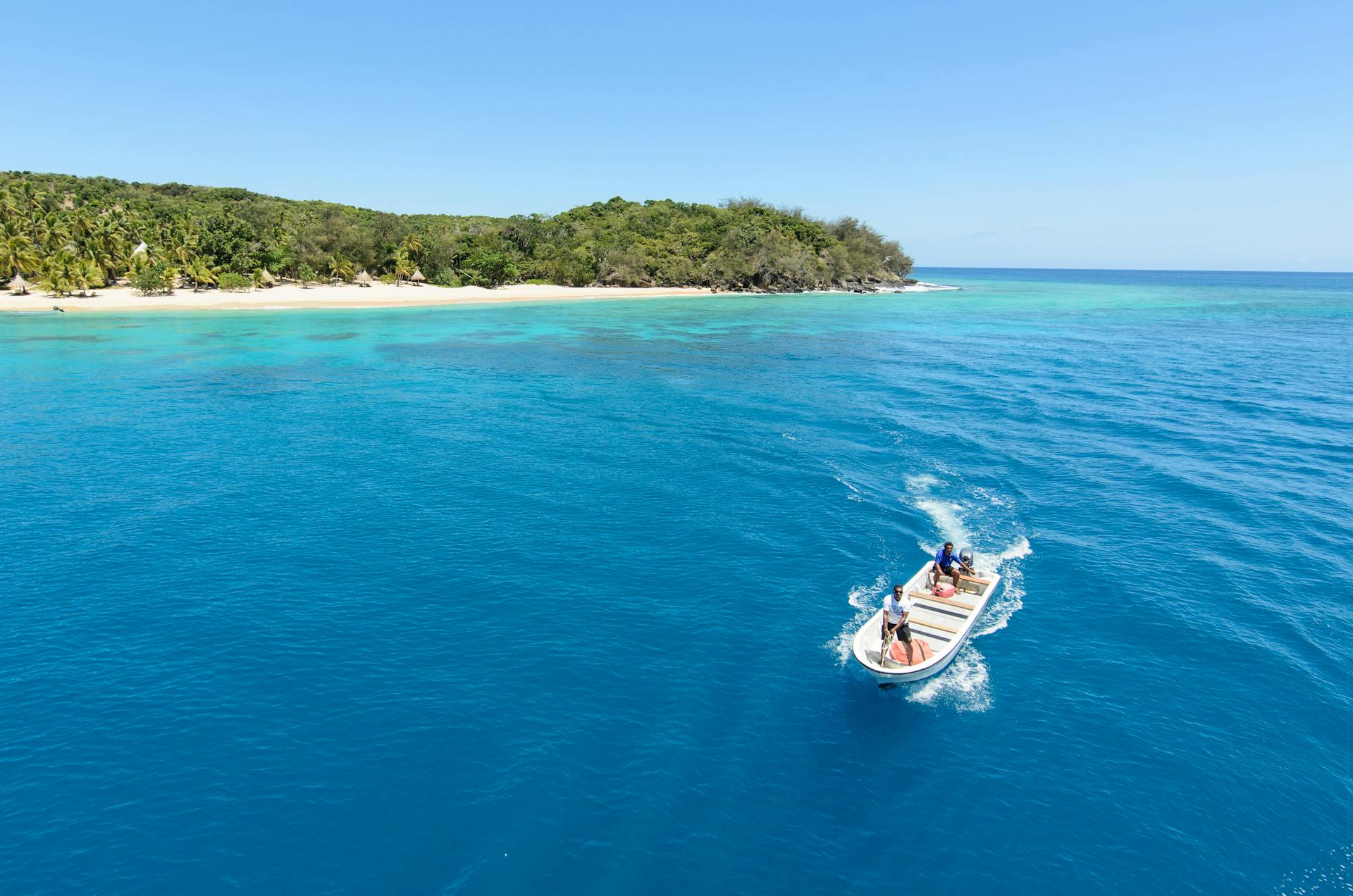
A high-speed catamaran ferry crossing turquoise water with a forested Yasawa island in the background
Travel medicine for Fiji

Scopolamine patch for the Yasawa Flyer crossings, plus azithromycin and ondansetron for the TD and breakthrough nausea that round out a Fiji island-hopping week.

View the bundle →
Medications you may want
Scopolamine
Motion sickness
Learn more →
Azithromycin
Traveler's diarrhea
Learn more →
Ondansetron
Nausea & vomiting
Learn more →

Travel-health tips

Straight from our medical team.

Practical advice for healthier trips. No spam.

Frequently Asked Questions

Most travelers who are prone to seasickness benefit from one. The Yasawa Flyer's run to the northern islands takes roughly five hours with fourteen open-water stops, and the swell increases the farther north the boat travels, especially in the windier June-September months. A scopolamine patch applied at least 4 hours before boarding covers the whole crossing; talk with a provider about whether it's appropriate for you.

No. CDC does not list malaria transmission in Fiji, so antimalarial medication is not part of a standard Fiji trip.

Yes, and it's worth planning around. Fiji has reported an active dengue outbreak through 2026 with case counts well above prior years, concentrated on Viti Levu and Vanua Levu. There is no antiviral treatment or approved vaccine most travelers would use, so daily mosquito bite avoidance, repellent, covering up at dawn and dusk, is the actual prevention plan.

Speak with a travel medicine provider well before departure. These are commonly recommended for travel to Fiji given food and water exposure across resorts and villages, though individual recommendations depend on your itinerary and health history.

It's the single biggest health-planning variable on this trip. The Yasawa Flyer covers over a dozen stops and multiple hours of open water, and conditions get noticeably choppier past the mid-chain islands. Travelers with any seasickness history should plan medication timing around the two long crossing days (day 2 north, day 6 south) specifically.

Most resorts serve treated or bottled water, but community sanitation varies across the islands, and CDC flags traveler's diarrhea as the most common illness reported by visitors to Fiji. Stick to bottled or treated water and be cautious with ice and raw produce washed in tap water, especially in villages.

Reef-safe sunscreen, a wide-brim hat, mosquito repellent with 20%+ DEET or picaridin, water shoes for reef walking, a dry bag for boat days, and your travel-medicine kit (motion sickness, TD antibiotic, antiemetic). Pack meds in a carry-on, not checked luggage, in case bags are delayed on an inter-island leg.

Roughly November through April, overlapping with the wetter, hotter part of the year. The dry season, May through October, is generally the better window for ferry-dependent itineraries like this one, though seas can still build during the windier middle months.

AF
Written by
Alec Freling, MD
Co-founder, Wandr Health

Alec Freling, MD is a board-certified emergency medicine physician and co-founder of Wandr Health with ER experience treating returning travelers.

More itineraries

Beach7 days

The 7-Day Cartagena Itinerary: The Health-Smart Version

Beach9 days

The 9-Day Philippines Island-Hopping Itinerary: The Health-Smart Version

Adventure8 days

The 8-Day Cape Town & Garden Route Itinerary: The Health-Smart Version

Travel-health tips

Straight from our medical team.

Practical advice for healthier trips. No spam.

Your trip-prep timeline
  1. 6 weeks out
    Confirm routine vaccines are current and discuss Hepatitis A and Typhoid with a provider, both are commonly recommended for Fiji per CDC
  2. 2 weeks out
    Get your scopolamine patch, azithromycin, and ondansetron through the Fiji Islands Travel Pack
  3. Week of departure
    Pack a mosquito repellent with 20%+ DEET or picaridin, reef-safe sunscreen, and your travel-medicine kit