
The 9-Day Ladakh & Leh Itinerary: The Health-Smart Version

A 9-day Ladakh loop out of Leh (3,500 m) is the itinerary most travelers ask AI trip-planners for, and altitude is what actually shapes it. Flying directly from sea-level Delhi to Leh is a high-risk ascent pattern per the CDC Yellow Book, with acute mountain sickness rates approaching 50 percent when travelers skip staged acclimatization. This plan builds in two full rest days in Leh before any high-altitude excursion, routes the Nubra Valley crossing of Khardung La (5,359 m) into a lower overnight, and saves the trip's highest sleeping altitude, Pangong Lake at 4,350 m, for after the body has proven it tolerates 3,500 m. As Wandr's clinical team frames it: acclimatize low first, then stack passes.
Ladakh has become one of the most-asked-about high-altitude trips in the Indian Himalaya, and for good reason: monasteries perched on cliffs, a lake that shifts color through the day, and one of the highest motorable roads on Earth. What most itineraries leave out is that the trip starts with the single riskiest ascent pattern in travel medicine, a direct flight from sea level to a sleeping altitude above 3,400 m. This itinerary is built around that fact from day one: two full acclimatization days in Leh before any real elevation gain, a staged crossing of Khardung La into a lower overnight in Nubra Valley, and the trip's highest sleeping altitude, Pangong Lake, saved for last.
Who this itinerary is for
This trip suits travelers drawn to Ladakh's specific mix of Tibetan Buddhist culture and stark high-desert mountain scenery, whether or not they've done high-altitude travel before. First-timers should take the two Leh acclimatization days seriously rather than treating them as filler; skipping straight into sightseeing on day one at 3,500 m is where most avoidable altitude sickness on this route happens.
Travelers who've done other high-altitude trips (Peru, Bolivia, Nepal) will recognize the underlying logic, climb high, sleep low, stage your ascent, but Ladakh's version is unusual in one respect: there's no gradual road approach the way there is from Kathmandu toward Everest Base Camp. Most visitors arrive by a 90-minute flight that erases the multi-day acclimatization a road journey would otherwise provide, which is exactly why the itinerary front-loads recovery time. See our India destination guide for the country-level picture before focusing in on Ladakh's specific altitude profile below.
The route
The structure is Leh-centered for the first four days, then a loop: Leh to Nubra Valley over Khardung La, Nubra to Pangong Lake via the Shyok river valley, and Pangong back to Leh over Chang La. That loop avoids re-crossing Khardung La twice and lets the itinerary control exactly which nights are spent at which altitude, the single biggest lever for avoiding acute mountain sickness on this trip.
The first four days never leave Leh's own elevation band: arrival and complete rest, then a slow Old Town day, a low-key Sham Valley excursion to Magnetic Hill and the Sangam, and a monastery circuit (Thiksey, Hemis, Shey). Only on day 5 does the route gain serious elevation, crossing Khardung La as a day trip before descending to sleep lower, in Nubra, that night. Day 7 pushes to the trip's true altitude ceiling, an overnight at Pangong Lake around 4,350 m, before day 8 trends back down through Chang La to Leh. The whole arc is designed so the highest-risk night comes only after the body has demonstrated it tolerates 3,500 m and a 5,359 m pass crossing without worsening symptoms.

Day-by-day plan
Day 1: Fly Delhi to Leh, do nothing
The flight itself gains roughly 3,500 m of altitude in about 90 minutes, a rate of ascent no trekking route could match. Plan for a full rest day: check into your hotel, drink far more water than feels necessary, and avoid alcohol and any real physical exertion. If a provider has prescribed acetazolamide, today should be your second dose, having started the medication the day before you flew.
Day 2: Leh acclimatization day: Old Town and Leh Palace
Keep the pace slow. Leh's old town and market are walkable, and the 17th-century Leh Palace, modeled loosely on Lhasa's Potala Palace, rewards an unhurried visit for the views alone. This is still your first full day at 3,500 m, so treat any headache, unusual fatigue, or nausea as acute mountain sickness rather than ordinary travel tiredness.
Day 3: Sham Valley day trip: Magnetic Hill and the Sangam
Sham Valley's sights, Magnetic Hill's optical illusion, the Gurudwara Pathar Sahib, and the Sangam where the Indus and Zanskar rivers visibly merge, all sit close to Leh's own elevation. Treat this as your second acclimatization day in disguise. By evening, most travelers feel close to normal at altitude, which is the signal the itinerary is watching for before attempting anything higher.
Day 4: Leh's monastery circuit: Thiksey, Hemis, and Shey
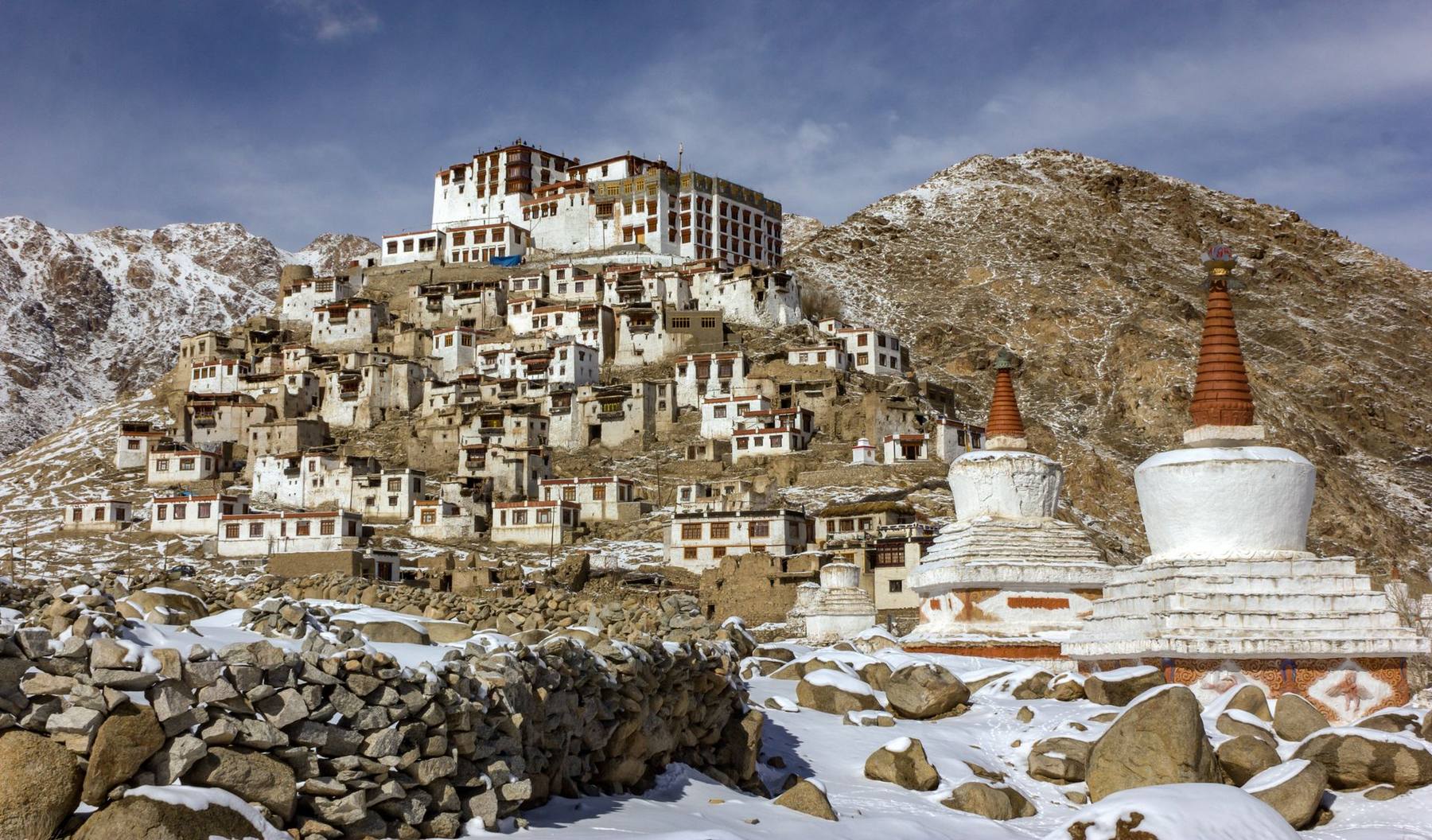
Thiksey Monastery's tiered, whitewashed architecture is often compared to Lhasa's Potala Palace on a smaller scale; Hemis hosts Ladakh's largest monastic festival each July; Shey's ruined palace complex was once the region's summer capital. Altitude stays at Leh's level throughout. This is the last sleeping-altitude day in Leh before the itinerary starts genuinely gaining elevation tomorrow.
Day 5: Drive to Nubra Valley over Khardung La
The road to Khardung La climbs steadily out of Leh to the pass itself at 5,359 m, commonly described as one of the highest motorable passes in the world. The crossing is a through-point, not a destination to linger at; most vehicles pause briefly for photos before continuing down into Nubra Valley, where the overnight altitude near Diskit drops to about 3,048 m, lower than Leh. That drop is the point: a genuine climb-high, sleep-low night after the day's real altitude test.
Want the health prep for India?
Get a 60-second pre-trip check: the vaccines, prescriptions, and altitude/seasonality notes that change the plan — built for your exact dates.
Day 6: Nubra Valley: Diskit Monastery and Hunder's sand dunes
Diskit Monastery sits on a cliff above the valley floor, home to a roughly 32-meter Maitreya Buddha statue visible from a distance. Hunder's cold-desert sand dunes, an unusual landscape for the Himalaya, are typically visited by double-humped Bactrian camel, a legacy of the old Silk Route trade through this valley. Sleeping altitude tonight stays lower than Leh's, giving your body a real recovery window after yesterday's pass crossing.
Day 7: Nubra to Pangong Lake via the Shyok route
Rather than re-crossing Khardung La, the route follows the Shyok river valley toward Durbuk and on to Pangong Lake, arriving at the shore around 4,350 m, close to 800 m higher than any night so far on this trip. This is deliberately the last major elevation gain of the itinerary and the highest sleeping altitude of the whole trip. Watch specifically for symptoms that feel worse than the mild adjustment headache from earlier in the week; that distinction matters, and it's worth raising with your guide the same evening rather than waiting to see if it passes.
Day 8: Pangong Lake to Leh via Chang La
Many visitors get up before sunrise to watch the lake shift through shades of blue as the light changes, one of the most-photographed moments in Ladakh. The return drive climbs over Chang La, around 5,360 m, before descending back to Leh for the night. Net elevation trends downward all day, from 4,350 m to 3,500 m, which is itself the most effective way to resolve any lingering effects from the Pangong overnight.
Day 9: Depart Leh, fly to Delhi
A short final morning before flying back to sea level. Descending by air typically resolves ordinary AMS symptoms within hours. Anything more serious, confusion, a cough producing frothy or pink sputum, or chest tightness at rest, should be flagged to a provider before boarding, since those can point toward high-altitude pulmonary or cerebral edema rather than routine acute mountain sickness.
Health prep for this trip
Start the conversation with a provider 4 to 6 weeks out, specifically about acetazolamide for the direct flight into Leh, and confirm Hepatitis A and Typhoid vaccines are current given India's typhoid burden. Two weeks out, fill the rest of the altitude kit: acetazolamide for AMS prophylaxis, prescription-strength ibuprofen for the headache that commonly hits within the first 24 hours at 3,500 m, and hydroxyzine for the sleep disruption that becomes common above roughly 2,700 m. See the full Ladakh & Leh travel medicine bundle for dosing windows and what's included.
If a provider prescribes acetazolamide, CDC guidance is to start it the day before ascent and continue through the first days at elevation, which for this itinerary means the day before your Delhi-to-Leh flight. Review the acetazolamide prescribing information with your provider ahead of time, since side effects like increased urination and tingling in the fingers and toes are worth knowing about in advance rather than discovering at 3,500 m. If the pre-dawn Pangong departures or general sleep disruption at altitude are a bigger concern for you personally, ask about hydroxyzine, the third prescription in the Ladakh bundle.
What to pack
Layers matter more here than almost anywhere else on a standard itinerary. Daytime Leh in peak season is mild, but Pangong Lake's shoreline and both high passes regularly sit near or below freezing before sunrise, so pack a proper insulated layer, gloves, and a warm hat you can add and remove through the day. UV exposure climbs with elevation, so sunglasses rated for UV protection, a wide-brim hat, and high-SPF sunscreen reapplied often are non-negotiable, especially at Khardung La and Chang La. Bring a refillable water bottle and drink more than feels necessary, since both altitude and the region's dry air increase dehydration risk. Round out your kit with your prescribed altitude medications, any personal prescriptions, and basic first-aid supplies, since pharmacy access thins out considerably once you leave Leh for Nubra Valley and Pangong Lake.
Best time to go and what to avoid
Mid-June through early October is the most dependable window for this specific itinerary, since it requires both Khardung La and Chang La to be reliably open. Traveling right at the edges of the season (late May or October) can work, but build in schedule flexibility, since a late-season snowfall can close a pass for a day or two even outside the core winter months.
Cost expectations
Most travelers budget this as a mid-range trip: comfortable guesthouses or hotels in Leh, simpler camps or homestays in Nubra Valley and at Pangong Lake, and a private or shared vehicle with driver for the Khardung La, Nubra, and Pangong legs, since self-driving the high passes is uncommon among visitors. Foreign nationals and domestic travelers both need an Inner Line Permit for Nubra Valley and Pangong Lake, arranged in Leh in advance or same-day through a local operator, a modest but real cost and logistics step worth planning for rather than a backpacker-style walk-up trip.
Day-by-day plan
| Day | What you're doing | Health note |
|---|---|---|
| 1 | Fly Delhi to Leh, do nothing A roughly 90-minute flight takes you from sea level to Leh's airport at about 3,500 m. The only plan today is rest. | This is the highest-risk ascent in the whole trip: a direct flight to a sleeping altitude above 3,400 m with zero staged acclimatization. If a provider has you on acetazolamide, today is day two of dosing, having started the day before you flew. Skip alcohol, hydrate well, and avoid any real exertion. |
| 2 | Leh acclimatization day: Old Town and Leh Palace A deliberately slow day exploring Leh's old town, the market, and the 17th-century Leh Palace, all reachable on foot or by short drive. | Still your first full acclimatization day at 3,500 m. Walk slowly, especially on the palace's stairs, and treat any headache, nausea, or unusual fatigue as acute mountain sickness until proven otherwise. |
| 3 | Sham Valley day trip: Magnetic Hill and the Sangam A low-exertion loop to Magnetic Hill, the Gurudwara Pathar Sahib, and the Sangam, where the Indus and Zanskar rivers visibly meet. | Elevation stays close to Leh's own, so this is a second acclimatization day disguised as sightseeing. By tonight you should feel close to normal at 3,500 m before anything higher is attempted. |
| 4 | Leh's monastery circuit: Thiksey, Hemis, and Shey A day of Ladakh's most photographed gompas, Thiksey's tiered monastery, Hemis's July festival ground, and the ruined palace at Shey. | By day 4 most travelers are through the worst of initial AMS symptoms. This is still a sleeping-altitude day in Leh, the last one before the itinerary starts gaining real elevation. |
| 5 | Drive to Nubra Valley over Khardung La The road climbs to Khardung La at 5,359 m, one of the highest motorable passes in the world, then descends into Nubra Valley to overnight near Diskit at about 3,048 m. | This is the first high-pass crossing, and it is a day trip through the altitude, not an overnight there. You sleep lower than Leh tonight, a textbook climb-high, sleep-low pattern. Have anti-nausea medication on hand for the switchbacks and altitude combined; move slowly at the pass itself and don't linger. |
| 6 | Nubra Valley: Diskit Monastery and Hunder's sand dunes A full day around Nubra: the cliffside Diskit Monastery and its giant Maitreya Buddha statue, then the cold-desert sand dunes at Hunder, with double-humped Bactrian camels. | Sleeping altitude tonight (~3,048 m) is lower than Leh's, giving your body a genuine recovery night after yesterday's pass crossing. A good day to note whether yesterday's headache or fatigue has resolved. |
| 7 | Nubra to Pangong Lake via the Shyok route Rather than re-crossing Khardung La, the route follows the Shyok river valley to Durbuk and on to Pangong Lake, overnighting at about 4,350 m on the lakeshore. | Tonight is the highest sleeping altitude of the entire trip, about 800 m higher than Leh. Only attempt this after two clean acclimatization days in Leh and a successful pass crossing with no worsening symptoms. If AMS symptoms are present or worsening, this is the point to discuss descending instead with your guide. |
| 8 | Pangong Lake to Leh via Chang La A sunrise view of the lake's color shift, then the return drive over Chang La, roughly 5,360 m, back down to Leh for the night. | The whole day trends downhill in net altitude, from 4,350 m at Pangong to 3,500 m in Leh, which is the fastest way to resolve any lingering symptoms from the Pangong night. Motion-sickness and altitude-nausea overlap heavily on Chang La's switchbacks. |
| 9 | Depart Leh, fly to Delhi A final easy morning before the flight back to sea level in Delhi. | Descending by air resolves altitude symptoms fast, usually within hours. Flag anything that hasn't improved, chest tightness, confusion, or a cough with frothy sputum in particular, to a provider before you fly, since those can signal high-altitude pulmonary or cerebral edema rather than routine AMS. |
Frequently Asked Questions
Most travelers on this itinerary should discuss it with a provider. Leh's airport sits at about 3,500 m, and flying there directly from sea-level Delhi is exactly the ascent pattern, rapid, non-staged, above 3,400 m, that the CDC Yellow Book classifies as high risk for acute mountain sickness, with rates approaching 50 percent when no acclimatization is built in. Acetazolamide compresses the body's usual multi-day acclimatization into about a day; whether it's right for you depends on your health history, so speak with a provider first.
Leh sits at roughly 3,500 m (11,500 ft). Khardung La, the pass crossed en route to Nubra Valley, is about 5,359 m (17,582 ft), long cited even higher but corrected by modern GPS and satellite elevation data. Pangong Lake, where this itinerary overnights on day 7, sits at about 4,350 m, some 800 m higher than Leh, making it the highest sleeping altitude of the whole trip.
No. Per CDC, there is no malaria transmission above 2,000 m in India, and Ladakh sits well above that threshold everywhere on this itinerary. India also has no yellow fever risk, so no vaccination or certificate is required for this route. The travel-health planning here is almost entirely about altitude.
Beyond routine vaccines, the CDC recommends Hepatitis A and Typhoid for most travelers to India; typhoid is worth prioritizing since roughly 85 percent of US typhoid cases in travelers trace back to South Asia. India also carries the world's highest reported burden of rabies, so travelers doing extended stays, or anyone likely to be around street dogs, should ask a provider about pre-exposure rabies vaccination. Confirm your full list based on the complete itinerary, not just the Ladakh leg.
Nubra Valley's floor sits at roughly 3,048 m, lower than Leh's 3,500 m, so ending the day there after crossing Khardung La is a genuine climb-high, sleep-low pattern rather than just a scenic detour. Doing the pass as a there-and-back day trip without an overnight would mean spending a long day at extreme altitude with no true recovery period.
It's the highest-risk night of the trip precisely because it's the highest sleeping altitude, about 4,350 m, roughly 800 m above where you've been sleeping for the previous week. This itinerary sequences it deliberately late, after two acclimatization days in Leh and a successful Khardung La crossing, so your body has had time to prove it tolerates elevation gain before the Pangong night. Any worsening symptoms there, rather than the same mild headache you've had all week, are worth discussing with your guide immediately rather than waiting until morning.
Often both at once, which is part of why they're hard to tell apart on the day. Acute mountain sickness commonly includes nausea, and the switchback roads over Khardung La and Chang La are genuinely rough regardless of elevation. Prescription-strength ibuprofen in the Ladakh travel-medicine kit targets the altitude headache specifically; ask a provider whether a separate motion-sickness option makes sense for you if winding roads are typically an issue.
Mid-June through early October is the most reliable window, when both the Srinagar-Leh and Manali-Leh highways and the high passes, Khardung La and Chang La included, are open and largely clear of snow. May can work but often overlaps with lingering snow at the passes and later highway openings. From November through April, Ladakh is largely cut off from the rest of India by road, and even Leh's airport sees far harsher cold, so this itinerary is not built for winter travel.
The Wandr Team is the editorial group at Wandr Health; every article is reviewed by a licensed clinician before publication.