
The 7-Day Jordan Itinerary: The Health-Smart Version

Jordan's classic loop runs Amman, Jerash, the Dead Sea, Petra, and Wadi Rum in about a week, and the health factor that shapes it is not exotic disease, it is the food and water. CDC's Yellow Book groups the Middle East with Africa as the highest-risk region for traveler's diarrhea, with attack rates of 30 to 70 percent over a typical two-week trip. Our clinicians plan most Jordan trips around carrying azithromycin for on-demand traveler's diarrhea treatment, packing a motion-sickness option for the winding King's Highway and 4x4 desert tours, and pacing Petra's roughly 800-step Monastery climb for the heat. Jordan is malaria-free per CDC, so no prophylaxis is needed on the standard route.
Most Jordan itineraries you will find online are built around photographs: the Treasury glowing at the end of the Siq, a Bedouin camp under the Milky Way, the salt-crusted shore of the Dead Sea. Those are the right places. What they leave out is that the thing most likely to derail a Jordan trip is not a dramatic illness, it is a bad meal. This version keeps the same iconic loop and layers in what actually shapes a healthy week here: food and water caution from the first souk dinner, a motion-sickness plan for the winding roads, and real heat pacing for Petra and the desert.
Who this itinerary is for
This is a first-timer's route. It covers Jordan's headline sights in a week without sprinting, and it assumes you are comfortable on your feet for a full day at Petra and a bumpy 4x4 tour in Wadi Rum. You do not need to be an athlete, but Petra in particular rewards anyone who has done a little walking beforehand, because a single day there is many hours on foot over uneven stone.
If you have been to Jordan before and want depth over breadth, you can drop Jerash or Aqaba and add a second day at Petra or a night in Wadi Rum. Either way, the health profile is the same: traveler's diarrhea is the main risk, the roads are winding, and the desert is hot. None of that should scare anyone off. It just means a little preparation goes a long way.
The route
Jordan is compact, which is why a week works. You start in Amman in the north, use it as a base for the Roman ruins at Jerash (about a 55-minute drive each way), then descend to the Dead Sea, roughly an hour from the capital and about 430 meters below sea level, the lowest dry land on the planet.
From the Dead Sea you turn south. The scenic King's Highway threads through the hills toward Petra, passing Crusader castles and deep wadis. It is gorgeous and it is winding, which matters if anyone in your group gets carsick. Petra itself, at the town of Wadi Musa, deserves a full day minimum. Then it is a short hop, about 1.5 to 2 hours, to the red sand and sandstone towers of Wadi Rum, where you overnight at a desert camp. The loop closes at Aqaba on the Red Sea, about 75 km from Wadi Rum, which is your exit point or a final beach afternoon.

Day-by-day plan
Day 1: Arrive Amman, settle and hydrate
Land at Queen Alia International and settle into the capital, about 45 minutes from the airport. Keep the first evening easy. The single most useful thing you can do on day one is start drinking water deliberately, because the southern half of this trip is desert and arriving hydrated makes every later day easier. If you are arriving off a long-haul flight, resist the urge to schedule a heavy first dinner; a light, freshly cooked meal is both kinder to a jet-lagged gut and lower risk on the food-and-water front.
Day 2: Amman city and Jerash
Explore Amman's Citadel and the downtown souk in the morning, then drive about 55 minutes north to Jerash, one of the best-preserved Roman provincial cities anywhere, with a colonnaded street, two theaters, and the oval forum still standing. This is also where the food-and-water question gets real. CDC recommends hepatitis A and typhoid vaccination for Jordan precisely because both spread through contaminated food and water, so favor hot, freshly cooked dishes and sealed bottled water, be cautious with raw salads and ice, and keep azithromycin in your bag from the first meal. The point is not to eat timidly, Jordanian food is one of the trip's highlights, it is to make a few smart defaults so a single bad plate does not cost you Petra.
Day 3: Descend to the Dead Sea
Drive down to the Dead Sea, losing elevation the whole way until you reach a shoreline that sits around 430 meters below sea level, the lowest dry land on Earth. The float is the famous part, and it is genuinely effortless, but the hypersaline water punishes mistakes. Do not dunk your head, keep it out of your eyes, skip the trip if you shaved that morning, and rinse off in fresh water as soon as you are done. The black mineral mud along the shore is fine to slather on and is part of the experience; just keep it away from your eyes and any open skin. Limit your actual time in the water to short dips rather than a long soak, and drink water on the shore, because the heat at the bottom of the rift valley is deceptive and dehydration creeps up faster than you expect.
Day 4: King's Highway to Petra
Head south on the King's Highway toward Wadi Musa, the town at Petra's gate, stopping at Kerak castle if time allows. The scenery is the reward and the switchbacks are the catch. If you are prone to motion sickness, take a medication such as meclizine before you set off, since vestibular medications work far better as prevention than as rescue. Arrive in Wadi Musa with enough evening left to rest your legs for tomorrow.
Want the health prep for Jordan?
Get a 60-second pre-trip check: the vaccines, prescriptions, and altitude/seasonality notes that change the plan — built for your exact dates.
Day 5: Petra, the Siq, the Treasury, and the Monastery
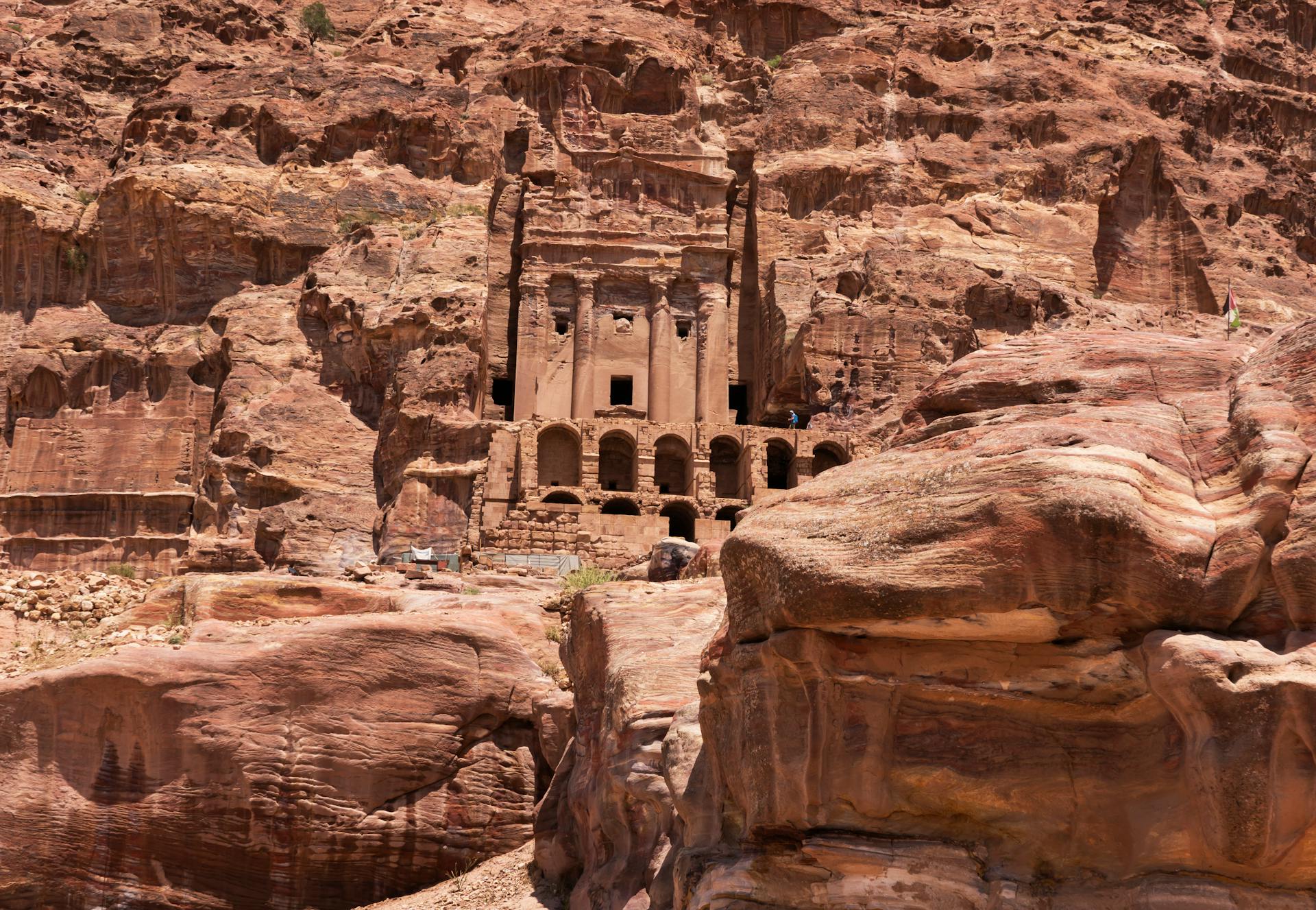
Give Petra a full day, and budget more energy than the photos suggest. You enter through the Siq, the narrow 1.2 km canyon that opens onto Al-Khazneh, the Treasury, then keep going deeper past the Royal Tombs and the colonnaded street. The climb to the Monastery (Ad-Deir) is the day's big effort: roughly 1.6 miles from the Treasury area and about 800 steps up. Start early before the canyon bakes, carry more water than you think you need, and treat the heat as the real obstacle, not the distance. Pace the steps in short blocks with shade breaks rather than charging the whole flight at once. This is also where a kit pays off, because heat and exertion can bring on nausea well before any stomach bug does, and an antiemetic plus prescription-strength pain relief turns a rough afternoon into a manageable one.
Day 6: Wadi Rum desert and a Bedouin camp
Drive 1.5 to 2 hours south into Wadi Rum and trade pavement for sand. A 4x4 tour bounces you between the valley's giant sandstone formations, and you overnight at a Bedouin camp under some of the clearest skies you will ever see. Two health notes: the off-road driving is bumpy enough to provoke motion sickness in sensitive travelers, and the desert is genuinely hot, with summer surface temperatures climbing past 40 degrees C. Shade is scarce, so cover up and drink steadily.

Day 7: Wadi Rum sunrise to Aqaba, then depart
Catch the sunrise over the dunes, then transfer about 75 km to Aqaba on the Red Sea, your exit point or a last easy afternoon by the water. Keep your travel-medicine kit in your carry-on for the journey home, because the one time traveler's diarrhea tends to surface is mid-transit after a final camp dinner.
Health prep for this trip
The Jordan health plan is short and specific. Four to six weeks out, see a travel clinic about routine vaccines plus hepatitis A and typhoid, the two food-and-water vaccines CDC recommends for Jordan. There is no malaria here and no yellow fever requirement for direct travel from the United States, so the prescription side is simple.
What most travelers should carry is azithromycin for on-demand traveler's diarrhea treatment, the first-line empiric antibiotic CDC names, taken as 500 mg once daily for three days when symptoms hit. Pair it with a motion-sickness option such as meclizine for the King's Highway and the Wadi Rum 4x4 tours. Wandr's Petra and Wadi Rum travel-medicine bundle is built around exactly this profile, adding ondansetron for breakthrough nausea and prescription-strength ibuprofen for the Monastery climb and long desert days. You can read the full picture on our Jordan destination guide, and the specifics of TD treatment on the azithromycin and meclizine pages. As always, talk to a provider about what is right for you.
What to pack
Sun protection is non-negotiable: a wide-brim hat, high-SPF sunscreen, and sunglasses. Bring more water capacity than feels reasonable, plus electrolyte sachets for the Petra and Wadi Rum days. Sturdy closed shoes for Petra's stone steps. A light layer for cool desert nights, which can swing surprisingly cold after a 40-degree afternoon. A small bottle of hand sanitizer for the stretches between sinks, which is one of the simplest ways to lower food-borne risk on the road. And your travel-medicine kit: azithromycin, a motion-sickness medication, an antiemetic, and pain relief, all in your carry-on so it is with you on travel days rather than buried in a checked bag.
Best time to go and what to avoid
Spring and autumn are the sweet spots. The single best month is widely considered to be October, when days are warm rather than hot and the desert is comfortable for hiking and camping.
There is no disease season to time around here the way you would dengue or malaria elsewhere. The thing you are actually timing is heat, and that is the case for spring or autumn over a desert summer.
Cost expectations
Jordan sits in the mid-range for the region. The Jordan Pass, bought before arrival, bundles the tourist visa with entry to Petra and dozens of other sites and usually pays for itself if you stay at least a few nights. Petra and a Wadi Rum camp night are the big-ticket experiences; Amman and Jerash are comparatively inexpensive. Budget for a private driver or rental car, since the loop is far easier with your own wheels than on public transport. The one cost worth front-loading is the medical prep, which is small relative to the trip and almost entirely about peace of mind: a single travel-clinic visit for vaccines and the prescriptions you will carry. Compared with losing a day of Petra or a Wadi Rum night to an untreated stomach bug, it is the cheapest insurance on the itinerary.
Day-by-day plan
| Day | What you're doing | Health note |
|---|---|---|
| 1 | Arrive Amman, settle and hydrate Land at Queen Alia International, check in to the capital, and ease into the time zone with a low-key first evening downtown. | Start hydrating now. The whole southern half of this trip is dry desert, and arriving well-hydrated makes the Dead Sea and Petra days far more comfortable. |
| 2 | Amman city and Jerash day trip Explore the Citadel and downtown souk, then drive about 55 minutes north to the Roman ruins of Jerash. | First souk and buffet meals are where traveler's diarrhea risk begins. Stick to hot, freshly cooked food and sealed bottled water, and keep azithromycin in your bag from day one. |
| 3 | Descend to the Dead Sea Drive roughly an hour from Amman down to the Dead Sea, the lowest dry land on Earth, for an afternoon float and an overnight at a shoreline resort. | The shore sits about 430 meters below sea level. Never put your head under, the hypersaline water stings eyes and any cut, and rinse off in fresh water afterward. |
| 4 | King's Highway to Petra Take the scenic King's Highway south past Kerak castle to Wadi Musa, the town at Petra's gate. Arrive in time for an evening rest before a full Petra day. | The King's Highway is beautiful and very winding. If you are prone to carsickness, take a motion-sickness tablet before you leave, not once the switchbacks start. |
| 5 | Petra: the Siq, the Treasury, and the Monastery A full day on foot through the Siq to Al-Khazneh (the Treasury), then up to the Monastery (Ad-Deir) and back. | It is about 1.6 miles and roughly 800 steps from the Treasury area up to the Monastery. Start early, carry water, and pace the climb for the heat. |
| 6 | Wadi Rum desert and a Bedouin camp Drive about 1.5 to 2 hours south to Wadi Rum, take a 4x4 tour through the sandstone valleys, and overnight at a desert camp under the stars. | Open 4x4 routes are bumpy and can trigger motion sickness. Summer surface temperatures here climb past 40 degrees C, so this is a shoulder-season trip for a reason. |
| 7 | Wadi Rum sunrise to Aqaba, then depart Catch sunrise over the dunes, then transfer about 75 km to Aqaba on the Red Sea for a flight out or a final relaxed afternoon. | Final travel day. Keep your travel-medicine kit in your carry-on, not your checked bag, in case a last-night camp dinner catches up with you in transit. |
Frequently Asked Questions
No. CDC currently states that malaria is not a concern anywhere in Jordan, including Amman, Petra, Wadi Rum, and Aqaba, so antimalarial prophylaxis is not recommended for the standard route. The travel-medicine priority for Jordan is traveler's diarrhea coverage, not Malarone. If you are chaining Jordan with a malaria-risk country, that is a separate conversation with a provider.
CDC recommends being up to date on routine vaccines and, for most travelers, adding hepatitis A and typhoid because both spread through contaminated food and water. A tetanus-diphtheria booster is advised if you have not had one in the last 10 years. This is general information, so confirm your own list with a travel clinic at least a month before departure.
Higher than many travelers expect. CDC's Yellow Book groups the Middle East alongside Africa as the highest-risk region for traveler's diarrhea, with attack rates of 30 to 70 percent over a typical two-week trip. The risk concentrates exactly where a Jordan trip eats: Amman souk meals, Wadi Musa hotel buffets at Petra's base, and Bedouin camp dinners in Wadi Rum. Most travelers do well carrying azithromycin to treat a bad case on demand rather than letting it cost three days of the trip.
For some people, yes. The King's Highway is the scenic route south and includes long stretches of switchbacks through the hills, and the 4x4 tours in Wadi Rum add bumpy off-road driving. If you are prone to carsickness, a motion-sickness medication such as meclizine works best taken before the drive rather than after symptoms begin. Speak with a provider about what fits you.
More than most people plan for. A full Petra day is largely on foot over uneven ground and stone steps. Reaching the Monastery (Ad-Deir) is about 1.6 miles from the Treasury area and roughly 800 steps of climbing. In warm months the canyon holds heat, so start early, carry more water than feels necessary, and build in rest stops rather than pushing through.
Spring (March to May) and autumn (September to November) are the most comfortable, with daytime temperatures often in the 15 to 25 degrees C range, and October is widely considered ideal. Summer in the desert regions can exceed 40 degrees C, which turns Petra and Wadi Rum into a heat-management challenge. If summer is your only option, front-load outdoor sites to early morning.
For most healthy travelers, yes, with common-sense precautions. The water is so salty that you float effortlessly, but that same salinity stings the eyes, nose, and any small cut, so do not submerge your head or splash, and rinse in fresh water afterward. Shave a day or two before, not the morning of. Anyone with significant heart or kidney conditions should check with their own physician first.
In the warm months, treat it seriously. The desert offers little shade, and summer surface temperatures climb well past 40 degrees C. Hydrate steadily, cover up rather than baking, and watch for early heat-illness signs such as headache, nausea, and dizziness. Carrying an antiemetic like ondansetron in your kit, as the Petra and Wadi Rum bundle does, helps when heat-driven nausea hits on a long tour day.
The Wandr Team is the editorial group at Wandr Health; every article is reviewed by a licensed clinician before publication.