
The 7-Day Japan Itinerary: The Health-Smart Version

This 7-day Japan itinerary runs Tokyo to Hakone and Mount Fuji to Kyoto, and the health factor that shapes it most is not food, it is the clock. Tokyo sits 13 to 14 hours ahead of the mainland United States, and per the CDC Yellow Book the body adjusts to eastward travel at only about one hour per day, so front-load Tokyo and use morning light to reset. Japan is one of the few low-risk countries in Asia for traveler's diarrhea, under 5 percent per CDC, so a kit here is backup, not a daily worry. The real symptom load is jet lag plus motion sickness on the winding Hakone roads and Lake Ashi crossing. As an ER physician, I plan the first two days for sleep, not sightseeing.
Most Japan guides hand you a packed seven days and assume your body shows up ready to use them. It will not. The trip is eastward and long, and the clock is the real opponent here. I am an ER physician, and the returning travelers I see from Japan almost never have an exotic infection. They have a wrecked sleep cycle from a 13 to 14 hour time shift, a queasy afternoon on a mountain railway, and an upset stomach they could have headed off. This itinerary keeps the classic Tokyo to Hakone to Kyoto route and builds the health decisions in, so the days you traveled this far for are the ones you actually feel good on.
Who this itinerary is for
This is built for a first-time visitor who wants the headline trio, Tokyo, the Mount Fuji area, and Kyoto, in a week, at a pace that respects a major time-zone change. You do not need to be especially fit. The hardest physical day is optional and seasonal: a Fuji summit climb that only exists July through early September.
Returning travelers can compress the front end and add a day in Kyoto or a side trip. Either way, plan the first 48 hours for recovery rather than ambition. Japan rewards travelers who arrive rested, and it punishes the ones who try to sightsee through the worst of their jet lag.
It also suits travelers who want very little medical complexity. There is no malaria here, no yellow fever requirement, and no routine altitude exposure unless you choose the seasonal summit. That makes this one of the lower-risk long-haul trips you can take, which is exactly why the small things, sleep timing and one queasy travel day, end up mattering most. If you travel with children or older relatives, the same first-48-hours rule applies, and a slightly slower Kyoto finish tends to work better than a packed one.
The route
The shape is a straight line southwest, and that is deliberate. You land in Tokyo, the densest and most stimulating stop, and spend three nights there while your body clock is at its worst. Big-city energy and abundant daylight actually help you reset, and you are never far from your hotel when you fade.
From Tokyo you move to the Hakone and Mount Fuji area for two nights. This is the scenic and slightly slower middle of the trip: hot-spring inns, lake views, and the first clear sightlines to Fuji. It is also where the only real motion-sickness exposure lives, on the switchback railway, the ropeway, and the Lake Ashi crossing.
You finish in Kyoto for the cultural payoff, temples, shrines, and old streets, reached by a smooth bullet train that gives your stomach a break after the mountain transit. By the time you reach Kyoto you should be mostly adjusted to local time, which is exactly when its quieter, detail-rich sightseeing lands best. Total ground covered is roughly 450 km, almost all of it on fast, comfortable rail.

Day-by-day plan
Day 1: Arrive Tokyo, land on local time
Fly into Haneda or Narita and transfer to a base in Shinjuku or Shibuya. The temptation after a long eastward flight is to crash. Resist it. Eastward jet lag resolves at only about one hour per day per the CDC Yellow Book, so the most useful thing you can do tonight is stay awake until a normal Tokyo bedtime. Eat dinner out, take a short walk, and let the city's light and noise keep you up. Most travelers should keep alcohol light on arrival night, since it fragments the little sleep you will get.
Day 2: Central Tokyo, Asakusa to Shibuya
Start at Senso-ji temple in Asakusa early, partly for the calm and partly for the daylight. Outdoor morning light is the strongest signal for advancing your body clock after flying east, so an early start does double duty. Work through Ueno Park, then end at the Shibuya scramble after dark. Expect a 3 or 4 a.m. wake-up tonight. That is normal on day two and not a reason to medicate.
Day 3: Tokyo neighborhoods and a slower reset
Meiji Shrine, Harajuku, and either teamLab or the Imperial Palace East Gardens make an easy day. Keep it flexible. If you hit a wall in the afternoon, a 20 to 30 minute nap is fine, but a long dark sleep will stall your adjustment. A daylight walk beats a nap nearly every time on day three.
Day 4: Tokyo to Hakone, into Fuji country
Take the train to Hakone and run the classic loop: the Hakone Tozan switchback railway, the ropeway over the Owakudani vents, and a sightseeing boat across Lake Ashi with Fuji on the horizon. This sequence is the motion-sickness pinch point of the whole trip. The railway reverses direction up the slope, the ropeway sways, and the lake can chop up in wind. If you are prone to motion sickness, meclizine taken about an hour before the first leg is a reasonable plan, and it generally lasts the day on a single dose. Check timing and dosing with a provider.
Want the health prep for Japan?
Get a 60-second pre-trip check: the vaccines, prescriptions, and altitude/seasonality notes that change the plan — built for your exact dates.
Day 5: Mount Fuji views, or a seasonal summit climb
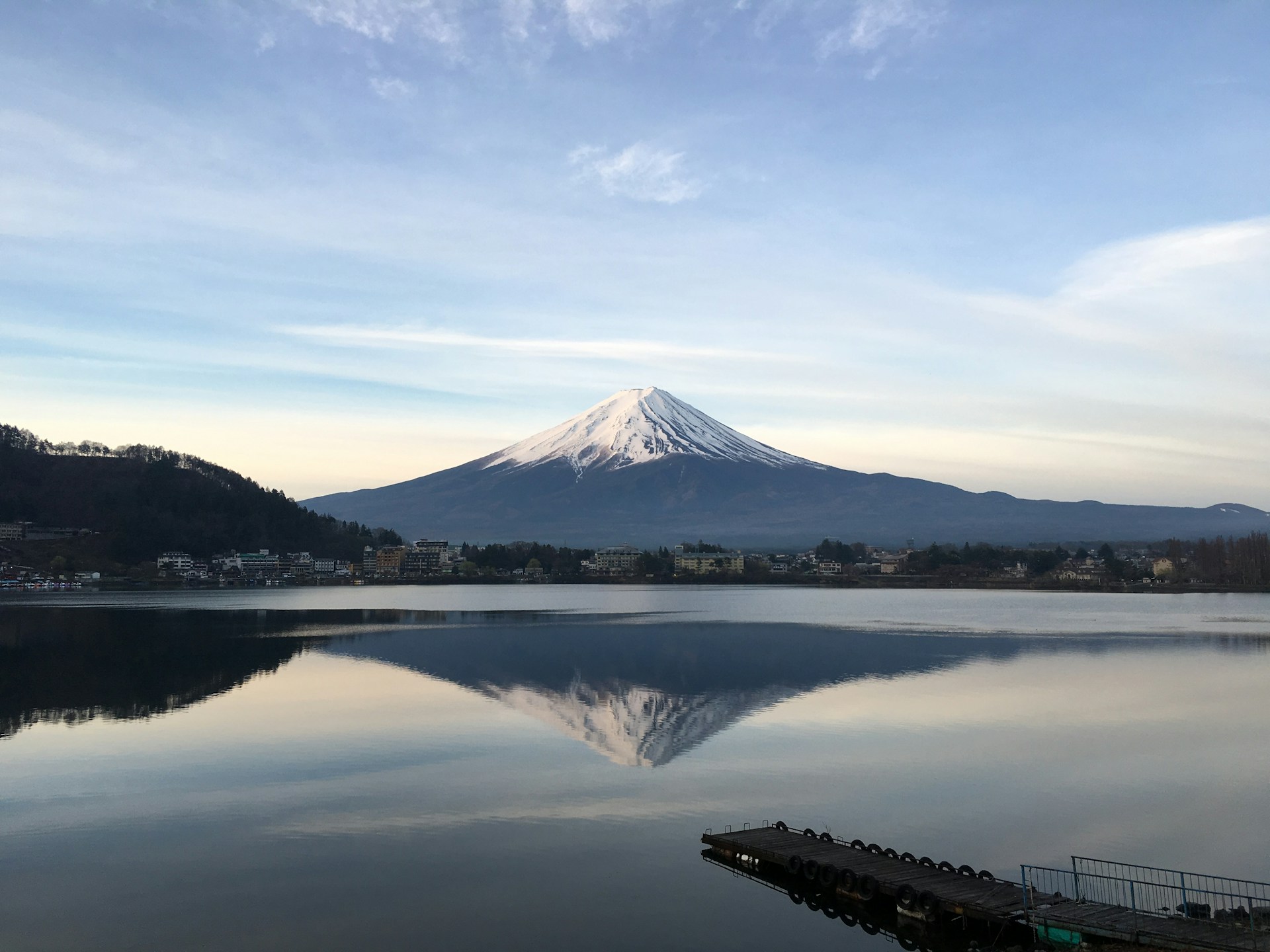
For most of the year this is a viewing day, and a spectacular one: the Chureito Pagoda above Fujiyoshida and the Kawaguchiko lakeshore give you the postcard Fuji, with an onsen soak to follow. Viewing carries no altitude risk at all. Climbing is a different decision and a seasonal one. The summit stands at 3,776 m (12,389 ft), and the standard route gains roughly 1,500 m from the Fifth Station in a single push, the rapid-ascent profile the CDC ties to acute mountain sickness. The official 2026 season is narrow, July 1 to September 10 on the Yoshida Trail, with a 4,000 ¥ entry fee, a 4,000-hiker daily cap, and a mandatory hut reservation. If you are summiting in season, ask a provider about acetazolamide, which can be started the day before the climb.
Day 6: Hakone to Kyoto by bullet train
Ride the shinkansen to Kyoto. After yesterday's mountain transit, the bullet train is a relief: it is smooth and stabilized, and it rarely provokes motion sickness even in people who struggled on the switchbacks. Drop your bags and head to Fushimi Inari, ideally late afternoon as the crowds thin, then wander Gion at dusk. By now you should be close to fully on local time, which is why Kyoto's slower, detail-heavy sightseeing lands better at the back of the trip.

Day 7: Kyoto temples and departure
Use the morning well. The Arashiyama bamboo grove and Kiyomizu-dera are both best early, before tour buses arrive. Then transfer out. Travel day is exactly when a small medical kit earns its place: a single dose of ondansetron can settle an unsettled stomach or travel nausea before a long flight, and it is worth keeping in your day bag rather than your checked luggage.
Health prep for this trip
The prep here is light, which is the point. Japan does not demand a wall of vaccines or daily prophylaxis. The CDC's main message for most travelers is to be current on routine vaccines, including MMR, and to consider hepatitis A. Japanese encephalitis vaccine exists, but the CDC notes that short-term travelers who stay in major urban areas are at minimal risk, so it is usually reserved for longer or rural itineraries. Sort your routine vaccines four to six weeks out and talk through the rest with a travel provider.
The medication side is short and targeted. For the eastward time shift, low-dose melatonin in the local evening can help, and the CDC notes 0.5 to 1 mg is often enough; pair it with morning light. For the Hakone day, meclizine covers the winding-road and boat motion sickness, taken about an hour ahead. Keep ondansetron on hand for nausea that has already started or for travel days. Japan's low food-and-water risk means a traveler's diarrhea drug like azithromycin is a backup rather than a daily plan, but many travelers still carry a standby course. The Japan and Mount Fuji travel medicine bundle pulls the relevant prescriptions into one provider visit, including the altitude option if you intend to summit. For the wider health picture, the Japan destination guide covers what to know before you go. Every one of these is a conversation to have with a clinician, not a self-diagnosis.
What to pack
Pack light and clinical. A small kit covers the realistic risks on this route:
- Meclizine for the Hakone switchbacks and Lake Ashi crossing
- Ondansetron for travel-day or food nausea
- Low-dose melatonin for the eastward time shift
- A standby traveler's diarrhea course if your provider agrees
- Sunscreen and a refillable water bottle (Japan's tap water is safe to drink)
- Comfortable walking shoes; you will easily clear 20,000 steps on temple days
- Cash, since smaller shrines, shops, and rural buses are still cash-first
Best time to go and what to avoid
Japan's health calendar is driven by weather and crowds more than disease. The two prime windows are spring, late March through May for cherry blossom, and autumn, October through November for foliage. Both bring mild temperatures and comfortable walking. Summer is the only season you can climb Fuji, but it is also hot and humid in the cities, which raises heat and dehydration risk on long temple days.
Whenever you go, the eastward jet lag is the same. The CDC's adaptation estimate of about one hour per day does not change with the season, so the first-48-hours rule holds year round.
Cost expectations
A 7-day Japan trip lands in the mid-range for most travelers: rail, including a stretch of shinkansen, plus a mix of city hotels and one hot-spring inn, tends to be the largest line after flights. The health spend is small by comparison, a single travel-medicine visit and a compact kit, and it is the cheapest insurance on the trip against losing a day to jet lag or a queasy afternoon. This is not a budget-backpacking guide; it is a plan to spend your week feeling good rather than recovering.
Day-by-day plan
| Day | What you're doing | Health note |
|---|---|---|
| 1 | Arrive Tokyo, land on local time Fly into Haneda or Narita, transfer to a base in Shinjuku or Shibuya, stay awake to a normal Tokyo bedtime. | Resist the airport nap. Eastward jet lag eases roughly one hour per day, so getting on local time tonight is the single highest-value health move of the trip. |
| 2 | Central Tokyo: Asakusa, Ueno, Shibuya Senso-ji temple, Ueno Park, then the Shibuya scramble at night. | Get bright morning light early. Outdoor daylight in the local morning is the strongest signal for advancing your body clock after an eastward flight. |
| 3 | Tokyo neighborhoods and a slower reset Meiji Shrine, Harajuku, teamLab or the Imperial Palace gardens, easy pace. | If you are still waking at 3 a.m., that is normal on day three. Short daylight walks beat a long dark nap for resetting the clock. |
| 4 | Tokyo to Hakone, Fuji country Train to Hakone, ride the Tozan switchback railway and ropeway, cross Lake Ashi by boat for Fuji views. | The switchback railway, the ropeway, and the lake crossing are the motion-sickness pinch point. If you are prone to it, take meclizine about an hour before the first leg. |
| 5 | Mount Fuji views (or a seasonal summit climb) Chureito Pagoda and Kawaguchiko for the classic Fuji view, onsen soak, optional summit climb only in season. | Viewing Fuji carries no altitude risk. Climbing it does: the trail tops out at 3,776 m, and the CDC links rapid ascent above 2,500 m to acute mountain sickness. |
| 6 | Hakone to Kyoto by bullet train Smooth shinkansen to Kyoto, then Fushimi Inari and the Gion district by evening. | The bullet train is gentle and rarely provokes motion sickness, a welcome contrast to yesterday's mountain transit. Hydrate and walk at stops. |
| 7 | Kyoto temples and departure Arashiyama bamboo grove and Kiyomizu-dera, then transfer out. | Carry your kit on travel day. A single dose of ondansetron can settle travel nausea or an unsettled stomach before a long flight home. |
Frequently Asked Questions
For most travelers it is jet lag, not illness. Tokyo runs 13 to 14 hours ahead of the mainland United States, and per the CDC Yellow Book the body adapts to eastward travel at roughly one hour per day. Plan a light first two days, get morning daylight, and consider low-dose melatonin in the local evening. Speak with a provider about what fits you.
Japan is one of the few low-risk destinations in Asia. The CDC Yellow Book places it under a 5 percent attack rate, far below the 20 to 75 percent seen across most of developing Asia, Africa, and Latin America. Most travelers do well without daily worry, but many still carry azithromycin as a just-in-case backup. Ask a provider whether a standby supply makes sense for you.
Only if you climb it. Viewing Fuji from Hakone, Kawaguchiko, or the Chureito Pagoda carries no altitude risk. The summit trail tops out at 3,776 m, and the CDC links rapid ascent above 2,500 m to acute mountain sickness. If you plan to summit, talk to a provider about acetazolamide, which can be started the day before you climb.
The official 2026 climbing season runs July 1 to September 10 on the Yoshida Trail and July 10 to September 10 on the Shizuoka-side trails. Outside those dates the trails and mountain huts are closed and the climb is considered unsafe. A 7-day cultural trip in any other month is a Fuji-viewing trip, not a climb.
Meclizine is a common choice for motion sickness. It generally works best taken about an hour before travel and can be repeated once every 24 hours. The Hakone switchback railway, ropeway, and Lake Ashi boat are the typical trigger points. Ondansetron can help if nausea has already started. Confirm dosing with a provider.
Rarely. The shinkansen is smooth and travels in a straight, stabilized line, so most people who feel queasy on mountain switchbacks are fine on the bullet train. The motion-sickness risk on this itinerary clusters in Hakone's winding transit and the lake crossing, not the long-distance rail.
Start shifting your sleep earlier a few days before you fly, since the trip is eastward. On arrival, get outside in the local morning light, keep the first naps short, and consider low-dose melatonin (the CDC notes 0.5 to 1 mg is often enough) in the local evening. Light exposure is the strongest lever. A provider can help you build a plan.
Most travelers mainly need to be current on routine vaccines, including MMR. The CDC may suggest hepatitis A and, for some itineraries, Japanese encephalitis, though it notes that short-term travelers staying in major urban areas are at minimal risk for JE. Check your routine vaccines early and discuss the rest with a travel provider.
Alec Freling, MD is a board-certified emergency medicine physician and co-founder of Wandr Health with ER experience treating returning travelers.