
The 10-Day Morocco Itinerary: The Health-Smart Version

A 10-day Morocco loop runs Marrakech into the High Atlas, south to the Sahara dunes at Merzouga, and back, roughly 560 km each way of mountain passes and desert road. The health factor that actually shapes this trip is not altitude. The Tizi n'Tichka pass tops out near 2,205 m, below the usual altitude-sickness threshold, so the real issues are traveler's diarrhea and motion sickness on the switchback roads. Per CDC, traveler's diarrhea is the most common travel-related illness, so most travelers should carry a standby antibiotic and start food and water precautions on day one. Morocco has been malaria-free since 2010 per WHO, so no malaria pills are needed on this route. Speak with a provider before you go.
Morocco packs a mountain range, a desert, and a thousand-year-old city into one loop, and the health risks shift as the landscape does. I am an ER doctor, and the travelers I see after a trip like this rarely come back with anything exotic. They come back with traveler's diarrhea from food and water, or they spent half the drive to the Sahara feeling carsick on the switchbacks. Both are preventable with a little planning. This 10-day itinerary runs Marrakech into the High Atlas, south to the dunes at Merzouga, and back, and it builds the health prep into the route instead of bolting it on at the end. The goal is simple: enjoy the food, the mountains, and the desert without losing a day to something you could have headed off before you left.
Who this itinerary is for
This is a strong first trip to Morocco for travelers who want the classic arc, the imperial city, the mountains, and the Sahara, without rushing. The pace is moderate. You will spend several days on the road, so comfort with long drives matters more than fitness. There is no serious altitude and no trekking required on the standard route.
Returning travelers and those who want more desert time can stretch the Sahara leg or swap a road day for a guided High Atlas walk. If you are prone to motion sickness or you are traveling with someone who is, plan for it early. The roads are the single biggest health variable on this trip, more than any bug or vaccine.
Health-wise, expect nothing dramatic if you prepare. The realistic risks are traveler's diarrhea from food and water, motion sickness on the passes, and sun and heat in the desert. None of those should change whether you go. They just change what is in your bag and how you pace the driving days. Families with kids and older travelers do this route regularly, usually with a hired driver so the motion-sensitive passengers can rest and face forward.
The route
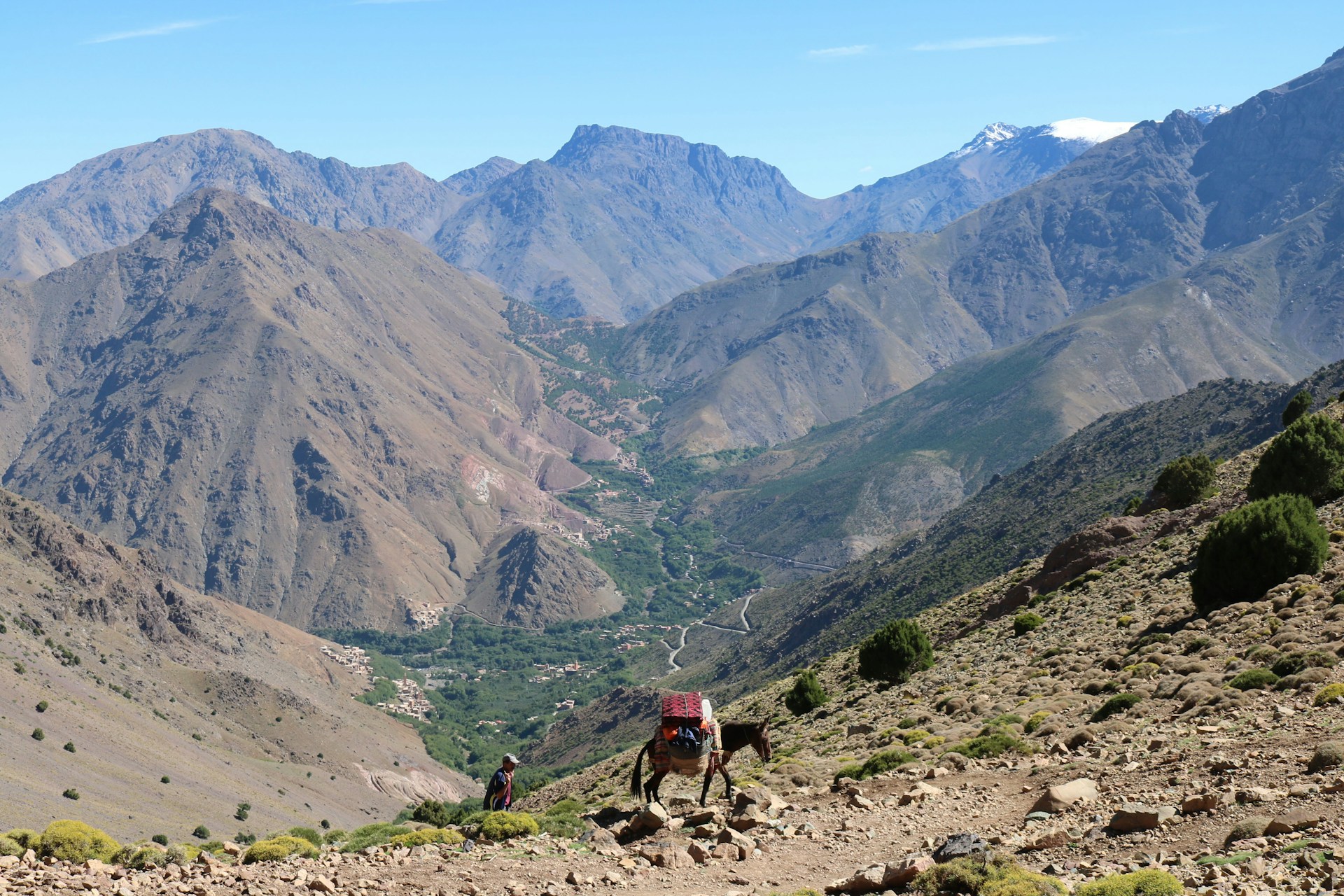
The shape is a loop out of Marrakech, roughly 560 km each way once you count the detours, per regional route guides. From Marrakech you climb southeast over the Tizi n'Tichka pass, the highest major road pass in North Africa at about 2,205 m, into the kasbah country around Ait Benhaddou and Ouarzazate. Mount Toubkal, Morocco's high point at 4,165 m (13,665 ft) per Britannica, sits to your west but is not on the road route.

From there the route runs east along the Road of a Thousand Kasbahs, through the Dades Valley and the Todra Gorge, where limestone walls rise as high as 400 m, to the dunes of Erg Chebbi near Merzouga. The largest dunes there reach about 150 m. You ride out to a desert camp, catch a Sahara sunrise, then loop back west through the Draa Valley and recross the Atlas to Marrakech. Every leg is scenic and most are long, which is why the health plan centers on the road as much as the destinations.
Day-by-day plan
Day 1: Arrive Marrakech, settle into the medina
Land, check in near the old city, and keep the first day light. Walk the immediate neighborhood, find dinner, and start food and water precautions immediately. Drink bottled or treated water, including for brushing teeth, and skip ice from unknown sources. Contaminated food and water are the main route to traveler's diarrhea, so the habits you set tonight matter all week.
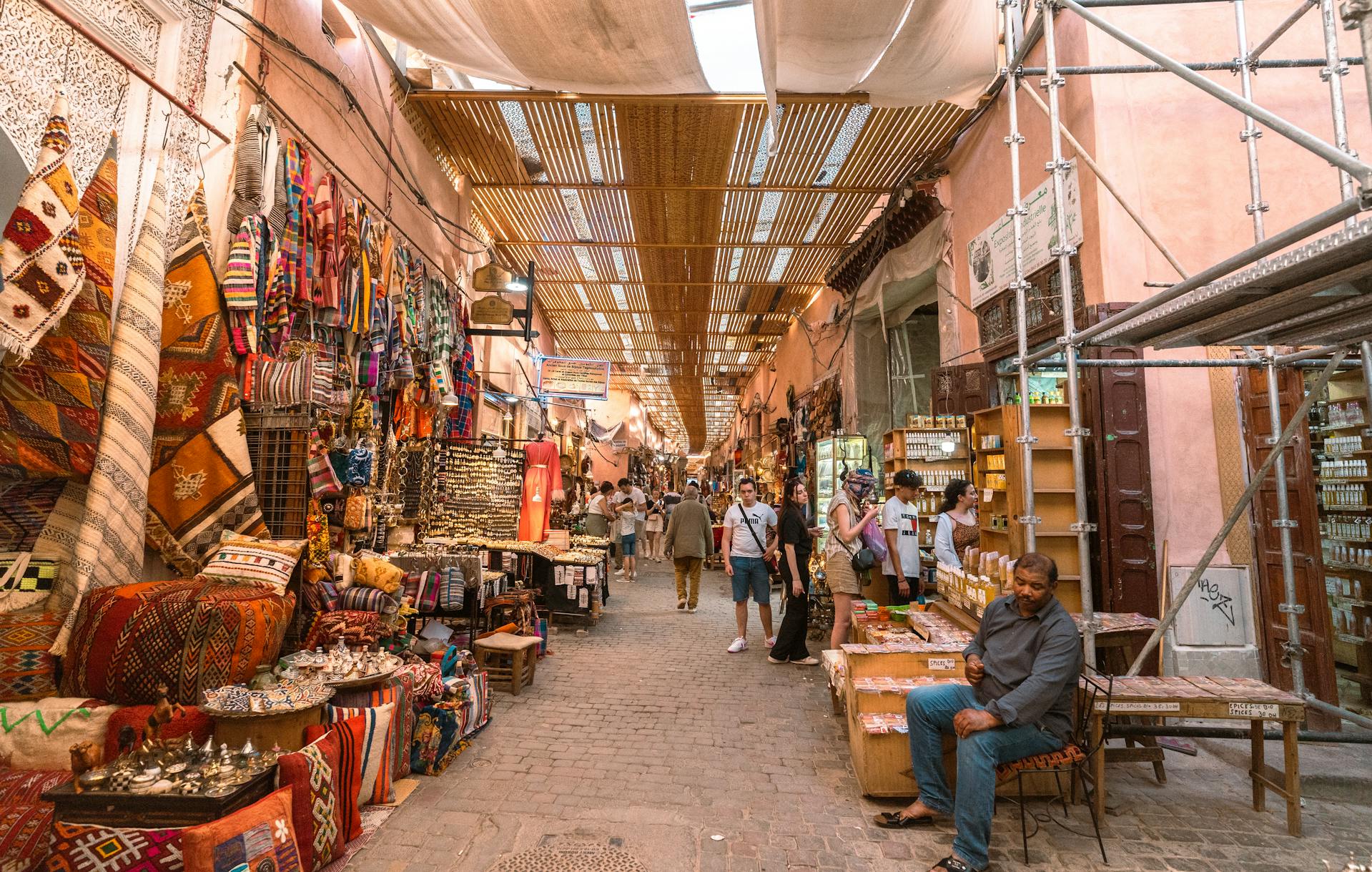
Day 2: Marrakech medina, souks, and Jemaa el-Fna
A full day in the old city: the Koutoubia minaret, Bahia Palace, the souks, and the Jemaa el-Fna square as it fills up after dark. Street food is part of Marrakech, and you do not have to avoid it. Choose busy stalls with high turnover, food cooked in front of you and served hot, and fruit you peel yourself. That is where the food and water precautions become practical rather than restrictive.
Day 3: Marrakech to Ait Benhaddou over the Tizi n'Tichka pass
The big crossing day. The road climbs to about 2,205 m on tight switchbacks, the highest major pass in North Africa. This is a motion-sickness day, not an altitude day. If you are prone to carsickness, take your medication 30 to 60 minutes before you set off, sit in the front, and keep your eyes on the horizon. You finish at the earthen kasbah of Ait Benhaddou, a UNESCO World Heritage site.
Day 4: Ait Benhaddou and Ouarzazate
A slower day to recover from the drive. Explore the ksar in morning light, visit the Ouarzazate film studios, and detour to the Fint Oasis. Desert sun is strong even in spring and autumn, so carry water, wear a hat, and use high-SPF sunscreen. Keeping ahead on fluids today sets you up for the longer desert legs to come.
Day 5: Dades Valley and the Dades Gorge
Drive the Road of a Thousand Kasbahs into the dramatic Dades Gorge, with its famous hairpin switchbacks. More winding road means more motion-sickness management: front seat, fresh air, eyes forward. The scenery, red rock and green valley floor, is some of the best on the route, so plan photo stops that double as rest breaks.
Want the health prep for Morocco?
Get a 60-second pre-trip check: the vaccines, prescriptions, and altitude/seasonality notes that change the plan — built for your exact dates.
Day 6: Todra Gorge to Merzouga, camel to a desert camp
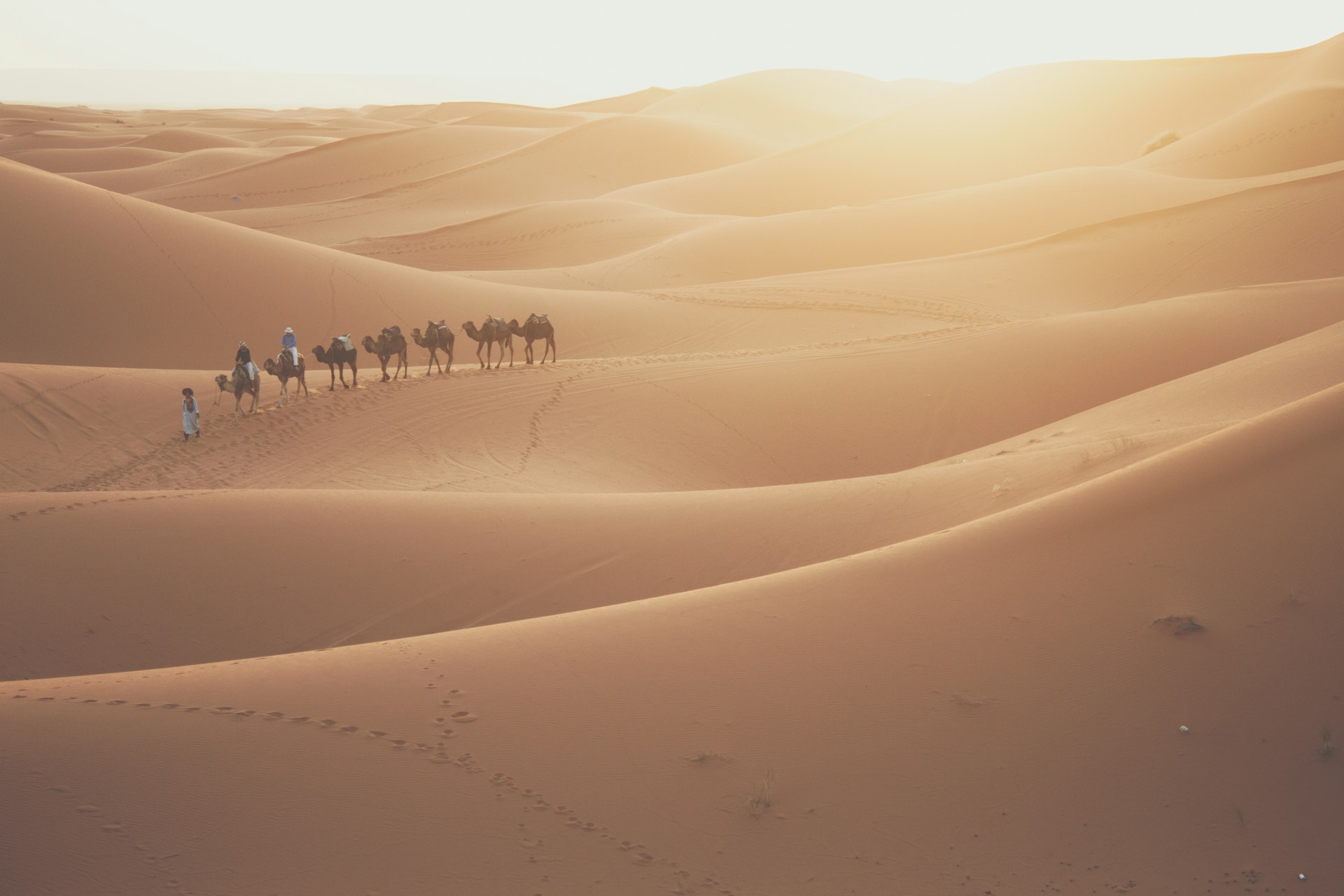
Walk the Todra Gorge in the morning, where the walls climb as high as 400 m, then continue to Erg Chebbi. Late afternoon you ride a camel out to a desert camp among the dunes. Hydrate through the whole day. A camel ride and a night in the Sahara are far easier when you are not already behind on fluids, and oral rehydration salts are worth packing for exactly this.

Day 7: Sahara sunrise and Erg Chebbi
Wake for sunrise over the dunes, then explore Merzouga and the surrounding desert at an easy pace. Heat and sun are the dominant risks now. Rest during the midday peak, cover up, and rehydrate with safe fluids. If anyone develops significant diarrhea out here, this is when the standby antibiotic and rehydration plan earn their place in your kit. CDC defines significant traveler's diarrhea as three or more loose stools in eight hours, or symptoms with fever, blood, or vomiting, and that is the threshold for starting the antibiotic rather than riding it out.
Day 8: Merzouga to the Draa Valley
Turn west through Rissani and the palm-lined Draa Valley toward Agdz or Zagora. This is a long road day across open country, so pack safe snacks and bottled water and do not count on finding what you need roadside. Break the drive at oasis towns to stretch and reset if motion sickness creeps in.
Day 9: Return to Marrakech over the Atlas
Recross the mountains back toward Marrakech, with a stop in the foothills or at a kasbah you missed on the way out. Run your motion-sickness routine one more time and split the drive if you need to. You will arrive back in the city by evening for a proper last night.
Day 10: Marrakech, last morning, depart
A final walk through the Majorelle Garden or the souks before your flight. Keep your standby medications in your carry-on, not your checked bag, in case symptoms start on the way home. Traveler's diarrhea can show up a day or two after the exposure, so the kit stays useful right through travel day.
Health prep for this trip
Start six weeks out with a travel clinic visit. CDC currently recommends most travelers be up to date on routine vaccines and consider hepatitis A and typhoid for Morocco, since both spread through contaminated food and water. Rabies is present in the country, so raise it if you will be around animals or spending time in rural areas. There is no yellow fever in Morocco, though you may need proof of vaccination if you arrive from a country with yellow fever risk. You can read the country-level picture on the Wandr Morocco destination guide.
Two weeks out, sort your travel-medicine kit. The two things that actually shape this trip are traveler's diarrhea and motion sickness. For traveler's diarrhea, most travelers should carry a standby antibiotic, Wandr uses azithromycin 500 mg once daily for three days for significant cases, plus dicyclomine for cramping, and start food and water precautions on day one. You can build the kit from the Marrakech and Morocco travel-medicine bundle. For the mountain passes, ask a provider about a motion-sickness plan and have it ready before the day-3 crossing. Morocco has been malaria-free since 2010, per WHO, so no malaria pills are needed on this route.
What to pack
Bring oral rehydration salts, alcohol-based hand sanitizer, and your standby antibiotic and anti-cramping medication. Add high-SPF sunscreen, a wide-brimmed hat, sunglasses, and a refillable bottle with a filter or purification method. Pack your motion-sickness medication somewhere you can reach it in the car, plus layers for cold desert nights and a light scarf for sun and blowing sand. A small first-aid kit with blister care, a thermometer, and any personal prescriptions in their original packaging rounds it out. Keep copies of your prescriptions and a short note on doses in case you need care abroad.
Best time to go and what to avoid
The sweet spot for combining the Atlas and the Sahara is the shoulder seasons, March to May and September to November. Midsummer brings extreme desert heat that sharply raises dehydration and heat-illness risk, especially on the Merzouga leg. Winter can be beautiful but high passes may ice or close, and desert nights get genuinely cold.
Cost expectations
Morocco runs from budget to high-end without much trouble. Riads and guesthouses, shared transport, and local food keep costs modest, while private drivers, luxury desert camps, and boutique riads push it up fast. The biggest single variable is whether you self-drive or hire a driver for the long mountain and desert legs. Many motion-sensitive travelers find the driver worth it because it lets them face forward and rest. Budget a little extra for bottled water throughout, since safe hydration is not the place to economize on this route, and for a quality desert camp on the Merzouga night, where the difference between a basic and a comfortable camp is mostly about shade, clean facilities, and reliable water. Travel insurance that covers medical care and evacuation is worth pricing in too, given how remote the desert and gorge legs are from a hospital.
Day-by-day plan
| Day | What you're doing | Health note |
|---|---|---|
| 1 | Arrive Marrakech, settle into the medina Land in Marrakech, check in near the old city, and keep the first day light. | Start food and water precautions now. Drink bottled or treated water and skip ice from unknown sources. |
| 2 | Marrakech medina, souks, and Jemaa el-Fna Koutoubia, Bahia Palace, the souks, and the main square come evening. | Street food is part of the experience. Choose busy stalls with high turnover and food served hot. |
| 3 | Marrakech to Ait Benhaddou over the Tizi n'Tichka pass Cross the High Atlas on the country's highest major road pass, then reach the kasbah of Ait Benhaddou. | The pass climbs to about 2,205 m on tight switchbacks. If you are prone to motion sickness, take your medication 30 to 60 minutes before you set off. |
| 4 | Ait Benhaddou and Ouarzazate Explore the UNESCO-listed ksar, the film studios, and the Fint Oasis. | Desert sun is intense even in cooler months. Carry water, a hat, and high-SPF sunscreen. |
| 5 | Dades Valley and the Dades Gorge Drive the Road of a Thousand Kasbahs into the Dades Gorge. | More winding road today. Sit in the front seat, face forward, and keep airflow moving if you are sensitive to motion. |
| 6 | Todra Gorge to Merzouga, camel to a desert camp Walk the Todra Gorge, then continue to Erg Chebbi and ride out to a camp among the dunes. | Hydrate through the day. A camel ride and a night in the dunes are easier when you are not already behind on fluids. |
| 7 | Sahara sunrise and Erg Chebbi Catch sunrise over the dunes, then explore Merzouga and the surrounding desert. | Heat and sun are the main risks here. Rest during midday and rehydrate with safe fluids and oral rehydration salts if needed. |
| 8 | Merzouga to the Draa Valley Drive west through Rissani and the palm-lined Draa Valley toward Agdz or Zagora. | Long road day. Pack safe snacks and bottled water so you are not dependent on roadside stops. |
| 9 | Return to Marrakech over the Atlas Recross the mountains back to Marrakech, with a stop in the foothills. | Another mountain crossing. Repeat your motion-sickness routine and break the drive if you need to. |
| 10 | Marrakech, last morning, depart A final walk through the gardens or souks before your flight home. | Keep your standby medications in your carry-on in case symptoms start on the way home. |
21% of Marrakech street food fails Morocco's own safety tests. A short azithromycin course handles the morning at the Bahia Palace if it goes sideways.
Diamox for the Toubkal climb. The one prescription most climbers wish they'd started before leaving Imlil.
Azithromycin, ondansetron, and dicyclomine for the remote desert leg of your Morocco trip. Three Rx in one visit, ready at your pharmacy before you leave Marrakech.
Frequently Asked Questions
No. Morocco has been malaria-free since 2010, per WHO, and there is no malaria transmission on the Marrakech to Sahara route. Most travelers do not need antimalarial medication for this trip. Confirm current guidance with a provider, since recommendations can change.
It is unlikely on the standard road route. The pass tops out near 2,205 m, below the roughly 2,500 m threshold where acute mountain sickness typically begins, and you do not sleep at altitude. The more common problem is motion sickness on the switchbacks. A separate Mount Toubkal trek reaches 4,165 m and is a different altitude conversation.
Per CDC, traveler's diarrhea is the most common travel-related illness, and a standby antibiotic shortens it. Wandr uses azithromycin 500 mg once daily for three days for significant cases. For cramping, dicyclomine can help. Most travelers should start food and water precautions on day one and use the antibiotic only when symptoms are significant. Speak with a provider about what is right for you.
The Marrakech to Sahara route crosses tight switchbacks at Tizi n'Tichka and through the Dades and Todra gorges. If you are prone to motion sickness, take your medication 30 to 60 minutes before you set off, sit in the front seat, face forward, keep your eyes on the horizon, and keep fresh air moving. Ask a provider which motion-sickness option fits you.
CDC currently recommends most travelers be up to date on routine vaccines and consider hepatitis A and typhoid, both of which spread through contaminated food and water. Rabies is present in Morocco, so discuss it if you will be around animals or in rural areas. There is no yellow fever in Morocco, though proof of vaccination may be required if you arrive from a country with yellow fever risk. Confirm specifics with a travel clinic.
Most travelers should stick to bottled or treated water, including for brushing teeth, and skip ice from unknown sources. Contaminated food and water are the main route for traveler's diarrhea, typhoid, and hepatitis A, so food and water precautions are the cornerstone of staying well on this trip.
Spring (March to May) and autumn (September to November) are the most comfortable for combining the Atlas Mountains and the Sahara. Midsummer brings extreme desert heat that raises the risk of dehydration and heat illness, while winter can close or ice high passes. Shoulder seasons balance the mountain and desert legs best.
Yes, many travelers self-drive, but the mountain passes and desert roads are long and winding. If you self-drive, plan shorter daily distances, carry extra water and safe snacks, and build in rest stops. A driver lets motion-sensitive travelers face forward and rest, which many find worth it on this route.
Alec Freling, MD is a board-certified emergency medicine physician and co-founder of Wandr Health with ER experience treating returning travelers.