
The 7-Day Brazilian Amazon Itinerary: The Health-Smart Version

A 7-day Amazon itinerary based in Manaus starts with a city orientation, then moves upriver to a Rio Negro jungle lodge for flooded-forest canoe trips, a caiman night walk, and a canopy-tower sunrise, before returning to Manaus to fly out. The one factor that changes the plan: malaria prophylaxis needs to start 1 to 2 days before you land, not after, since CDC data show 99% of Brazil's malaria cases occur within the Amazon region, where atovaquone-proguanil is the CDC's first-line option due to established chloroquine resistance. Wandr's physicians build the yellow fever timeline and the malaria course into the same pre-trip visit, since both need lead time a last-minute pharmacy stop can't make up.
Manaus sits at the heart of the largest rainforest on earth, but the health calculus that shapes a smart Amazon trip has less to do with the jungle's reputation for danger and more to do with a straightforward decision: what pills to start and when. This route builds a base in Manaus, then moves upriver to a Rio Negro lodge for the canoe trips, night walks, and wildlife encounters most travelers picture when they imagine the Amazon. The one health factor that changes the plan is timing: malaria prophylaxis needs to start before you land, not after, and the yellow fever vaccine needs lead time too. Get those two timelines right and the rest of the trip is mostly about sunscreen, hydration, and a good pair of boots.
Who this itinerary is for
This itinerary suits first-time Amazon travelers who want a real jungle-lodge experience without committing to a multi-week expedition. Seven days is enough time for a Manaus orientation, an upriver lodge stay with structured wildlife excursions, and a buffer day to fly out without rushing. If you have traveled in South America before but never gone north of Rio or Sao Paulo, the Amazon's health profile is genuinely different. Malaria and yellow fever are not relevant risks in Rio or the southern beach cities, but both matter here, which is why this itinerary treats them as the trip's defining planning factor rather than an afterthought.
Physically, this is a moderate-effort trip. Most days combine short boat transfers with guided walks on flat or gently uneven jungle trails, canoe paddling a guide usually handles, and one pre-dawn wake-up for a canopy-tower sunrise. Heat and humidity are the bigger daily challenge, not distance or elevation. Manaus sits near sea level and stays hot and humid year-round. Returning travelers who have handled tropical heat elsewhere will find the pace comfortable; first-timers should plan for an early bedtime most nights and pace themselves through the hottest midday hours.
The route
The route runs in one direction: Manaus, then upriver, then back. You start in Manaus itself, Brazil's Amazon gateway and one of only two cities inside the rainforest with more than a million residents, alongside Belem, per Wikipedia. A day here orients you to the region: the ornate Teatro Amazonas opera house, built during the rubber boom, and the riverside Mercado Adolpho Lisboa market are the two landmarks most itineraries build around.
From Manaus, a boat carries you first past the Encontro das Aguas, the Meeting of the Waters, where the black, warm, slow Rio Negro and the muddy, cooler, faster Solimoes River run side by side for miles without fully blending, then continues upriver to a jungle lodge. Most lodges sit somewhere between one and three hours from the city by boat: close enough for an easy transfer, far enough to feel like real rainforest. The lodge becomes your base for three full days of excursions, a flooded-forest canoe route, a night wildlife walk, a riverside community visit, and a canopy-tower sunrise, before the boat carries you back to Manaus for a final night and departure.
This out-and-back structure, rather than a multi-lodge circuit, keeps the logistics simple and keeps the malaria-risk zone contained to one clearly defined stretch of the trip, which matters when you are timing a prescription around exact travel dates.
Day-by-day plan
Day 1: Arrive Manaus, acclimatize at the edge of the rainforest
Land at Eduardo Gomes International Airport and settle into a hotel near the historic center. Manaus is hot and humid year-round, so treat today as an adjustment day rather than a sightseeing sprint. If you started atovaquone-proguanil 1 to 2 days before departure as most providers recommend, take today's dose with food at the same time you plan to take it for the rest of the trip. Rehydrate after the flight, tomorrow's boat transfer is easier if you are not still catching up on fluids.
Day 2: The Meeting of the Waters, then upriver to a Rio Negro lodge
A morning boat ride takes you out to the Encontro das Aguas, where the Rio Negro and Solimoes run side by side without mixing, before continuing upriver to your jungle lodge. This is the day to start a real dawn-and-dusk repellent routine. Mosquitoes that carry malaria bite most between dusk and dawn per CDC, and long sleeves plus a permethrin-treated shirt do more than repellent applied to skin alone. Settle into your room, most lodges provide a mosquito net, and take an easy first evening.
Day 3: Flooded-forest canoe trip and a caiman night walk
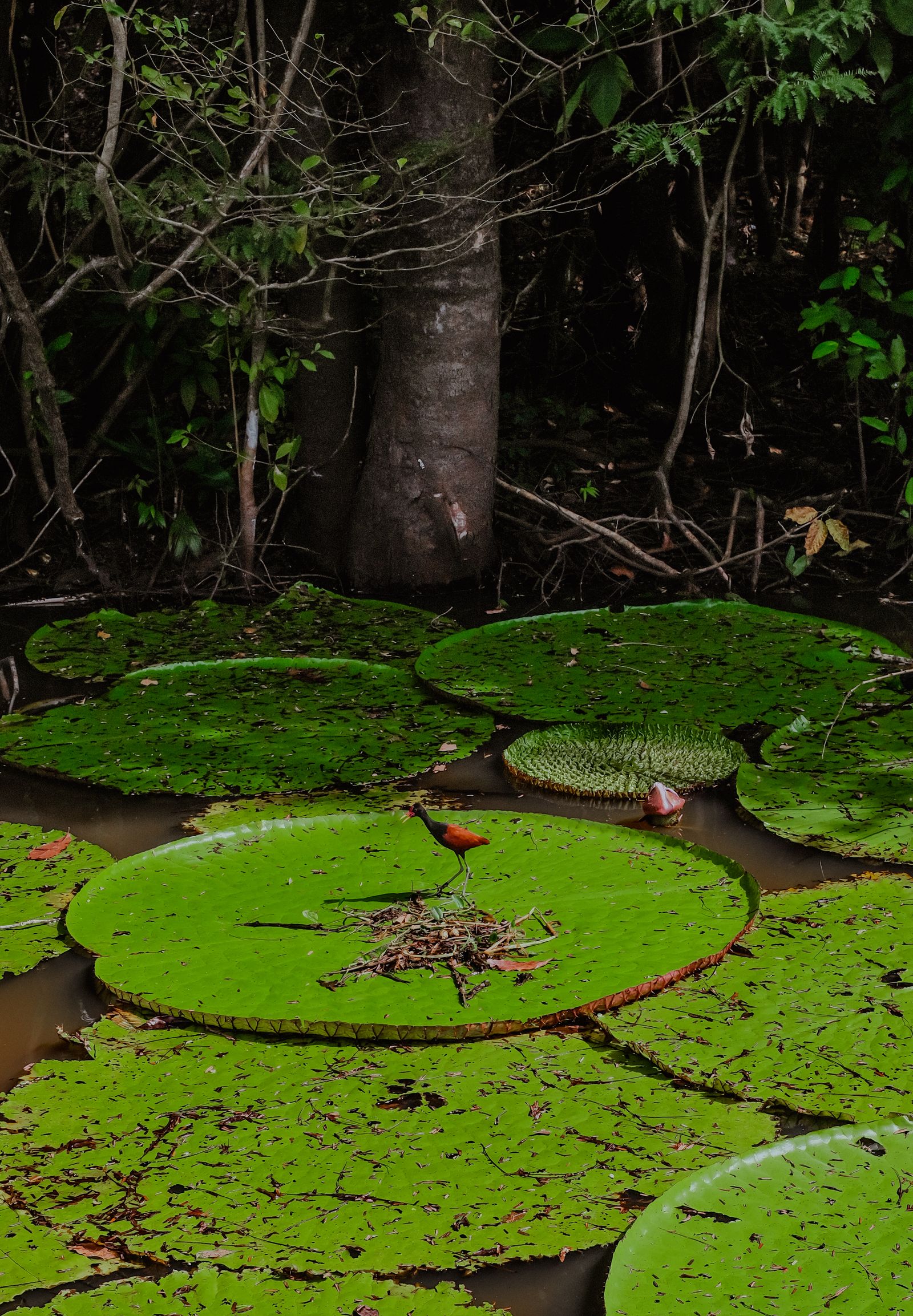
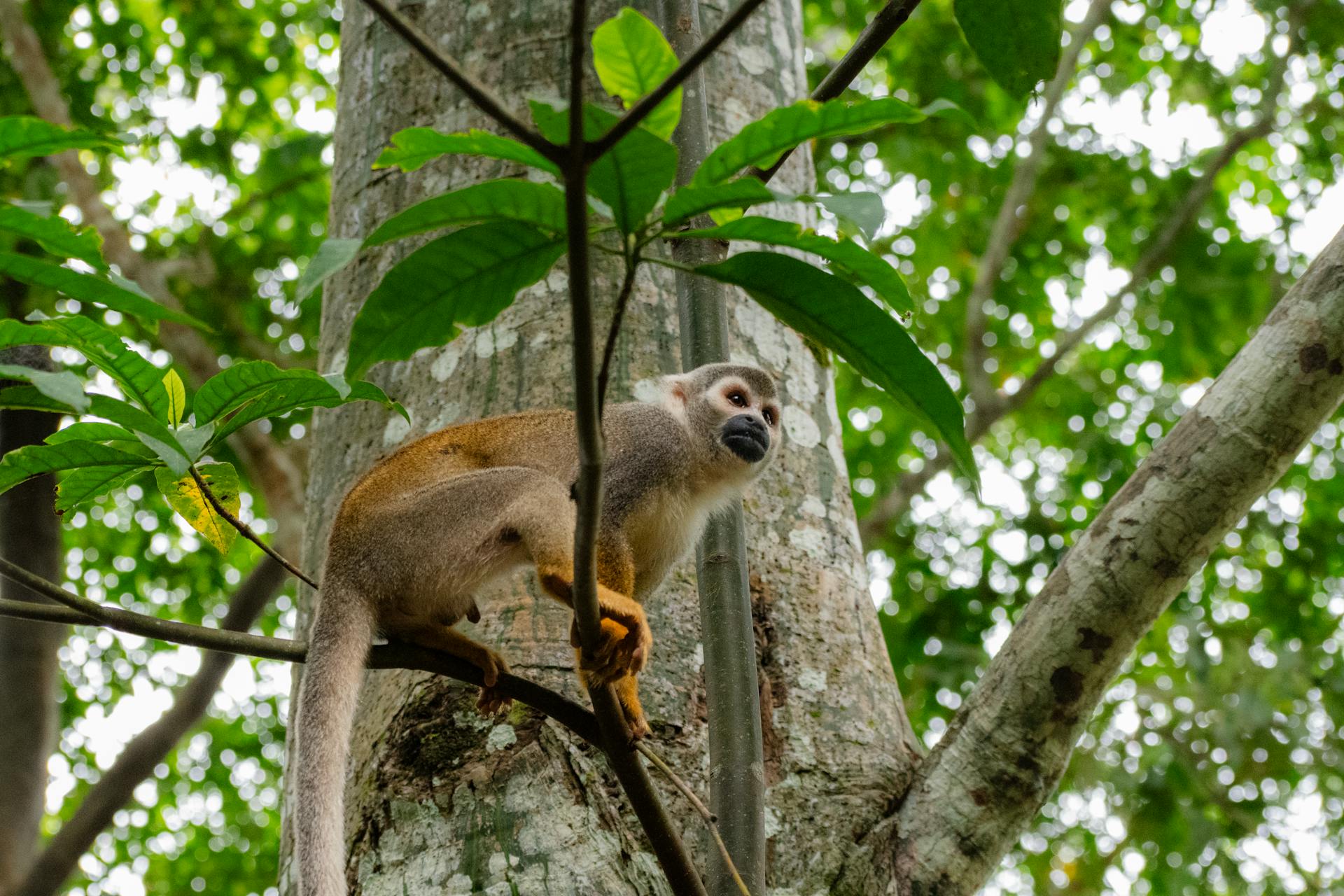
By day, a guide paddles you through the igapo, the seasonally flooded forest where the canopy grows straight out of the water, watching for monkeys, macaws, and the giant water lilies the blackwater channels are known for. After dark, a spotlight canoe trip goes looking for caiman eyes reflecting off the water. Reapply repellent before the night excursion specifically, this is peak biting time, and bring a headlamp so you are not relying on a phone flashlight.
Day 4: Riverside community visit and a Rio Negro swim
Today usually includes a visit to a riverside community, arranged respectfully through your lodge rather than as a drive-by stop, plus piranha fishing and a swim in the Rio Negro itself. The blackwater is naturally acidic and holds fewer mosquito larvae than the muddier Solimoes, which is part of why lodges treat it as swimmable, but treat any river swim with normal caution: skip it if you have open cuts, and ask your guide about current conditions first. Stick to bottled or treated water at meals, and go easy on raw or undercooked fish if you are prone to a sensitive stomach.
Want the health prep for Brazil?
Get a 60-second pre-trip check: the vaccines, prescriptions, and altitude/seasonality notes that change the plan — built for your exact dates.
Day 5: Canopy tower sunrise and a jungle trek
An early wake-up gets you to a canopy tower or walkway before sunrise, when the rainforest is loudest and wildlife is most active, then a guided trek at ground level looks for monkeys, birds, and the insects most people never think to look for. Heat and humidity peak by midday, so hydrate on a schedule rather than waiting to feel thirsty. If the jungle's nighttime soundscape, insects, frogs, distant howler monkeys, is making it hard to sleep, the hydroxyzine in your travel-medicine kit can help. Ask your provider if it is right for you before you rely on it.
Day 6: Return to Manaus, Ponta Negra, and repacking
The boat carries you back downriver to Manaus for your final night. Depending on the water level, Ponta Negra's riverside beach may be swimmable and is a relaxed way to spend the afternoon; otherwise, use the time for last-minute shopping or repacking. Keep taking atovaquone-proguanil daily, and do not stop once you are back in the city. The dose needs to continue through your exit from the malaria-risk area and for 7 days after.
Day 7: Depart Manaus
A transfer to Eduardo Gomes International Airport and a flight out closes the loop. Set a phone reminder for the last day of your post-trip atovaquone-proguanil course. Most travelers stop a few pills short by accident once the jungle part of the trip feels finished, and the medication's protection depends on finishing the full course.
Health prep for this trip
Start with timing. CDC recommends the yellow fever vaccine for travelers heading into Amazonas, ideally at least 10 days before departure, and a malaria prescription needs enough lead time to fill and start 1 to 2 days before you fly. Both mean a travel-medicine visit booked 6 to 8 weeks out is safer than waiting until the week before.
Malaria chemoprophylaxis is the centerpiece. CDC lists atovaquone-proguanil as first-line for the Brazilian Amazon because chloroquine resistance is established across the basin, and it is the medication built into the Amazon Expedition bundle alongside hydroxyzine for sleep disruption on the overnight flight and in the lodge, and clotrimazole-betamethasone for the fungal skin irritation humid jungle conditions and river crossings tend to produce. Most travelers should also ask their provider about hepatitis A and typhoid vaccines, which CDC generally recommends for Brazil given food and water safety that varies outside major hotels.
Travelers' diarrhea is not treated with a specific prescription in this bundle, so prevention does the heavy lifting: bottled or treated water, caution with buffet-style food, and skipping raw produce washed in tap water. Most cases resolve with hydration and rest; anything with high fever, blood, or several days without improvement needs medical evaluation. Speak with a provider about your full itinerary, since combining Manaus with cities outside the Amazon changes which of these recommendations actually apply to your trip. See the full Brazil destination guide for the country-wide picture beyond the Amazon portion of your route.
What to pack
- Lightweight, neutral-colored long sleeves and pants for dawn and dusk excursions
- A wide-brim hat and high-SPF sunscreen, the equatorial sun is intense even under cloud cover
- A strong EPA-registered insect repellent, plus permethrin spray for clothing and gear
- A dry bag or waterproof case for phones and cameras on boat transfers
- A headlamp for night walks and pre-dawn canopy-tower visits
- Your travel-medicine kit: atovaquone-proguanil, hydroxyzine, and clotrimazole-betamethasone, packed in a carry-on in case checked bags are delayed
- Binoculars if you have them, lodges rarely have enough to go around
- A light rain jacket regardless of season, rain is possible in the Amazon any month of the year
Best time to go and what to avoid
The Amazon does not have a single best season so much as two different experiences. Roughly December through June is the high-water season, when rising rivers flood the forest floor and canoe-based wildlife viewing into the igapo is at its best. Roughly July through November is the low-water season, when receding rivers expose hiking trails and river beaches that sit underwater the rest of the year. Neither season is objectively better, they trade off different activities.
What does not change with season: this is a rainforest, and rain is possible any month. Pack for it regardless of when you go. Heat and humidity are also constant. Manaus sits near the equator and stays hot year-round, so the biggest seasonal variable for your comfort is really how much standing water and mud you will deal with on trails versus how much of the flooded forest you will explore by canoe.
Cost expectations
Amazon jungle-lodge trips price out differently than a standard hotel-and-tours itinerary. Lodges typically sell multi-night packages that bundle boat transfers, meals, and guided excursions into one rate, so the sticker price looks higher than a comparable number of hotel nights until you account for what is included. Get a detailed inclusions list before booking. Some packages cover every excursion described here; others charge extra for night walks or the canopy tower, so confirm exactly what your rate covers before you compare lodges.
Day-by-day plan
| Day | What you're doing | Health note |
|---|---|---|
| 1 | Arrive Manaus, acclimatize at the edge of the rainforest Land in Manaus and settle into a hotel near the historic center for an easy first day. | If you started atovaquone-proguanil 1-2 days before departure, take today's dose with food. Rehydrate after the flight before tomorrow's boat transfer. |
| 2 | The Meeting of the Waters, then upriver to a Rio Negro lodge Boat out to the Encontro das Aguas confluence, then continue upriver to your jungle lodge. | Start a real dawn-and-dusk repellent routine today. Malaria-carrying mosquitoes bite most between dusk and dawn, per CDC. |
| 3 | Flooded-forest canoe trip and a caiman night walk Paddle the igapo flooded forest by day, then spotlight for caiman by canoe after dark. | Reapply repellent before the night excursion specifically, this is peak biting time. Bring a headlamp. |
| 4 | Riverside community visit and a Rio Negro swim Visit a riverside community, try piranha fishing, and swim in the Rio Negro's blackwater. | Stick to bottled or treated water at meals and go easy on raw or undercooked fish if your stomach is sensitive. |
| 5 | Canopy tower sunrise and a jungle trek Pre-dawn canopy-tower visit followed by a guided ground-level trek. | Hydrate on a schedule through the midday heat. Hydroxyzine can help if the jungle's night sounds disrupt sleep, ask your provider first. |
| 6 | Return to Manaus, Ponta Negra, and repacking Boat back to Manaus, an afternoon at Ponta Negra or last-minute shopping, and repacking. | Keep taking atovaquone-proguanil daily. The course continues through your exit from the risk area and for 7 days after. |
| 7 | Depart Manaus Transfer to Eduardo Gomes International Airport and fly out. | Set a reminder to finish your full post-trip atovaquone-proguanil course, most travelers stop a few pills short by accident. |
Frequently Asked Questions
Most travelers heading into Amazonas and the surrounding Amazon basin states should talk to a provider about malaria chemoprophylaxis. CDC data show 99% of Brazil's malaria cases occur in the Amazon region, and atovaquone-proguanil is the CDC's first-line option there because chloroquine resistance is established across the basin.
Brazil does not require proof of yellow fever vaccination at entry, but CDC recommends the vaccine for travelers heading into Amazonas, ideally at least 10 days before departure. Some neighboring countries do require a certificate if you continue your trip regionally, so confirm before booking onward travel.
The Encontro das Aguas is where the black, warm, slow-moving Rio Negro meets the muddy, cooler, faster Solimoes River just outside Manaus. Differences in temperature, density, and speed keep the two rivers visibly separate for several miles before they fully merge.
Many lodges include a supervised swim in the Rio Negro's blackwater, which is naturally more acidic and holds fewer mosquito larvae than muddier tributaries. Treat it like any river swim: skip it if you have open cuts, and ask your guide about local conditions first.
Lightweight long sleeves and pants in neutral colors, a wide-brim hat, a strong EPA-registered repellent, permethrin spray for clothing, a waterproof bag for electronics, and your travel-medicine kit. Most lodges provide mosquito nets, but a headlamp helps for night walks and pre-dawn transfers.
The Amazon has two seasons rather than one best window. Roughly December through June is the high-water season, favoring flooded-forest canoe wildlife viewing; roughly July through November is the low-water season, when hiking trails and river beaches reopen. Rain is possible year-round, so pack for it regardless.
CDC data put travelers' diarrhea attack rates at 30% to 70% over a two-week trip depending on destination. Stick to bottled or treated water, skip raw produce washed in tap water, and go easy on buffet-style food. Most cases resolve with hydration and rest; seek care for high fever, blood, or symptoms that don't improve within a couple of days.
Yes, and it changes the malaria math. CDC lists no malaria transmission in Rio de Janeiro, Sao Paulo, or Iguacu Falls, so chemoprophylaxis is only relevant for the Amazon portion of a combined itinerary. Tell your provider your full route so the prescription matches only the days you need it.
Speak with a licensed provider about routine vaccines plus hepatitis A and typhoid, which CDC generally recommends for travel to Brazil given food and water safety that varies outside major cities. Your specific itinerary and health history determine the full list.
Alec Freling, MD is a board-certified emergency medicine physician and co-founder of Wandr Health with ER experience treating returning travelers.