
The 11-Day Tour du Mont Blanc Itinerary: The Health-Smart Version
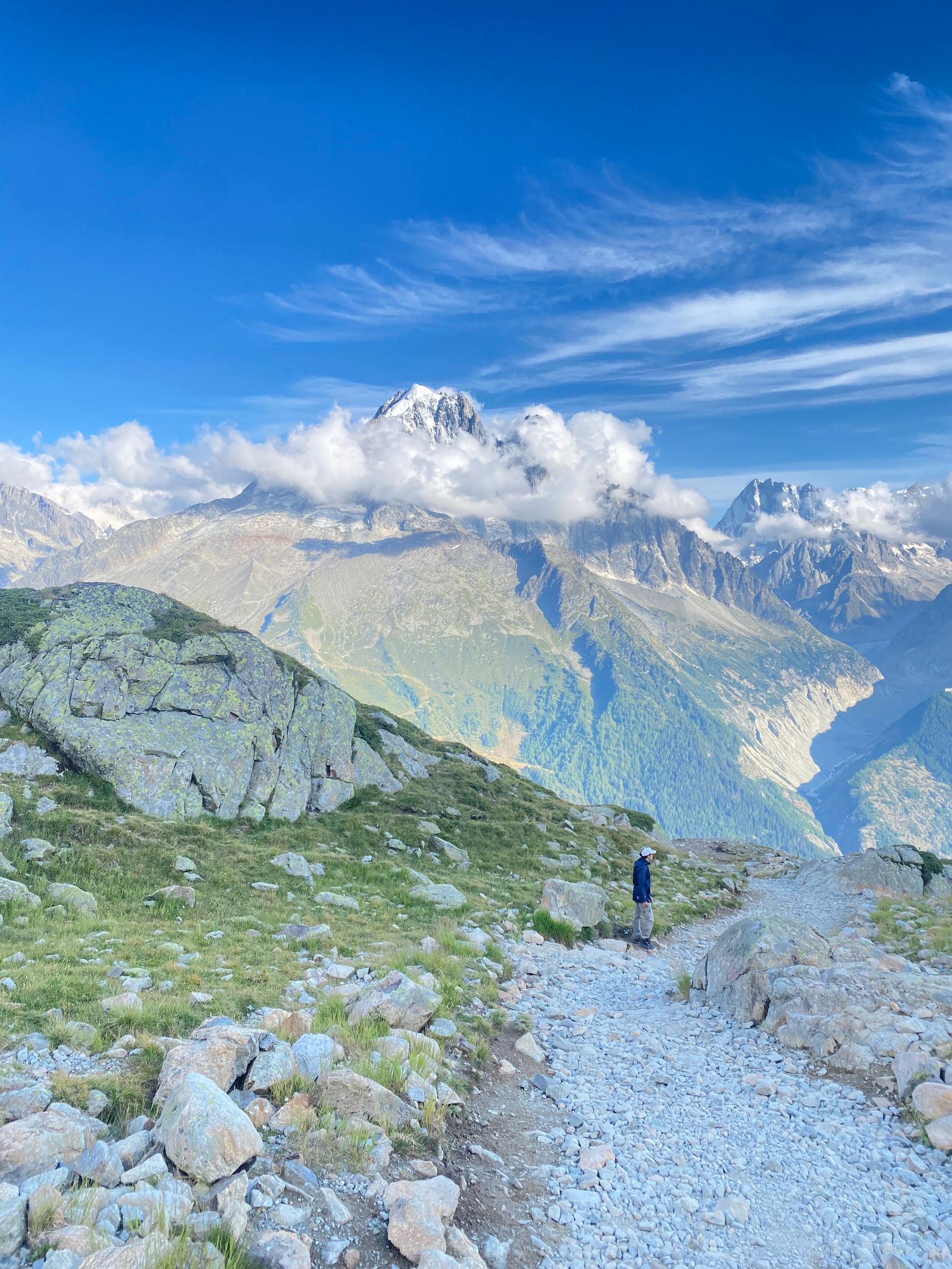
A health-smart Tour du Mont Blanc runs 11 stages counterclockwise from Les Houches through France, Italy, and Switzerland, roughly 170 km with close to 10,000 m of cumulative climbing. The health factor that actually shapes this trek is not altitude. The highest point on the classic circuit, the Grand Col Ferret, sits at 2,537 m, but you cross it in an afternoon and sleep well below it, and the CDC places the threshold for altitude illness at sleeping elevations of about 2,500 m or higher. The real risks are gut illness spread through shared refuge kitchens and dormitories, tick-borne encephalitis in the Swiss forest sections, and cumulative knee and tendon load from eleven straight days of 700 to 1,300 m ascents. Plan a self-start antibiotic, not an altitude prescription. Speak with a provider about your dates and history.
Eleven days around Mont Blanc looks, on paper, like the safest big trek in the world. Three wealthy countries, a refuge every five kilometres, a marked trail, mobile signal on most of the cols. That framing is exactly why people arrive underprepared. The Tour du Mont Blanc does not hurt trekkers with exotic disease. It hurts them with an ordinary stomach bug picked up in a shared refuge kitchen two days from a pharmacy, and with roughly 10,000 metres of cumulative descent absorbed by knees that trained only on the way up. This itinerary is the standard 11-stage counterclockwise loop, planned around those two things.
Who this itinerary is for
This is for a trekker who can walk 7 to 9 hours on consecutive days with a 7 to 10 kg pack and is comfortable on exposed but non-technical trail. You do not need mountaineering skills, a rope, or altitude experience. You do need consecutive-day endurance, because the difficulty of the TMB is cumulative rather than acute. Day four on its own is manageable. Day four after three days of climbing is what wrecks people.
First-timers should walk it in the full 11 stages rather than compressing it into seven. The shorter versions exist and they work, but they front-load descent volume onto untrained legs and remove the two genuinely restful days, stages 7 and 10, that let tendons recover. Returning trekkers, anyone over 60, and anyone with a knee or Achilles history should treat the 11-stage plan as the baseline and consider adding a rest day in Courmayeur.
The route
The classic circuit starts in Les Houches at the mouth of the Chamonix valley and runs counterclockwise, so the Mont Blanc massif stays in front of you for most of the trek. You climb south out of France over the Col du Voza and the Bonhomme cols, cross the Col de la Seigne at 2,516 m into Italy, and drop through the Vallee Veny into Courmayeur. That first Italian descent is the halfway psychological marker and the first real pharmacy since Les Houches.
From Courmayeur the trail climbs the eastern balcony of the Italian Val Ferret past Refuge Bertone and Rifugio Bonatti, then crosses the Grand Col Ferret at 2,537 m, the highest point of the classic route, into Switzerland. The Swiss section is the gentlest and the greenest: La Fouly, Champex-Lac, and the forested Bovine traverse. It is also, not coincidentally, the section where tick exposure is realistic rather than theoretical.
You re-enter France over the Col de Balme at 2,191 m and finish along the Aiguilles Rouges balcony, climbing the iron ladders below the Tete aux Vents, traversing to La Flegere, and closing the loop over Le Brevent back down to Les Houches. Total: roughly 170 km and close to 10,000 m of cumulative climbing, spread across three countries and eleven refuge nights.
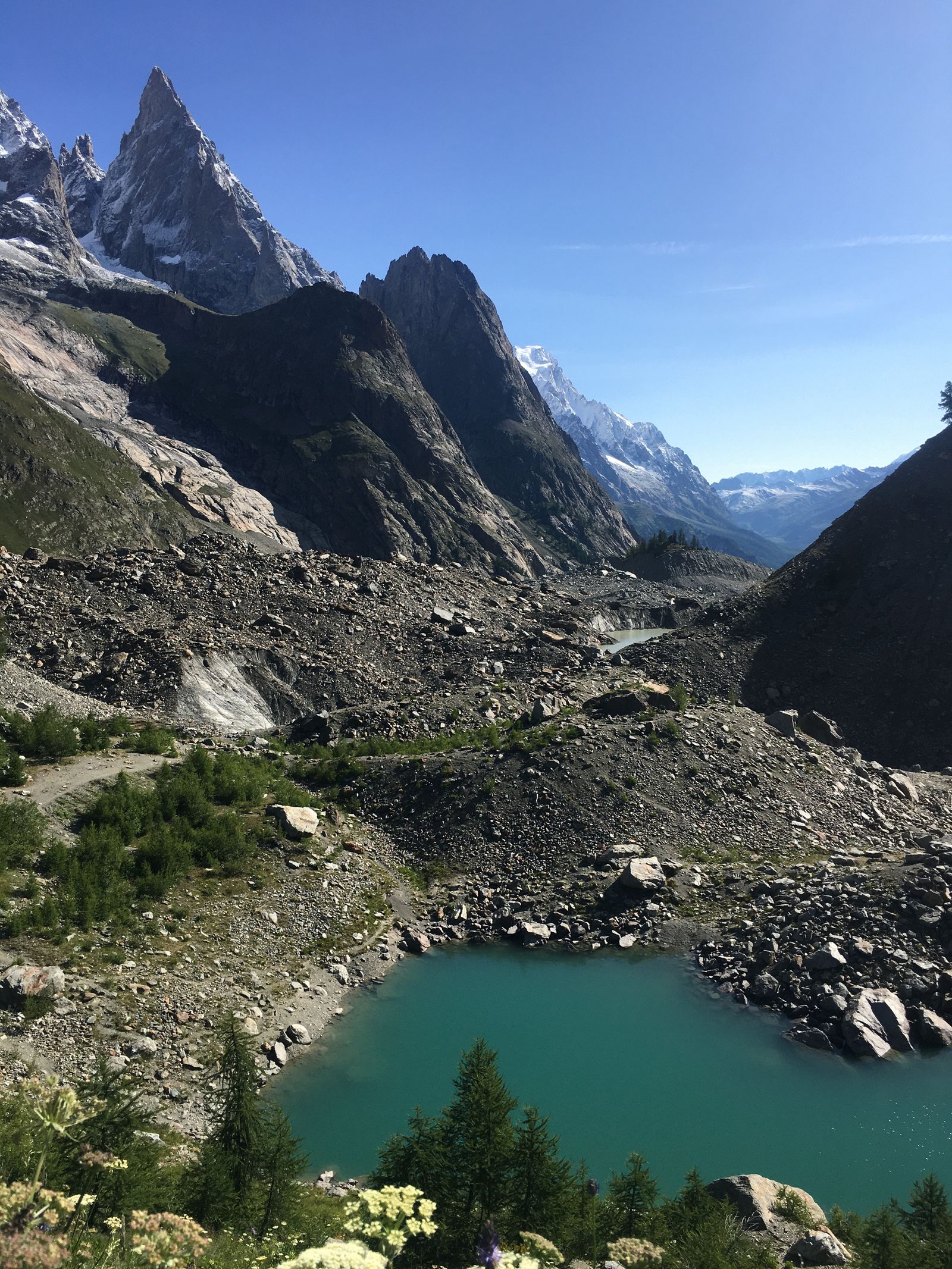
Day-by-day plan
Day 1: Les Houches to Les Contamines
Sixteen kilometres, about 646 m of climbing and 633 m of descent over the Col du Voza at 1,653 m. It is the gentlest full stage on the loop, which makes it the one people rush. Do not. Day one is a calibration day: find out how your boots behave loaded, how your poles are set, and where your pack rubs. The Bellevue cable car cuts the first two hours of forested climbing if you would rather save the legs.
Blister management starts here. A hot spot on day one becomes an open blister by day three and a limp by day five, at which point your gait changes and your knees take the difference. Stop and tape.
Day 2: Les Contamines to Les Chapieux
Eighteen kilometres and roughly 1,316 m of climbing over the Col du Bonhomme and the Col de la Croix du Bonhomme, then a 2.5 to 3 hour descent to Les Chapieux. This is the first big day and the first real weather exposure. Snow patches survive on these cols well into July, and if you are walking in late June or early July, lightweight traction spikes belong in your pack.
Wet boots plus a long descent is the textbook setup for macerated skin and blisters. Change into dry socks at the col even if it costs you ten minutes.
Day 3: Les Chapieux to Rifugio Elisabetta
Fifteen kilometres and about 1,004 m of ascent over the Col de la Seigne at 2,516 m, crossing into Italy. The descent to Rifugio Elisabetta takes about an hour. This is where the trek starts feeling remote, and where the first practical health decision shows up: a new country means a new kitchen, a new water source, and a new dormitory.
Refuge dining is communal by design. Dinner is cooked in batches for 40 to 80 people, breakfast rotates the same dormitory through one bathroom, and water comes from a shared tap. Wash your hands before every meal, not only after the toilet. That single habit is the highest-yield thing you can do on this trek.
Day 4: Rifugio Elisabetta to Courmayeur
Eighteen kilometres, 460 m up and roughly 1,560 m down past Lac Combal and around the Mont Favre spur at 2,430 m. On paper it is an easy day. Physiologically it is the hardest one on the circuit, because descending 1,500 m loads the patellar tendon and quadriceps eccentrically in a way that climbing never does.
Use both poles, shorten your stride, and take the descent in deliberate segments rather than trying to make time. If you are going to develop anterior knee pain on this trek, it will most likely announce itself somewhere on this descent.
Day 5: Courmayeur to Rifugio Bonatti
Twelve kilometres and about 860 m of climbing through Refuge Bertone onto the Italian Val Ferret balcony, finishing at Rifugio Bonatti. This is the shortest climb of the loop and one of the best refuge nights on the trail.
Courmayeur is a logistical checkpoint worth using. It is your last full pharmacy for roughly three days, and it is the natural place to insert a rest day if your knees flagged on yesterday's descent. Restock blister care, tape, and sunscreen here.
Want the health prep for France?
Get a 60-second pre-trip check: the vaccines, prescriptions, and altitude/seasonality notes that change the plan — built for your exact dates.
Day 6: Rifugio Bonatti to La Fouly
Twenty kilometres, 895 m up and 1,410 m down, crossing the Grand Col Ferret at 2,537 m from Italy into Switzerland. This is the high point of the classic circuit and the moment most trekkers ask about altitude sickness.
The honest answer is that this pass is not an altitude problem for most people. CDC guidance places the risk of altitude illness at sleeping elevations of roughly 2,500 m (8,000 ft) or higher, and you cross the Grand Col Ferret in an afternoon and sleep in La Fouly, well below it. Expect to be breathing hard at the col. Do not expect acute mountain sickness, and do not carry an altitude prescription you were not advised to carry. If your booking puts a night near that threshold, or you have a personal history of acute mountain sickness, raise it with a provider before you leave.
Day 7: La Fouly to Champex-Lac
Fifteen kilometres with only 420 m of climbing through the pastoral Swiss Val Ferret. The shortest and easiest stage, with one brief exposed section protected by a chain. Use the light day to actually recover: elevate the legs, eat properly, sleep.
This is also the tick stage. The Swiss section is forested, low, and green, which is exactly the habitat CDC describes for tick-borne encephalitis exposure in endemic Europe. Switzerland is TBE-endemic, CDC reports tick activity in Central Europe peaking in April and May and again in September and October, and CDC has documented a fatal case in an unvaccinated US traveler to Switzerland. Do a proper tick check at the end of the day: ankles, behind the knees, waistband, hairline.
Day 8: Champex-Lac to Col de la Forclaz
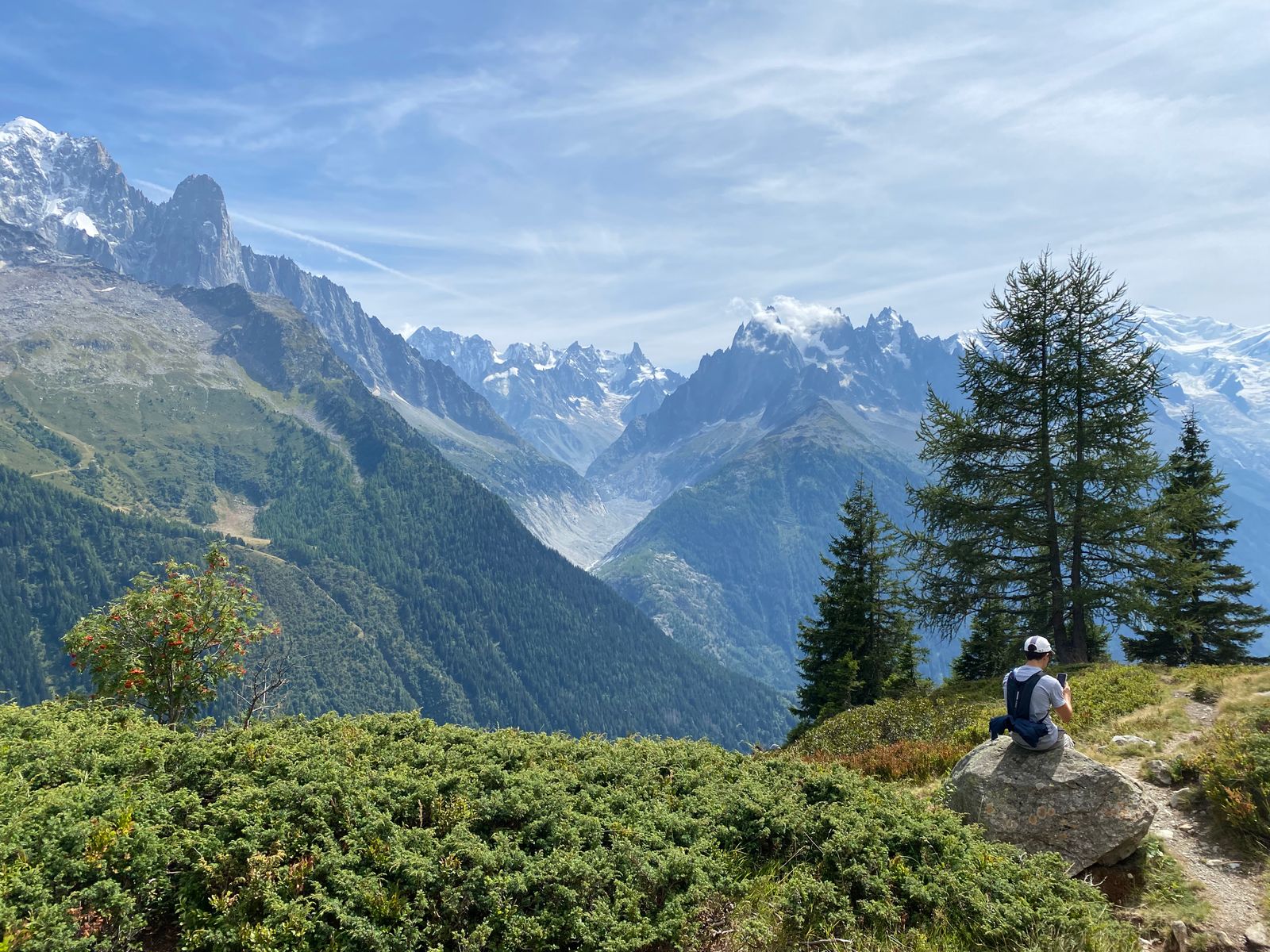
Sixteen kilometres and about 742 m of climbing via the Alp Bovine route, or the Fenetre d'Arpette variant which tops out at 2,665 m with roughly 1,199 m of ascent and 1,139 m of descent. Arpette is the more spectacular option and the harder one, with a long steep boulder descent.
This is a clinical decision as much as a scenic one. If you are already managing a sore knee, a tender Achilles, or a blister that has changed how you walk, take Bovine. Arpette on compromised legs is how people end their trek on day eight.
Day 9: Col de la Forclaz to Tre-le-Champ
Thirteen kilometres, 1,069 m up and 1,178 m down over the Col de Balme at 2,191 m, crossing back into France, with a descent along the Aiguillette des Posettes. The views open onto the full Chamonix valley here and it is one of the most satisfying days on the loop.
Nine days in, accumulated fatigue starts showing up as sloppy foot placement rather than as breathlessness. The most common trekking injury on this circuit is a rolled ankle on a tired descent, not anything dramatic. Keep the poles out and stop for food before you feel like you need it.
Day 10: Tre-le-Champ to Refuge La Flegere
Eight kilometres and 733 m of climbing, including the iron ladders below the Tete aux Vents at 2,132 m. Walking counterclockwise means you climb the ladders rather than descend them, which is significantly easier and safer.
Short day, big sun. The Aiguilles Rouges balcony is open and exposed, and ultraviolet intensity increases with elevation. Reapply sunscreen at the top of the ladders and again at the refuge, and wear real sunglasses. Glare off residual snowfields on a clear afternoon at 2,100 m is not a trivial exposure.
Day 11: Refuge La Flegere to Les Houches
Seventeen kilometres, 772 m up and roughly 1,546 m down over Le Brevent, past Refuge Bellachat, closing the loop into Les Houches. It is the longest descent of the trek on the most tired legs of the trek.
If your knees are finished by the summit of Le Brevent, taking the cable car down into Chamonix is a reasonable decision, not a failure. Eleven days of cumulative eccentric loading is a real physiological stress, and finishing on a damaged knee costs you weeks afterward.
Health prep for this trip
Start with vaccines around eight weeks out. CDC advises that all international travelers be up to date on routine vaccinations and specifically that everyone traveling internationally be fully vaccinated against measles with MMR. If your trip includes time in forested, lower-elevation Switzerland, or you are traveling in the spring or autumn tick peaks, ask a provider about tick-borne encephalitis vaccination. CDC recommends it for travelers to endemic areas with extensive tick exposure and notes it may be considered for others engaging in outdoor activities in tick habitat. The series takes weeks, so it is not a last-minute decision.
Prescriptions come next, around two weeks out. The practical kit for this route is azithromycin for bacterial traveler's diarrhea, dicyclomine for the abdominal cramping that usually rides along with it, and prescription-strength ibuprofen for the musculoskeletal load. Wandr's Tour du Mont Blanc travel medicine bundle covers all three in a single visit, with a licensed provider reviewing your health history and sending the prescriptions to your pharmacy. You can also read more about azithromycin for traveler's diarrhea and the country-level picture on the France destination guide.
The reason to carry rather than buy is geographic. CDC classifies France, Italy, and Switzerland as low-risk destinations, and that is accurate at a country level. It is not the relevant unit of analysis when you are sleeping in a 60-bed dormitory above Courmayeur. Attack rates for traveler's diarrhea run from 30% to 70% over a two-week period in higher-risk destinations, and while Western Europe sits far below that band, the refuge environment concentrates exposure in a way a hotel trip does not. CDC also notes that appropriate antibiotics shorten bacterial traveler's diarrhea by roughly one to two days. On a trek where every refuge night is pre-booked and non-transferable, one to two days is the difference between finishing and bailing to a valley bus.
Most travelers should plan a self-start approach: carry the antibiotic, use it only for genuinely incapacitating diarrhea, and seek care if symptoms persist beyond 24 to 36 hours or include high fever, bloody stool, or signs of dehydration. Speak with a provider about what is appropriate for your history.
What to pack
- Broken-in boots plus a second pair of dry socks accessible without unpacking
- Trekking poles, both of them, used on every descent
- Blister kit: tape, hydrocolloid dressings, small scissors
- Your prescriptions split between pack and daypack so a lost bag does not end the trip
- Oral rehydration salts, which matter more than any single medication if you do get sick
- Sunscreen SPF 30 or higher, lip balm with SPF, real sunglasses
- Fine-tipped tweezers for tick removal
- Lightweight traction spikes if walking before mid-July
- Rain shell and warm layer, because the cols hold weather even in August
- Sleeping bag liner, required by most refuges
Best time to go and what to avoid
The seasonality question on the TMB is mostly a weather and logistics question rather than a disease question, which is what makes it different from a tropical trek. There is no malaria window, no dengue season, no yellow fever certificate. What shifts month to month is snow on the high cols, afternoon thunderstorm frequency in July and August, and tick activity, which CDC describes as peaking in Central Europe in April and May and rising again in September and October. Early September is the sweet spot for most trekkers: settled weather, thinner crowds than August, refuges still open.
Cost expectations
Budget roughly 90 to 140 euros per night for half-board in a refuge dormitory, which covers your bed, dinner, and breakfast, and lands somewhere around 1,000 to 1,500 euros for eleven nights before flights, transfers, and the occasional hotel night in Courmayeur or Chamonix. Guided packages run considerably higher. The prescription side is comparatively small: Wandr's Tour du Mont Blanc visit is $89 for azithromycin alone or $129 for the three-medication trek pack, which is materially less than a travel clinic appointment for the same prescriptions.
Day-by-day plan
| Day | What you're doing | Health note |
|---|---|---|
| 1 | Les Houches to Les Contamines over the Col du Voza 16 km, about 646 m up and 633 m down, crossing the Col du Voza at 1,653 m into the Montjoie valley. | Treat day one as a calibration day. Blisters that start here compound for ten more days, so stop and tape hot spots the moment you feel them. |
| 2 | Les Contamines to Les Chapieux over the Bonhomme cols 18 km and roughly 1,316 m of climbing over the Col du Bonhomme and the Col de la Croix du Bonhomme, the first genuinely big day. | Snow patches persist here into mid-July. Wet boots and a long descent are the classic setup for maceration and blisters, so change socks at the col. |
| 3 | Les Chapieux to Rifugio Elisabetta over the Col de la Seigne 15 km and about 1,004 m of ascent, crossing into Italy at the Col de la Seigne at 2,516 m. | Your first Italian refuge means new kitchen, new water source, new dormitory. Wash hands before every meal, not just after the toilet. |
| 4 | Rifugio Elisabetta to Courmayeur 18 km with only 460 m of climbing but roughly 1,560 m of descent past Lac Combal and the Mont Favre spur into Courmayeur. | The single hardest day on your knees. Descending 1,500 m loads the patellar tendon far more than climbing does, so use poles and shorten your stride. |
| 5 | Courmayeur to Rifugio Bonatti 12 km and about 860 m up through Refuge Bertone into the Italian Val Ferret, the shortest ascent day on the loop. | Courmayeur is your last full pharmacy for roughly three days. Restock blister care here if you did not carry enough in. |
| 6 | Rifugio Bonatti to La Fouly over the Grand Col Ferret 20 km, 895 m up and 1,410 m down, crossing the highest point of the classic circuit at 2,537 m into Switzerland. | The high point of the trek, but you cross it in an afternoon and sleep far below it in La Fouly. Expect breathlessness at the col, not acute mountain sickness. |
| 7 | La Fouly to Champex-Lac through the Swiss Val Ferret 15 km with only 420 m of climbing, the shortest and gentlest stage, through pastoral Swiss valley villages. | This is forested, low-elevation Switzerland, which is where tick exposure is realistic. Check ankles, waistband, and hairline at the end of the day. |
| 8 | Champex-Lac to Col de la Forclaz over Alp Bovine 16 km and about 742 m of climbing on the Bovine route, or the harder Fenetre d'Arpette variant at 2,665 m. | If you are already nursing a knee or an Achilles, take Bovine. The Arpette variant adds a long steep boulder descent. |
| 9 | Col de la Forclaz to Tre-le-Champ over the Col de Balme 13 km, 1,069 m up and 1,178 m down, back into France over the Col de Balme at 2,191 m. | Day nine is where accumulated fatigue shows up as sloppy footing. Most trekking injuries on the loop are ankle rolls on tired descents. |
| 10 | Tre-le-Champ to Refuge La Flegere via the ladders 8 km and 733 m of climbing, the shortest day, including the iron ladders below the Tete aux Vents at 2,132 m. | Short day, high sun exposure on the Aiguilles Rouges balcony. Ultraviolet intensity climbs with elevation, so reapply sunscreen at the top of the ladders. |
| 11 | Refuge La Flegere to Les Houches over Le Brevent 17 km, 772 m up and roughly 1,546 m down over Le Brevent and past Refuge Bellachat to close the loop. | The longest descent of the trek on the most tired legs. If your knees are done, the Brevent cable car down to Chamonix is a reasonable call. |
Frequently Asked Questions
On the classic route, most trekkers do not. The highest point of the standard circuit is the Grand Col Ferret at 2,537 m, and the Col des Fours and Fenetre d'Arpette variants top out at 2,665 m, but all of these are crossed during the day. CDC guidance places the risk of altitude illness at sleeping elevations of roughly 2,500 m (8,000 ft) or higher, and the TMB refuges sit below that. If your specific booking puts a night near or above that threshold, or you have a personal history of acute mountain sickness, that is worth raising with a provider before you go.
Gastrointestinal illness from the refuge environment is the practical answer. France, Italy, and Switzerland are all low-risk countries by CDC criteria, but the trek concentrates 40 to 80 trekkers into shared dining rooms, communal taps, and single-bathroom dormitories every night for eleven nights. Anything circulating on the trail moves quickly through that setup. Most travelers should plan hand hygiene deliberately and carry a self-start antibiotic rather than assuming a Western European destination means no gut risk.
Azithromycin 500 mg once daily for three days is a standard self-treatment regimen for bacterial traveler's diarrhea and covers Campylobacter, which fluoroquinolones increasingly miss. CDC guidance notes that appropriate antibiotics shorten bacterial traveler's diarrhea by roughly one to two days when the pathogen is susceptible. On a hut-to-hut trek where a lost day means a refuge booking you cannot rebook, that difference matters. Which antibiotic is right for you depends on your history and allergies, so this is a provider conversation.
It depends on your itinerary and your risk tolerance. Switzerland is TBE-endemic, and CDC recommends the vaccine for travelers to endemic areas who will have extensive tick exposure through planned outdoor activities, and notes it may be considered for others doing outdoor activities in tick habitat. CDC also reports that tick activity in Central Europe peaks in April and May and rises again in September and October. The TMB's realistic exposure is the forested, lower-elevation Swiss stages around La Fouly and Champex-Lac. CDC has documented a fatal TBE case in an unvaccinated US traveler to Switzerland, so this is not a theoretical risk. Discuss it with a provider well ahead of your trip, since the vaccine requires a multi-dose series.
The circuit covers roughly 170 km with close to 10,000 m of cumulative ascent across 11 stages, which averages out to 13 to 20 km and 700 to 1,300 m of climbing per day, typically 7 to 9 hours on trail. The limiting factor for most trekkers is not aerobic fitness, it is cumulative descent load on knees and Achilles tendons over consecutive days. Training that includes downhill volume, not just uphill, is the single most useful preparation.
Most trekkers go counterclockwise from Les Houches, which keeps the Mont Blanc massif in front of you and puts the iron ladders below the Tete aux Vents on the ascent rather than the descent. Clockwise means quieter mornings on trail but descending those ladders, which is harder and less forgiving if you are tired or managing a knee problem. The 11 stages in this itinerary are counterclockwise.
The refuge season runs roughly late June to mid-September, and the supporting infrastructure follows it. The Les Chapieux shuttle, for example, typically runs from mid-June to mid-September. Snow lingers on the Col de la Croix du Bonhomme and the Col des Fours variant well into July, so early-season trekkers should carry traction. September usually brings the most settled weather and fewer thunderstorms than August.
The practical trek kit for this route is azithromycin for bacterial traveler's diarrhea, dicyclomine for the cramping that often comes with it, and prescription-strength ibuprofen for the back-to-back 1,000 m climbing and descending days. Wandr's Tour du Mont Blanc travel medicine bundle covers all three in one visit. What is appropriate for you depends on your health history, current medications, and allergies, so a licensed provider reviews every request.
Farther than most trekkers expect. Chamonix and Courmayeur have full pharmacies, and Champex-Lac and La Fouly have limited options, but the high refuge nights between them can leave you a full day of trekking plus a valley transfer from a real pharmacy. Refuges stock basic first aid, not prescriptions. That is the structural argument for carrying your prescriptions in rather than planning to buy them en route.
CDC advises that all international travelers be up to date on routine vaccines, and specifically that everyone traveling internationally be fully vaccinated against measles with MMR. Beyond that, France, Italy, and Switzerland do not carry the tropical vaccine requirements you would see in Southeast Asia or sub-Saharan Africa. Tick-borne encephalitis is the one destination-specific vaccine worth discussing for the Swiss forest sections. Check the current CDC destination pages and speak with a provider at least a month out.
The Wandr Team is the editorial group at Wandr Health; every article is reviewed by a licensed clinician before publication.