
The 8-Day South Korea Itinerary: Seoul and Jeju, The Health-Smart Version

An 8-day South Korea itinerary splits cleanly into 4 nights in Seoul and 3 on Jeju Island, connected by a roughly one-hour domestic flight. It needs no malaria pill (CDC limits the country's small vivax malaria zone to rural areas near the DMZ) and no altitude prep (Hallasan tops out at about 1,947 m, under the roughly 2,500 m threshold where acute mountain sickness becomes a real concern). What it does need is a plan for the clock and the food. Seoul runs 13 to 16 hours ahead of the continental US, and CDC's 2026 Yellow Book puts eastbound adaptation at about 1 hour per day, so this plan front-loads easy daylight-heavy Seoul days. CDC groups South Korea with Japan as a lower-risk travelers' diarrhea destination, but night markets and Jeju's raw seafood still justify carrying azithromycin plus an antispasmodic. Every article is reviewed by a licensed clinician before publication.
South Korea is one of the easier countries in Asia to travel healthily, and this itinerary is honest about that. There is no malaria pill to take, no yellow fever certificate to carry, no altitude to acclimatize to, and the tap water in Seoul is treated. What actually shapes an eight-day Seoul-and-Jeju trip is less dramatic and more practical: a 13 to 16 hour eastbound clock shift that CDC's 2026 Yellow Book says the body corrects at only about an hour a day, and a food culture built around late-night markets and raw seafood. This plan puts the four Seoul days first, where light and walking do the jet lag work, then flies south to Jeju once you are functional enough to drive, hike, and eat well. The medicine kit is small on purpose.
Who this itinerary is for
First-time visitors who want the two halves of Korea that matter most to a short trip: the capital and the island. The pace is moderate. Seoul days are long on foot (15,000 to 20,000 steps is normal) but flat, and the Jeju days mix a sunrise climb, one optional big hike, and coastal walking. No technical skills are required. Anyone comfortable walking most of a day in a city will manage it.
Returning travelers who have done Seoul before may want to swap day 3's DMZ tour for a Bukhansan National Park hike or a KTX day trip, and should treat day 6 as a committed Hallasan summit day rather than the shorter oreum option. The health profile stays the same either way: manage the time zone early, carry a travelers' diarrhea kit you will probably never open, and skip the drugs this trip does not need.
The route
The route is a simple two-node design: Seoul for nights 1 through 4, Jeju for nights 5 through 7, with domestic flights between Gimpo Airport and Jeju that take about an hour and run dozens of times a day. Incheon International handles the long-haul legs; Gimpo, closer to the city center, handles Jeju.
Seoul first is a deliberate health choice, not just a geographic one. Eastbound jet lag from North America is among the largest shifts in international travel, and CDC's Yellow Book describes the eastbound direction as the harder one to adjust to because the body's intrinsic clock runs slightly longer than 24 hours and prefers to delay rather than advance. A city with abundant morning light, flat walking, good coffee, and no early-morning commitments is the right place to spend the first four days of that adjustment. Day 2's palace-and-market loop, day 3's escorted DMZ tour, and day 4's Namsan climb are all built around daytime light exposure and a bedtime that lands close to local midnight.
Jeju follows once you are functional. The island's rental-car logistics, a sunrise climb, and an optional long hike all go better on a body that has shifted most of the gap. The east coast comes first (Seongsan, Seopjikoji), then Hallasan or the oreum trails in the island's center, then the south coast around Seogwipo, before a morning flight back through Seoul to connect home. Total driving on Jeju is modest, rarely more than 90 minutes in a day.

Day-by-day plan
Day 1: Arrive Incheon, settle into Seoul, chase daylight
Most flights from the US land in Incheon in the late afternoon or evening local time, which is actually a gift for eastbound jet lag: you arrive close enough to local bedtime to make the first night work. Take the AREX express train (about 45 minutes to Seoul Station) or a limousine bus to your neighborhood; Jongno, Myeongdong, and Insadong all put you walking distance from day 2. Drop bags, then walk. Cheonggyecheon stream is a flat, well-lit, 10 kilometer urban walkway that runs right through downtown and is ideal for the first evening.
The rule for tonight is simple and evidence-based: no long nap, eat a light dinner, and go to bed at a normal local hour even if it feels early. CDC's Yellow Book lists staying awake through the local day, maximizing daylight, and short naps of 20 to 30 minutes at most as the strategies with real evidence behind them. If you brought hydroxyzine for sleep onset, tonight and tomorrow night are the only nights it is likely worth considering, and only after talking through the next-day grogginess tradeoff with a provider.
Day 2: Gyeongbokgung Palace, Bukchon Hanok Village, Gwangjang Market
Wake early (you will anyway), get outside into morning light, and be at Gyeongbokgung for the changing of the guard. The palace grounds are broad and mostly unshaded, so carry water. Walk east to Bukchon Hanok Village's tiled-roof alleys and down into Insadong for lunch. The afternoon is open; the National Folk Museum sits inside the palace grounds if the weather turns.
Evening is Gwangjang Market, Seoul's most famous food alley, and your first meaningful travelers' diarrhea exposure of the trip. CDC's Yellow Book explicitly groups South Korea with Japan as a lower-risk destination within Asia, so the odds are in your favor, but a night market is still a night market. Choose stalls where food is cooked to order in front of you and turnover is fast. The bindaetteok (mung bean pancakes) and tteokbokki are cooked hot; the raw beef tartare (yukhoe) is a personal call. If a meal does produce fever plus several loose stools over the next day, that is the moderate case CDC's guidance says an antibiotic is for, and azithromycin 500 mg daily for three days is the regimen. Dicyclomine covers the cramping.
Day 3: DMZ day tour from Seoul
A guided DMZ tour is the one day on this trip that touches a real, if small, malaria zone, and it is worth understanding why it still does not change your medication list. CDC notes a limited malaria risk in South Korea, caused only by Plasmodium vivax, in rural areas of northern Gyeonggi, Gangwon, and Incheon near the Demilitarized Zone, mainly from March through December. The escorted tour itinerary (the Third Infiltration Tunnel, Dora Observatory, Imjingak Park) keeps you in vehicles and visitor facilities for a few daytime hours. That is not the extended rural or overnight exposure for which prophylaxis is considered. Wear repellent in the warm months, and if you develop an unexplained fever within a year of returning, tell your clinician you visited the DMZ area so vivax stays on the list.
Tours return to Seoul by mid to late afternoon. Keep the evening quiet: Seongsu's converted-warehouse cafes or Ikseon-dong's hanok lanes suit a body that is still two-thirds of the way through the clock shift.
Day 4: Namsan, Seoul City Wall, and a Hongdae or Seongsu evening
By day 4 most eastbound travelers have closed roughly three to four hours of a 13 to 16 hour gap, which is exactly what the CDC's 1-hour-per-day estimate predicts. That is enough to feel human, not enough to feel normal, so today keeps the effort in the morning. Walk up Namsan through the park paths (or take the cable car) to N Seoul Tower for the full city panorama, then follow a section of the Seoul City Wall trail back down. It is uphill, in daylight, and finishes by lunch, which is precisely the pattern that advances a body clock.
Cap caffeine by mid-afternoon. CDC's Yellow Book suggests 200 mg of caffeine every four hours during daylight for alertness with a stop about six hours before bedtime. Spend the evening wherever your energy lands: Hongdae if you want the university-district buzz, Seongsu if you want a quieter dinner. Pack tonight for an early Gimpo flight.
Want the health prep for South Korea?
Get a 60-second pre-trip check: the vaccines, prescriptions, and altitude/seasonality notes that change the plan — built for your exact dates.
Day 5: Fly Gimpo to Jeju, east coast to Seongsan
Morning flights from Gimpo to Jeju run constantly and take about an hour. Collect the rental car (an International Driving Permit is required with a US license), and drive the east coast, roughly 50 minutes to Seongsan. Seopjikoji's coastal headland is a gentle first walk, and the haenyeo, Jeju's free-diving women, sell what they caught that morning from stalls near the water if the tide is right. Base yourself in Seongsan for tonight so the sunrise climb tomorrow is a five-minute drive.
Jeju's food culture is where this trip's travelers' diarrhea story moves from markets to raw seafood. Hoe (sliced raw fish), abalone, sea urchin, and live octopus are on almost every coastal menu. CDC's standard advice for raw seafood is not Korea-specific: pregnant travelers, young children, older adults, and anyone immunocompromised should skip it entirely because of Vibrio and parasite risk; everyone else should choose busy restaurants, avoid anything that has sat at room temperature, and keep the azithromycin close. Keep the driving short and in daylight today; Korea drives on the right like the US, but you are still adjusting to the time zone and an unfamiliar car.
Day 6: Seongsan Ilchulbong at sunrise, then Hallasan or the oreum trails

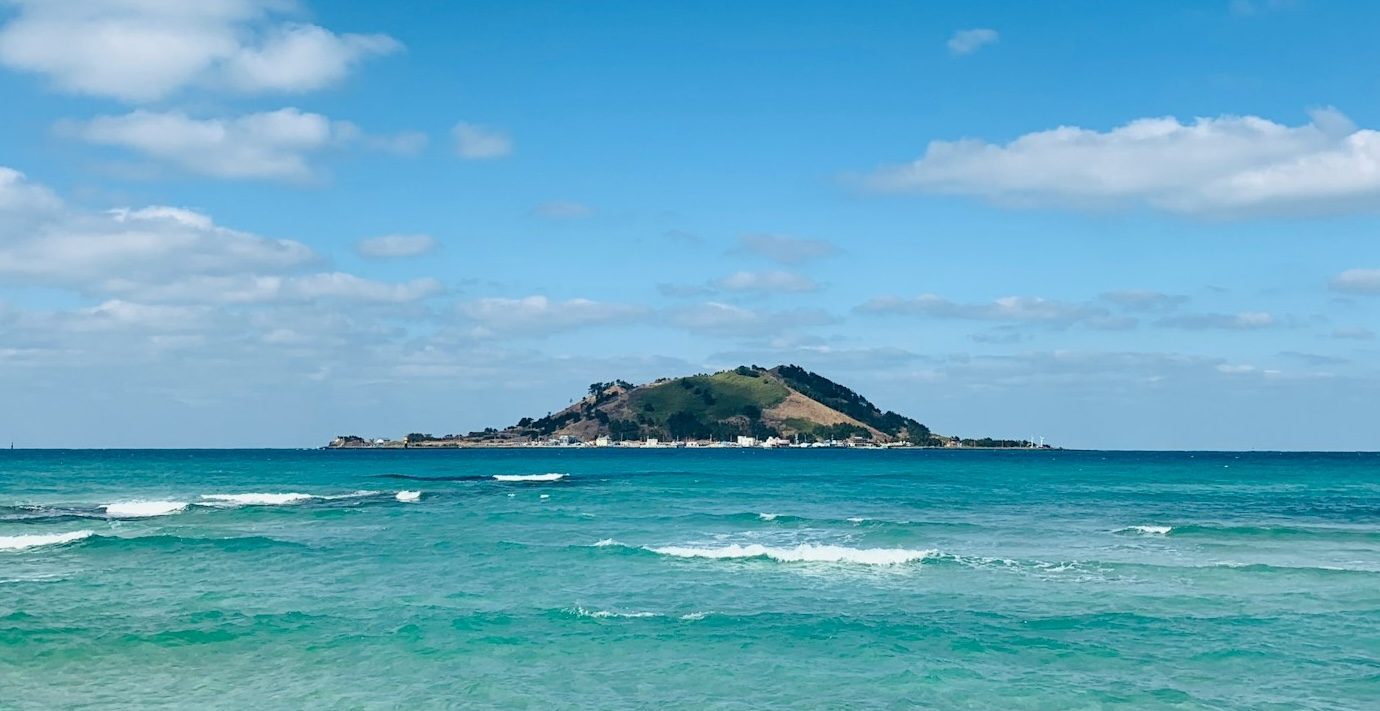
Seongsan Ilchulbong, "Sunrise Peak," is a 182 m volcanic tuff cone that rose out of the sea in a shallow eruption about 5,000 years ago and is part of the Jeju Volcanic Island and Lava Tubes UNESCO World Heritage site inscribed in 2007. The staircase climb takes 20 to 30 minutes, opens before dawn, and is the single best reason to stay in Seongsan the night before.
After sunrise you have a choice, and it should be an honest fitness choice rather than an altitude one. Hallasan, South Korea's highest peak, tops out at about 1,947 m, well below the roughly 2,500 m elevation at which CDC's Yellow Book says acute mountain sickness becomes a real concern. Acetazolamide has no role on Jeju. The summit day via the Seongpanak trail is roughly 9.6 km each way, typically 8 to 9 hours round trip, requires an advance online reservation through the national park, and enforces strict cutoff times at the checkpoints. Carry 2 to 3 liters of water, layers for a summit that can be 10 degrees colder than the coast, and your kit. If that is more than you want two days before a long flight, the oreum (parasitic cone) trails such as Yongnuni Oreum offer a 45-minute walk with a wide view of Hallasan for a fraction of the effort. Either way, this is a rural-grass day in Korea's tick season if you are traveling April through November, so use repellent and do a tick check that evening; SFTS, a tick-borne viral illness, has been reported across rural South Korea.
Day 7: Seogwipo and the south coast: waterfalls, Olle Trail, black pork
Drive the south coast to Seogwipo (about an hour from Seongsan). Jeongbang Waterfall drops directly into the sea, Cheonjiyeon is a short forested walk, and a coastal section of Olle Trail Route 7 along the Oedolgae cliffs is the day's main exercise. Olle routes are well signposted and mostly on maintained paths, which keeps the tick exposure low relative to yesterday.
This is the trip's biggest sun-and-heat day in the warm months. Jeju's south coast is subtropical, and heat illness is a more common reason travelers seek care in Korean summers than any infection. Sunscreen, a hat, shade breaks, and a rehydration plan matter more than anything in the prescription kit. Dinner is Jeju black pork, cooked hot at the table, which is about as low-risk as Korean food gets. If your stomach has held all week, this is the night to order the abalone porridge too.
Day 8: Fly Jeju to Seoul, connect home
Morning flight from Jeju to Gimpo, then the AREX or a limousine bus to Incheon (roughly an hour). Long layovers are common on this connection; the Incheon transit hotel, the airport's walking loops, or a quick trip into Songdo are all better for circulation on a long travel day than airport seating.
The flight home is westbound, and CDC's Yellow Book is clear that this is the easier direction: the body delays its clock more readily than it advances it, and westward adaptation averages about 1.5 hours per day versus 1 hour per day eastbound. Hydrate through the flight, go easy on alcohol, and expect to feel close to normal within three to five days. Any fever in the weeks after you return is worth a clinician visit; mention the DMZ tour and the raw seafood so the right things stay on the differential.
Health prep for this trip
Start with the South Korea travel health guide for the full picture, then work the timeline. Four to six weeks out, confirm your routine vaccines (MMR, Tdap, seasonal flu, COVID-19) are current and talk to a provider about hepatitis A, which CDC recommends for most travelers to South Korea because food and water are the main exposure route. Typhoid is a selective conversation for longer stays or rural eating. Japanese encephalitis vaccine is not indicated for a Seoul-and-Jeju city-and-coast trip; CDC reserves it for extended rural exposure during the summer-to-fall transmission season.
Two weeks out, get the kit itself sorted. The Seoul and Jeju travel medicine bundle covers the three prescriptions this itinerary actually uses: azithromycin 500 mg once daily for three days as the antibiotic CDC favors for a moderate-to-severe travelers' diarrhea case in Asia, dicyclomine for the cramping, and hydroxyzine as a short-term sleep-onset backstop for the first one or two Seoul nights if you know a new time zone keeps you awake. None are taken preventively. Note that CDC's jet lag chapter cautions against antihistamines for routine jet lag because of next-day grogginess, so hydroxyzine is a conversation with a provider about your own history, not a default.
Three to five days out, start moving bedtime and wake time earlier by 30 to 60 minutes a day. CDC's Yellow Book notes that pre-shifting sleep toward the destination before eastbound travel shortens the adjustment on arrival. Low-dose melatonin (0.5 to 1 mg) about 90 minutes before the shifted bedtime is the over-the-counter tool CDC describes as most useful for eastbound phase advance; higher doses are not more effective.
What to pack
Item | Why it matters on this trip |
|---|---|
Azithromycin (Rx) | Moderate-to-severe travelers' diarrhea after market or raw-seafood meals; started only if needed |
Dicyclomine (Rx) | Cramping and gut spasm that rides along with a food-related stomach |
Hydroxyzine (Rx, optional) | Sleep onset for the first 1-2 Seoul nights; discuss next-day grogginess with a provider |
Low-dose melatonin (0.5-1 mg) | CDC's eastbound phase-advance tool; take about 90 minutes before local bedtime |
Oral rehydration salts | Heat days on Jeju and any stomach episode; sold in Korean pharmacies too |
Sunscreen SPF 30+, hat | Day 6 and 7 coastal sun exposure |
DEET 25-30% or picaridin 20% | DMZ tour in warm months, Hallasan and oreum trails during April-November tick season |
KF94 mask | Spring yellow-dust days in Seoul; sold in every neighborhood pharmacy |
Broken-in walking shoes | 15,000-plus step Seoul days and the Seongsan staircase |
Layers for Hallasan | Summit can run 10 degrees colder than the coast |
International Driving Permit | Required with a US license for the Jeju rental |
Copies of prescriptions | Korea restricts some controlled medications; carry originals in labeled packaging |
Best time to go and what to avoid
Health, not scenery, is what makes the shoulder seasons the right answer for this route. Spring brings the yellow-dust episodes that push Seoul's fine particulate readings well above the WHO annual guideline of 5 micrograms per cubic meter on bad days, summer brings the monsoon and the heat that drives most tourist medical visits, and late summer brings Jeju's typhoons.
Month | Seoul | Jeju | Health notes |
|---|---|---|---|
Jan-Feb | Cold, dry, often below freezing | Mild, windy | Flu season peaks; layer up; lowest food-safety risk |
Mar-May | Cherry blossoms; yellow dust spikes | Pleasant, clear | Check AQI daily in Seoul; KF94 on high-particulate days; tick season starts in April |
Jun-Jul | Monsoon (changma), humid | Wettest months | Heat and humidity; flooding can disrupt Jeju hikes; Hallasan often closed for weather |
Aug-Sep | Hot and humid, then easing | Typhoon season | Heat illness risk high in Seoul walking days; Jeju flights and ferries cancel in storms |
Late Sep-Oct | Clear, mild, ideal | Clear, mild, ideal | Best window for both nodes; tick season still active on trails |
Nov-Dec | Cool, dry | Mild | Good for cities; tick and malaria seasons wind down |
Malaria's small seasonal window (March through December, rural DMZ-adjacent areas only) never affects the standard route regardless of month. Japanese encephalitis transmission runs summer into fall in rural rice-growing areas and is not a concern on this itinerary.
Cost expectations
Korea is a mid-cost destination by East Asian standards. Expect the two domestic Jeju flights to be inexpensive, the Jeju rental car to be the biggest variable, and Seoul accommodation to range widely by neighborhood. Food is where the value is: market meals and Korean barbecue are affordable, while Jeju's raw seafood and abalone dishes run higher. Travel medical insurance with evacuation coverage is worth carrying; Korean hospitals are excellent, but a US visitor pays out of pocket and claims later.
Day-by-day plan
| Day | What you're doing | Health note |
|---|---|---|
| 1 | Arrive Incheon, settle into Seoul, chase daylight Land at Incheon, take the AREX train or a limousine bus into central Seoul (Jongno or Myeongdong), check in, and walk Cheonggyecheon stream before an early dinner. | Your body clock is 13 to 16 hours behind local time. Get outside into daylight as soon as you can and hold off on any nap longer than 20-30 minutes; CDC's Yellow Book lists timed light and staying awake until local bedtime as the tools with the best evidence for resetting faster. |
| 2 | Gyeongbokgung Palace, Bukchon Hanok Village, Gwangjang Market Morning at Gyeongbokgung for the changing of the guard, a slow walk through Bukchon's hanok lanes and Insadong, then an evening at Gwangjang Market's food alley. | This is your first real food-exposure evening. Pick stalls with a fast turnover and food cooked in front of you. If a meal does turn into a moderate case of travelers' diarrhea with fever or more than a few loose stools, that is what the azithromycin in your kit is for. |
| 3 | DMZ day tour from Seoul Guided half or full day to the Third Tunnel, Dora Observatory, and Imjingak, back in Seoul by late afternoon for a quieter evening in Seongsu or Ikseon-dong. | CDC notes a limited vivax malaria risk in rural areas of northern Gyeonggi, Gangwon, and Incheon near the DMZ from roughly March through December. A short escorted day tour is not the kind of exposure that calls for prophylaxis, but wear repellent in warm months and mention the visit if you develop a fever in the year after you return. |
| 4 | Namsan, Seoul City Wall, and a Hongdae or Seongsu evening Walk or cable-car up Namsan to N Seoul Tower, follow a section of the Seoul City Wall trail, then spend the evening in a neighborhood that suits your energy level. | By day 4 most eastbound travelers have shifted 3 to 4 hours of the gap, not all of it. Keep the walking uphill in the morning light, cap caffeine by mid-afternoon, and stay off the long-half-life sleep aids CDC's Yellow Book cautions against. |
| 5 | Fly Gimpo to Jeju, east coast to Seongsan Morning domestic flight (about an hour), pick up a rental car, drive the east coast to Seongsan, stop at Seopjikoji, and watch the haenyeo divers if the tide cooperates. | Jeju's food story is raw: hoe (sliced raw fish), live octopus, and sea urchin are on nearly every coastal menu. Reputable, high-turnover restaurants are the norm, but pregnant and immunocompromised travelers should skip raw seafood entirely, and everyone should treat a fever with diarrhea as a reason to start treatment rather than wait. |
| 6 | Seongsan Ilchulbong at sunrise, then Hallasan or the oreum trails Climb Seongsan Ilchulbong's 182 m tuff cone for sunrise, then either a shorter volcanic oreum walk or a committed Hallasan summit day via Seongpanak (reservation required). | Hallasan is about 1,947 m at the summit, under the roughly 2,500 m elevation where CDC says acute mountain sickness starts to matter, so acetazolamide has no role here. The risks are fitness, weather, and the trail cutoff times. Carry 2 to 3 liters of water, layers, and your kit. |
| 7 | Seogwipo and the south coast: waterfalls, Olle Trail, black pork Jeongbang and Cheonjiyeon waterfalls, a coastal stretch of Olle Trail Route 7, and a black pork dinner in Seogwipo. | Coastal Jeju in warm months means sun and heat exposure for hours at a time. Sunscreen, a hat, and a rehydration plan matter more than any prescription today. Tick-borne illness including SFTS is a rural, brush-and-grass exposure risk in Korea from spring through autumn, so stick to maintained trails and check for ticks after the walk. |
| 8 | Fly Jeju to Seoul, connect home Morning flight to Gimpo, transfer to Incheon (about an hour by AREX or bus), and depart. If you have a long layover, the Incheon transit hotel or a Songdo walk beats airport seating. | The flight home is westbound, which CDC's Yellow Book says the body adapts to faster (about 1.5 hours per day versus 1 hour per day eastbound). Hydrate through the flight, skip the alcohol, and expect to feel closer to normal within 3 to 5 days. |
Frequently Asked Questions
No. CDC describes South Korea's malaria risk as limited, caused only by Plasmodium vivax, and confined to rural areas of northern Gyeonggi, Gangwon, and Incheon near the Demilitarized Zone from roughly March through December. Seoul, Jeju, Busan, and the standard tourist routes carry no meaningful risk, and an escorted DMZ day tour is not the kind of extended rural exposure that would justify prophylaxis. Prophylaxis becomes a conversation only for long stays or multi-week outdoor work in that border zone. This itinerary does not include an antimalarial for that reason.
No. Hallasan, the highest point in South Korea, tops out at about 1,947 m (roughly 6,390 ft). CDC's Yellow Book describes acute mountain sickness as a concern that starts to matter at elevations around 2,500 m and above, especially with a rapid ascent. A Hallasan day hike from sea level starts and ends below that line, and you sleep at sea level. The real risks are fitness, weather, and trail cutoff times, not altitude. Acetazolamide is not part of this kit.
Lower than most of Asia, but not zero. CDC's Yellow Book puts overall travelers' diarrhea attack rates at 30 to 70 percent over a two-week trip depending on destination, and specifically carves out Japan and South Korea as lower-risk exceptions within Asia. Tap water in Seoul and Jeju City is treated and generally considered safe to drink. The remaining risk comes from night-market stalls, banchan that has sat out, and raw seafood. Most cases are mild and settle with fluids; the reason to carry azithromycin is the moderate-to-severe case with fever or several loose stools a day that can cost you two days of an eight-day trip.
CDC recommends azithromycin as the preferred empiric antibiotic for travelers' diarrhea in Asia because Campylobacter, a leading bacterial cause in the region, is widely resistant to fluoroquinolones such as ciprofloxacin. The typical regimen Wandr prescribes is azithromycin 500 mg once daily for three days, started only if you develop a moderate or severe case. Dicyclomine (Bentyl) is included for the cramping that often rides along. Neither is taken preventively. Speak with a provider about your own history before relying on either.
Seoul is on Korea Standard Time (UTC+9), 13 hours ahead of the US East Coast and 16 ahead of the West Coast during daylight saving time. CDC's 2026 Yellow Book puts the average eastbound adaptation rate at about 1 hour per day, which is why this plan keeps days 1 to 4 in Seoul with early daylight and no big early-morning commitments. CDC's primary tools are timed light, staying awake until local bedtime, short naps only, and low-dose melatonin (0.5 to 1 mg) before bed. Hydroxyzine is a sedating prescription antihistamine that some travelers use for sleep onset on the first one or two nights; note that CDC's jet lag chapter cautions that antihistamines can worsen next-day grogginess and impair performance, so it is a short-term backstop to discuss with a provider, not the plan itself.
For most travelers, CDC recommends being current on routine vaccines (MMR, Tdap, seasonal flu, COVID-19) and getting hepatitis A, since food and water are the main exposure route. Hepatitis B is recommended for many adults regardless of destination. Typhoid is a selective recommendation for longer stays, rural travel, or adventurous eating. Japanese encephalitis vaccine is reserved for extended rural exposure during the summer-to-fall transmission season and is not needed for a Seoul-and-Jeju city-and-coast trip like this one. There are no entry vaccine requirements for arrivals from the US.
Generally, in the reputable high-turnover restaurants that dominate Jeju's coast, yes. Raw fish (hoe), abalone, and sea urchin are cultural staples handled with real care. The risk is not zero, and includes Vibrio bacteria and parasites, so CDC's standard advice applies: pregnant travelers, young children, older adults, and anyone immunocompromised should avoid raw or undercooked seafood entirely. Everyone else should choose busy restaurants, avoid seafood that has sat at room temperature, and treat a fever with diarrhea after a raw meal as a reason to start the antibiotic in your kit.
Late April to May and late September to October. Those windows avoid the June-to-July monsoon (changma), the July-August heat and humidity that drive heat illness in walking-heavy itineraries, the August-September typhoon season that most affects Jeju, and the March-to-May yellow-dust spikes that push Seoul's fine particulate levels well above the WHO annual guideline of 5 micrograms per cubic meter on bad days. Tick season for SFTS runs April through November in rural areas, so trail days in any warm month call for repellent and a tick check.
It makes the itinerary far easier. Jeju's public buses reach the main sights but add hours to a three-day stay, and the sunrise start at Seongsan Ilchulbong on day 6 is impractical without your own wheels. An International Driving Permit is required alongside your US license. From a health standpoint, the Jeju roads are well maintained; the risk is driver fatigue on day 5 when you are still adjusting to the time zone, so keep the first drive short and daytime.
The Wandr Team is the editorial group at Wandr Health; every article is reviewed by a licensed clinician before publication.