
The 10-Day Iceland Ring Road Itinerary: The Health-Smart Version
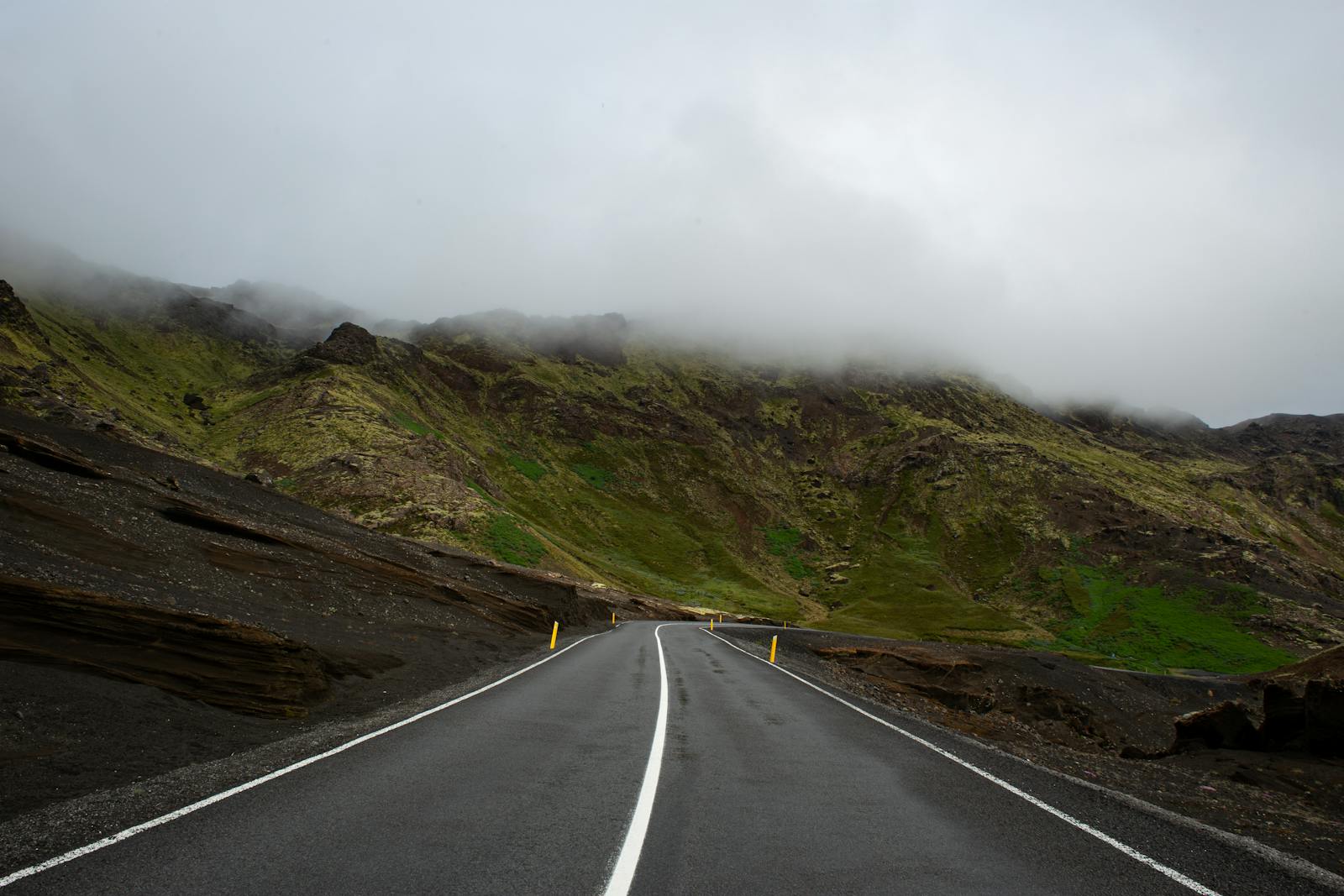
A 10-day counterclockwise loop of Iceland's Ring Road covers roughly 1,322 km of Route 1, the longest ring road in Europe, from Reykjavik through the South Coast, Jokulsarlon, the East Fjords, Myvatn, Akureyri, and Snaefellsnes. Iceland is a low infectious-risk destination with potable tap water, so the two health factors that actually reshape this trip are jet lag and motion sickness. Because the circadian clock realigns at only about 1 hour per day after eastward travel per the CDC Yellow Book, and because sleep loss makes motion sickness worse, this itinerary puts no driving on arrival day and places the whale-watching boat on day 8, after your clock has caught up. Speak with a provider about scopolamine or meclizine before you go.
Most Iceland Ring Road itineraries are built around photographs. This one is built around two things that quietly wreck the first half of a lot of trips: the four to eight hour eastward time shift you land with, and the fact that Route 1 spends whole days doing exactly what the vestibular system hates. Iceland is genuinely low risk infectiously, with potable tap water and no malaria, which means the usual travel-medicine checklist does not apply here. What does apply is sequencing. Where you put the boat day, where you put the longest drive, and what you do with the first 24 hours change how this trip actually feels.
Who this itinerary is for
This is written for the self-drive traveler taking a rental car counterclockwise around Route 1 over ten days, most likely between June and August when the full loop and the northern side roads are reliably open. You do not need to be especially fit. The hardest physical thing on this plan is a guided glacier walk on day 4, and that is optional. What you do need is tolerance for long driving days and a willingness to be flexible when weather closes a road.
If it is your first time, the counterclockwise direction below front-loads the greatest-hits South Coast while you are still fresh and leaves the quieter east and north for the middle of the trip. Returning travelers often flip the direction to hit the north first and thin out the crowds. Either way the health logic holds: the boat day and the longest drive belong late, not early, because sleep debt and motion sickness compound each other.
The route
The Ring Road, officially Route 1, runs roughly 1,322 km around the perimeter of the island and is the longest ring road in Europe. Ten days gives you an average of about 130 to 150 km of driving per day once you take out the arrival and departure days, which is comfortable. The distribution is what matters.
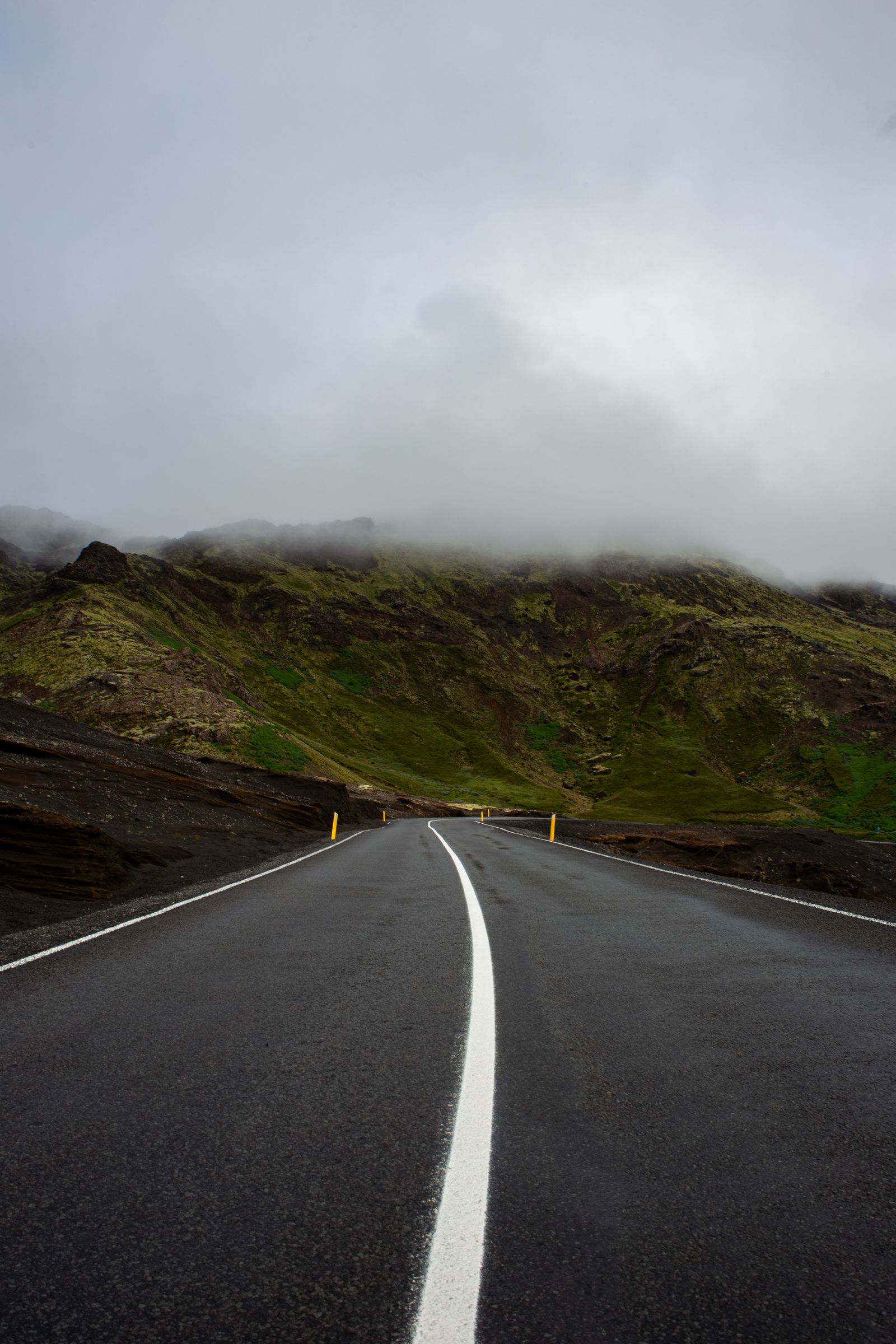
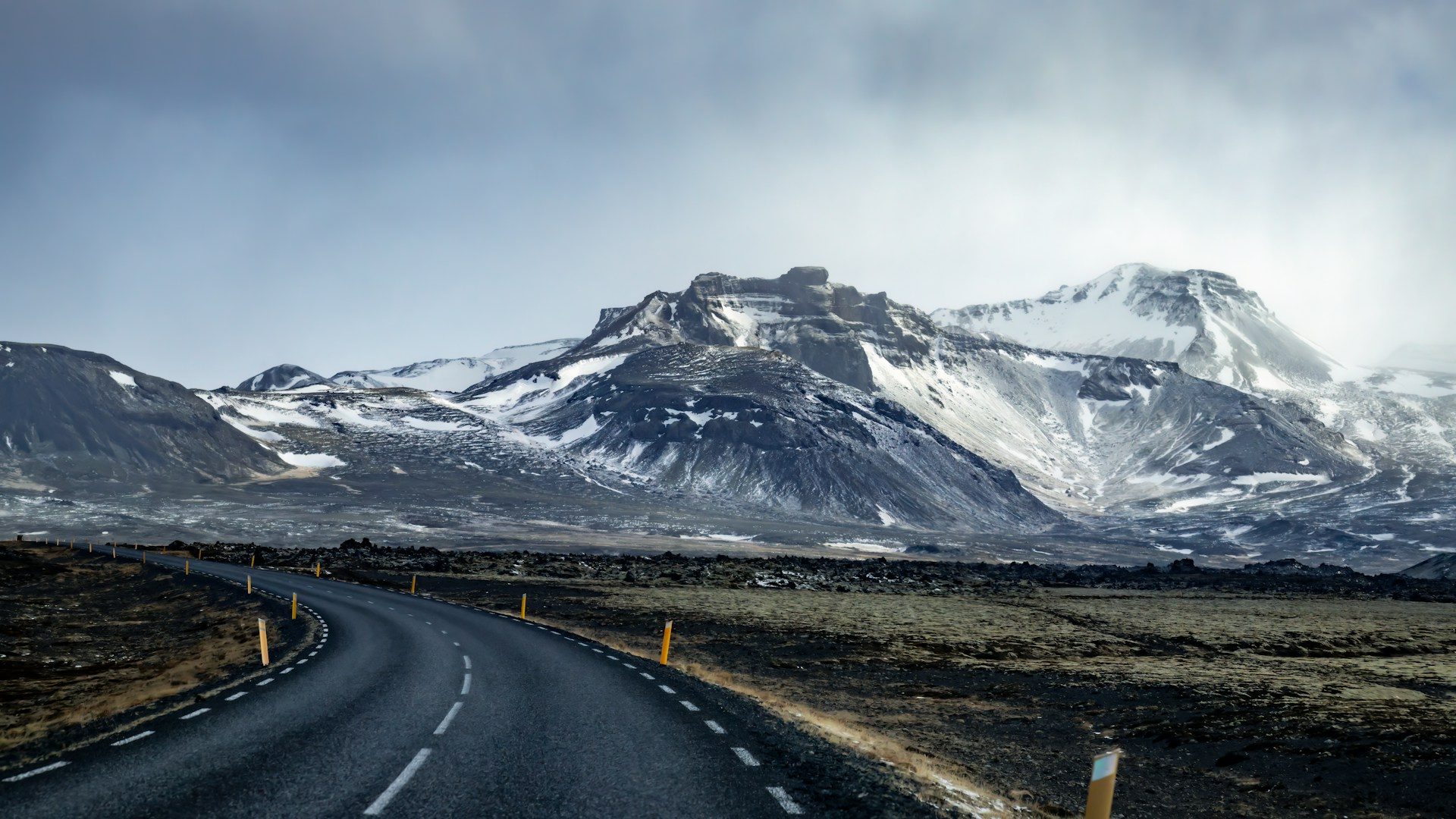
Going counterclockwise from Reykjavik, you drop onto the South Coast and run east past Seljalandsfoss, Skogafoss, and Vik, then across the black outwash plains to Skaftafell and the Jokulsarlon glacier lagoon. From Hofn the road turns north and threads the East Fjords, which is the single most sinuous stretch of the entire loop: fjord after fjord, tight radius curves, blind crests, and frequent single-lane bridges. That section is short in kilometers and long in nausea.
North of Egilsstadir the landscape opens into the Myvatn volcanic district, then runs west to Husavik on Skjalfandi Bay, which is the country's whale-watching hub. From Akureyri the road straightens out dramatically for the long western transit toward Borgarnes and the Snaefellsnes peninsula, before closing the loop back into Reykjavik.
Read that shape as a health map and the plan writes itself. Arrival is a recovery day. The curvy day is day 6, when you have your sleep back. The boat is day 8. The long day is day 9, because distance without curvature is far easier on a queasy passenger than curvature without distance.
Day-by-day plan
Day 1: Arrive Keflavik, Reykjanes, and Reykjavik
Almost every transatlantic flight to Iceland is an overnight, landing in the early morning. You will have slept badly, and you will want to drive. Do not. This itinerary deliberately puts zero road distance on day 1 beyond the airport transfer.
The reason is arithmetic. The CDC Yellow Book reports that circadian rhythms readjust at roughly 1 hour per day after eastward travel, compared with about 1.5 hours per day westward, because the intrinsic human clock runs slightly longer than 24 hours and is easier to delay than to advance. Coming from the US East Coast, that is a four-hour shift and about four days of realignment. One survey cited by CDC found 68 percent of international business travelers experience negative jet lag symptoms on a regular basis, so this is the norm rather than a personal failing.
Spend the morning at a geothermal lagoon on the Reykjanes peninsula, twenty minutes from the airport, then check into Reykjavik. Get outdoors in daylight early. If you nap, keep it to 20 to 30 minutes, since CDC notes that longer daytime naps interfere with the nighttime sleep you are trying to build.
Day 2: Golden Circle
Thingvellir, Geysir, and Gullfoss, roughly 230 km round trip on wide, mostly straight roads. This is your first driving day on purpose. You are still carrying sleep debt, and sleep deprivation is a documented aggravator of motion sickness per the CDC Yellow Book, so the first day behind the wheel should be the least provocative one available.
Day 3: South Coast to Vik
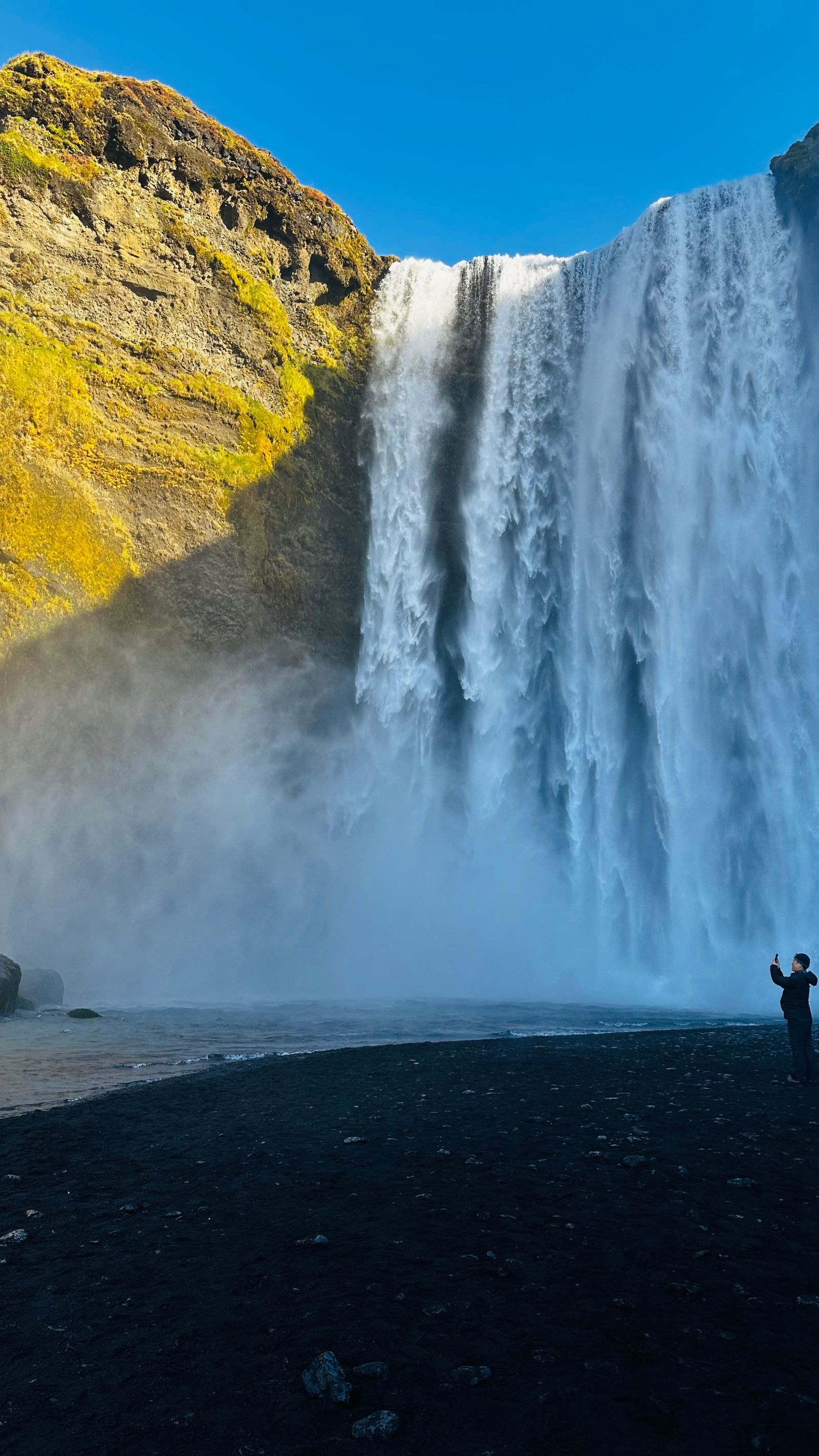
Seljalandsfoss, Skogafoss, Dyrholaey, and Reynisfjara, ending in Vik. The driving is broken into short hops between stops, which is ideal while you are still adjusting.
One non-negotiable safety note that has nothing to do with medication: Reynisfjara's sneaker waves have killed visitors, and they arrive without warning on days that look calm. Stay well back from the waterline and never turn your back on the water.
Day 4: Vik to Skaftafell
You cross the Eldhraun lava field and the vast Skeidararsandur outwash plain to reach Skaftafell, where most travelers add a guided glacier walk on an outlet tongue of Vatnajokull. Crampons, uneven blue ice, and a rope team are not the place to discover that a medication makes you drowsy. If you plan to trial-dose anything sedating, do it at home before the trip, which is also what CDC advises given how much side-effect profiles vary between individuals.
Day 5: Jokulsarlon and Diamond Beach to Hofn
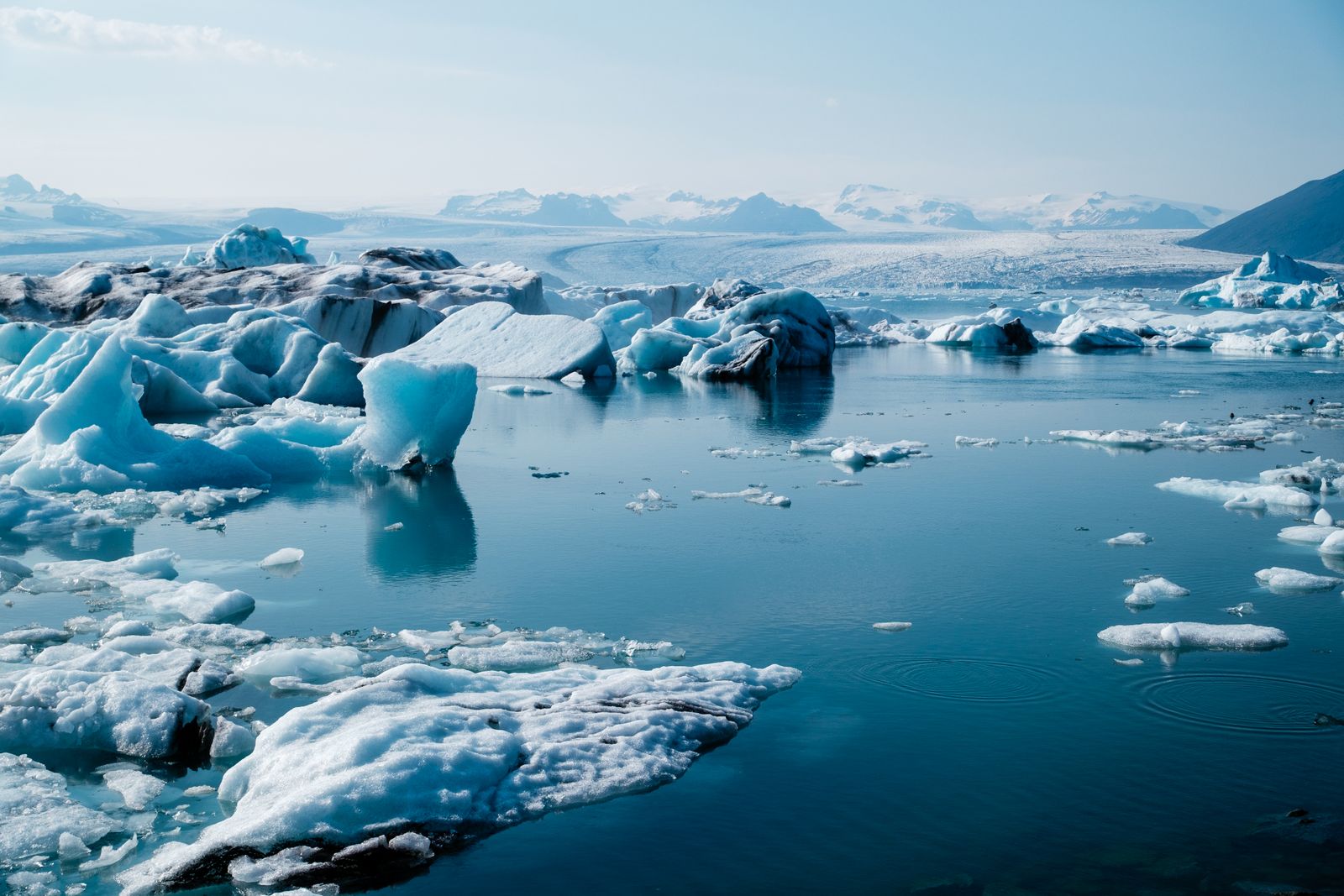
The glacier lagoon and the icebergs washed up on the black sand beach opposite it are the visual peak of the southern half. Many travelers add an amphibious or Zodiac boat tour on the lagoon. If you do, treat it as a boat day and dose before you board. Anti-motion-sickness drugs are markedly more effective taken before exposure than after symptoms start, partly because once nausea sets in, gastric stasis can block absorption of anything you swallow.
Want the health prep for Iceland?
Get a 60-second pre-trip check: the vaccines, prescriptions, and altitude/seasonality notes that change the plan — built for your exact dates.
Day 6: Hofn through the East Fjords to Egilsstadir
This is the day the itinerary exists to protect you from. Route 1 here traces the coastline in and out of successive fjords, generating exactly the slow, low-frequency oscillation and repeated direction change that provokes motion sickness. Distance is moderate, discomfort is not.
The CDC Yellow Book's behavioral countermeasures are worth applying literally on this stretch: keep a visual horizon reference, avoid reading and screens, minimize head movements, and let passengers lean into the curves rather than bracing against them. Being the driver is itself protective, which is one reason rotating the wheel helps a susceptible passenger more than any pill.
Susceptibility is also not a character trait. Twin studies cited by CDC attribute roughly 55 to 70 percent of individual variation in motion-sickness susceptibility to genetics. If one person in your car is reliably green by the third fjord, that is biology.
Day 7: Egilsstadir to Myvatn
North and west to the Myvatn volcanic district, with Dettifoss, the Namaskard sulfur fields, Hverfjall crater, and an evening in the Myvatn Nature Baths. The hydrogen sulfide smell around the geothermal areas is normal and harmless at these concentrations, though CDC lists increased sensitivity to odors among motion-sickness symptoms, so it can tip an already queasy stomach over the edge. Sit upwind.
Day 8: Myvatn to Husavik whale watching to Akureyri
Husavik on Skjalfandi Bay is the reason the boat day sits here. By day 8 a four-hour eastward shift has largely resolved, so you board a North Atlantic sailing rested rather than sleep-deprived, which materially changes how you tolerate it.
For a two to three hour sail, CDC guidance points toward oral meclizine or dimenhydrinate for mild to moderate exposure under six hours. Meclizine's onset is about 2 hours, so time it before you leave Myvatn, not in the harbor car park. Travelers who are highly susceptible, or who are adding more boat time, may do better with a transdermal scopolamine patch, which CDC lists as taking 6 to 8 hours to take effect and lasting up to 72 hours. Never cut a patch to adjust the dose, since that disrupts the release mechanism. Discuss which option fits you with a provider before you leave home.
What does not help here is ondansetron. CDC states plainly that 5-HT3 antagonists are not effective against motion sickness because their sites of action are not the central vestibular centers of the brain. Carry it for the different job it does well, which is nausea from a stomach bug or bad food.
Day 9: Akureyri to Snaefellsnes
The longest single driving day of the loop, running west across the north through Blonduos and Borgarnes before turning out onto the Snaefellsnes peninsula. It looks brutal on paper and is usually the easiest day of the trip physically, because Route 1 through the north and west is long, straight, and gently graded. Motion sickness tracks curvature and oscillation far more than it tracks odometer readings.
There is one hard constraint. If anyone applied a scopolamine patch for yesterday's boat, that patch is still delivering today and tomorrow, given the 72-hour duration CDC lists. Drowsiness, blurred vision, and dry eyes are the common side effects, none of which belong in a driver on a six-hour day. Plan the rotation before the patch goes on, not after.
Day 10: Snaefellsnes to Reykjavik and Keflavik
Kirkjufell, Djupalonssandur, and the Snaefellsjokull coast, then the drive back to Reykjavik and out to Keflavik, roughly 50 minutes beyond the city. Build a real buffer into this day. Weather-driven closures on Route 1 happen even in summer, and the Icelandic Road Administration's road.is conditions map is the only source worth trusting on the morning of a flight.
Health prep for this trip
Iceland is unusual among Wandr destinations in that the prep list is short. There is no malaria chemoprophylaxis, no yellow fever certificate requirement, and no need for water treatment. CDC's baseline advice is that all international travelers be up to date on routine vaccinations, including MMR, and that a pre-travel conversation happen roughly a month out. Full country detail lives on the Iceland destination guide.
The prescriptions that matter here are motion and sleep related, and the Iceland Ring Road travel-medicine bundle is built around exactly that combination. Two to three weeks out is the right window to sort them, because you want time to trial a dose at home. CDC specifically recommends considering a trial dose before departure since side effects differ so much between individuals.
A short map of the four options, all of which should be discussed with a provider:
On the jet lag side, the highest-yield interventions are free. Shift bedtime about an hour earlier for two to three nights before departure. Minimize alcohol and caffeine on the flight, since CDC notes both fragment sleep and contribute to dehydration. Get bright light early in the local morning and avoid it late in the evening, which is the direction of shift you want for eastward travel. If you use melatonin, CDC notes that 0.5 to 1 mg is usually sufficient to produce a circadian shift and that doses above 5 mg are not recommended. CDC also cautions against leaning on antihistamines as a routine jet lag sleep aid, because they can worsen cognitive impairment, increase fall risk, and impair physical performance, all of which matter when you are about to drive 1,322 km.
What to pack
- A genuine blackout eye mask. Guesthouse curtains rarely handle a Nordic summer night.
- Your motion-sickness medication in carry-on, not checked luggage.
- A reusable water bottle. Tap water is potable everywhere, so you never need to buy bottled.
- Waterproof shell and trousers, not a water-resistant jacket. Iceland rain arrives sideways.
- Swimwear and a quick-dry towel, since geothermal pools are the default evening activity.
- Sturdy waterproof boots with ankle support for lava fields and glacier approaches.
- Sunglasses. Low-angle summer sun on ice and water is brighter than people expect.
- A car phone mount and offline maps. Mobile coverage thins out in the East Fjords.
- Any regular prescriptions in original labeled containers, with enough for the full trip plus a few spare days.
Best time to go and what to avoid
The full Ring Road is a summer proposition. Outside June through August, snow, ice, and wind closures make a fixed ten-day loop a gamble rather than a plan.
Two things to actively avoid. First, booking a whale watch in the first 48 hours after a red-eye, which stacks sleep loss onto swell. Second, treating September and July seas as equivalent, since the same boat in the same bay is a very different experience once autumn systems arrive.
Cost expectations
Iceland is expensive, and there is no version of this trip that is not. In summer, budget realistically for a mid-range rental car with gravel and sand-and-ash protection, guesthouse or small-hotel accommodation, and fuel across 1,322 km plus detours. Groceries and hot-dog stands cut costs meaningfully; sit-down restaurant dinners every night will not. The two paid activities most worth the money on this route are the guided glacier walk and the Husavik whale watch, both of which are hard to replicate independently.
Day-by-day plan
| Day | What you're doing | Health note |
|---|---|---|
| 1 | Arrive Keflavik, Reykjanes and Reykjavik Land off the overnight flight, soak at a geothermal lagoon near the airport, then settle in Reykjavik. No long drive. | Zero driving day by design. Get outside in daylight within an hour of landing and hold sleep until local night. Short naps of 20 to 30 minutes only, per CDC jet lag guidance. |
| 2 | Golden Circle loop Thingvellir rift valley, the Geysir geothermal field, and Gullfoss, returning toward the south. | First real driving day, roughly 230 km on wide, mostly straight roads. Easy on the vestibular system while you are still sleep-debted. |
| 3 | South Coast waterfalls to Vik Seljalandsfoss, Skogafoss, Dyrholaey, and the black basalt of Reynisfjara, overnighting in Vik. | Short hops between stops. Reynisfjara has lethal sneaker waves; stay well back from the waterline regardless of how calm it looks. |
| 4 | Vik to Skaftafell and Vatnajokull Cross the Eldhraun lava field and the Skeidararsandur outwash plain to Skaftafell for a guided glacier walk. | Crampons and uneven ice. Sedating medications and glacier walking do not mix, so save any antihistamine dose for a non-activity evening. |
| 5 | Jokulsarlon, Diamond Beach, and Hofn The glacier lagoon and the icebergs stranded on the black sand opposite, then east to Hofn. | If you add the amphibious or Zodiac lagoon boat, treat it as a boat day and dose before boarding, not after symptoms start. |
| 6 | Hofn through the East Fjords to Egilsstadir The most sinuous stretch of Route 1, tracing fjord after fjord with tight radius curves and blind crests. | The highest motion-sickness load of the whole loop. Passengers should sit forward, keep a horizon reference, and avoid reading or screens. |
| 7 | Egilsstadir to Myvatn Dettifoss, the Namaskard sulfur fields, Hverfjall crater, and the Myvatn Nature Baths. | Sulfur odor is normal near the geothermal fields and is not a sign of illness, though it can trigger nausea if you are already queasy. |
| 8 | Myvatn to Husavik whale watching, then Akureyri Morning drive to Husavik on Skjalfandi Bay for a two to three hour whale-watching sail, then west to Akureyri. | The boat day, deliberately placed here. By day 8 a four-hour eastward shift has largely realigned, so you are not stacking sleep loss on top of North Atlantic swell. |
| 9 | Akureyri to the Snaefellsnes peninsula The long transit day west across the north, through Blonduos and Borgarnes, out onto Snaefellsnes. | Long in distance, low in curvature. That is why it sits the day after the boat, and why nobody who wore a scopolamine patch yesterday should be the driver. |
| 10 | Snaefellsnes to Reykjavik and Keflavik Kirkjufell, Djupalonssandur, and the Snaefellsjokull coast, then back to the capital and the airport. | Build in a buffer. Keflavik is roughly 50 minutes from Reykjavik and weather closures on Route 1 are not rare, even in summer. |
Frequently Asked Questions
No malaria prophylaxis is needed. Iceland is not a malaria-risk country and CDC does not list a yellow fever vaccination requirement for entry. What CDC does advise is that all international travelers be up to date on routine vaccines, including MMR. Beyond that, the health planning for Iceland is about motion, sleep, and weather rather than infectious disease. Speak with a provider about your own history before you travel.
Cold tap water in Iceland is potable nationwide and meets EU Water Framework Directive standards, so you do not need bottled water or a filter. Bring a reusable bottle and fill it anywhere. The hot tap water is geothermally heated and carries a sulfur smell, which is harmless but unpleasant to drink; if you want hot water, boil the cold tap water instead.
It depends on how much motion exposure you are covering. The CDC Yellow Book suggests meclizine or dimenhydrinate for shorter mild to moderate exposures of six hours or less, and reserves the scopolamine patch for longer or more intense exposure. A single two to three hour whale watch usually falls in the first category. The patch matters more if you are highly susceptible or adding multiple boat days. Note that a transdermal scopolamine patch delivers for up to 72 hours, so it will still be working on the driving days that follow. Discuss which fits your trip with a provider.
Treat that as a real constraint rather than a footnote. Every effective anti-motion-sickness drug crosses into the brain and the most common side effect is drowsiness, with dry mouth and blurred vision more common on scopolamine specifically. On a self-drive trip the practical answer is to designate a driver who does not dose, let passengers medicate, and rotate. Anyone who has applied a patch should assume they are not the driver for the next three days.
Not for true motion sickness. The CDC Yellow Book is explicit that 5-HT3 antagonists such as ondansetron are not effective against motion sickness because their sites of action are not the central vestibular centers of the brain. Ondansetron is still worth carrying on a Ring Road trip, just for a different job: nausea and vomiting from a stomach bug, food that disagreed with you, or a migraine. Ask a provider whether it belongs in your kit.
Iceland sits at UTC year-round with no daylight saving, so from the US East Coast you are shifting four hours eastward and from the West Coast seven or eight. Eastward is the harder direction: the CDC Yellow Book puts average circadian adaptation at about 1 hour per day eastward versus 1.5 hours per day westward. A four-hour shift therefore takes roughly four days to fully resolve, which is a meaningful chunk of a ten-day trip and the reason this itinerary front-loads recovery instead of sightseeing.
Around the summer solstice Reykjavik gets close to 21 hours of daylight and the sun barely dips below the horizon, so the usual darkness cue is missing. Bring a proper eye mask, because many guesthouses have thin curtains. Get bright light early in the local morning, which promotes the phase advance you want for eastward travel, and avoid bright light late in the evening. CDC guidance also cautions against relying on antihistamines as routine jet lag sleep aids, since they can worsen next-day cognitive impairment and increase fall risk. If you are considering a short-term sleep aid for the first night or two, discuss it with a provider first.
Yes, and ten days is close to the sweet spot. Route 1 runs about 1,322 km, so a ten-day loop averages a manageable 130 to 150 km per day once you subtract the arrival and departure days. What matters more than the average is the distribution: the East Fjords section is short in distance but heavy in curvature, while the north-to-west transit is long in distance but nearly straight. Sequencing those correctly is most of the comfort.
The emergency number nationwide is 112. Iceland has a high standard of care but a small system, with the major hospitals concentrated in Reykjavik and Akureyri and limited facilities in rural regions, so medical evacuation coverage in your travel insurance is worth confirming before departure. Carry your own medications with you rather than in checked luggage, since rural pharmacies keep short hours and are far apart.
The Wandr Team is the editorial group at Wandr Health; every article is reviewed by a licensed clinician before publication.