
The 6-Day Camino de Santiago Itinerary: The Health-Smart Version (Sarria to Santiago)

The final stage of the Camino de Santiago, Sarria to Santiago de Compostela, covers roughly 115 km over five walking days and was the route more than 162,000 pilgrims chose as their starting point in 2025, about 30% of all Compostela certificates issued that year per the Pilgrim's Office. Spain carries a low baseline travel-health risk, but five to six days sharing albergue bunks, kitchens, and pilgrim-menu dinners with a new set of walkers each night shifts the practical exposure more than a typical city trip. "The pilgrims who finish comfortably are the ones who treat foot care and hydration as part of the itinerary, not an afterthought," says Mark Karam, PA-C, co-founder of Wandr Health. Carry a self-treat antibiotic and an anti-inflammatory, and get your pilgrim credential stamped twice a day from the moment you start walking.
Five walking days, one prescription you hope you never need to open. The final stretch of the Camino de Santiago, from Sarria to the cathedral steps in Santiago de Compostela, is the route more pilgrims choose than any other starting point on the Camino Frances. It's roughly 115 km of Galician farmland, eucalyptus forest, and small stone villages, walked over five days and paired here with an arrival day in Sarria to make a clean 6-day trip. Spain itself is a low-risk destination by CDC standards. What changes on the Camino isn't the country, it's the setup: shared albergue bunks, communal kitchens, and a new set of walking partners most nights, for the better part of a week. That's a different practical exposure than a city trip, and it's why this itinerary treats foot care and a self-treat antibiotic kit as part of the plan rather than an afterthought.
This piece covers the last-100km version of the Camino specifically, not the full Camino Frances. If you're picturing the full 800 km route from the French border, that's a different trip with a different health profile (weeks of cumulative wear, more remote stretches, a longer prescription runway). Sarria to Santiago is the accessible version: a single vacation week, well-marked trail, frequent villages, and a real shot at the same Compostela certificate.
Who this itinerary is for
This is built for a first-time or returning pilgrim who wants the full Compostela experience, the certificate, the stamped credential, the walk into Praza do Obradoiro, without committing to the 4 to 6 weeks the complete Camino Frances requires from Saint-Jean-Pied-de-Port. Walking the last 100 km on foot is the minimum distance the Pilgrim's Office accepts for the Compostela, and Sarria sits comfortably past that line at roughly 115 km out.
Physically, expect rolling terrain rather than mountains. There's no altitude to acclimatize to and no single brutal climb. The demand here is cumulative: five consecutive days averaging 20 to 25 km, on trail and pavement, in whatever footwear you showed up in. A reasonably fit adult who has broken in their shoes beforehand will finish comfortably. Someone who buys new boots at the airport usually doesn't.
It also suits travelers who want structure without a guided tour. The route is exceptionally well-marked with yellow arrows and scallop-shell waymarkers, albergues line every stage, and you're rarely more than a few kilometers from a café, pharmacy, or bus stop back to a larger town if something goes sideways. That safety net is part of why Sarria draws first-time long-distance walkers who wouldn't necessarily attempt a remote trek elsewhere.
The route
Sarria to Santiago runs roughly northwest through inland Galicia, and it's conventionally split into five stages that roughly match a comfortable day's walk. The table below is the standard breakdown most Camino tour operators and guides use for this stretch.
Stage | From → To | Approx. distance |
|---|---|---|
1 | Sarria → Portomarin | ~22 km |
2 | Portomarin → Palas de Rei | ~25 km |
3 | Palas de Rei → Arzua | ~29 km |
4 | Arzua → O Pedrouzo | ~19 km |
5 | O Pedrouzo → Santiago de Compostela | ~20 km |
That totals close to 115 km, which lines up with why Sarria, sitting just over the 100 km Compostela minimum, was the single most popular starting point on the entire Camino network in 2025: more than 162,000 pilgrims began there, roughly 30% of all Compostela certificates issued that year, according to the Pilgrim's Office in Santiago. You will not walk this stretch alone. Expect crowded albergues in peak season and a genuinely social atmosphere, which is part of the appeal and part of the reason shared-facility exposure matters more here than on a typical trip.
Terrain-wise, the route stays under about 700m of elevation for nearly its entire length, rolling through pasture, oak and eucalyptus woodland, and small granite-walled villages rather than anything resembling a mountain pass. The one geographic landmark worth knowing in advance is the crossing of the Belesar reservoir into Portomarin on day two, where the town itself was relocated and rebuilt above its original site when the Mino River was dammed decades ago, right down to the Romanesque church, moved stone by numbered stone. Most pilgrims walk with a day pack only and use an optional bag-transfer service to move their main luggage ahead to each night's stop, which meaningfully reduces the physical load on tired days.

Day-by-day plan
Day 1: Arrive in Sarria, get your credential
Fly into Santiago de Compostela (the closer airport, about 1.5 hours from Sarria by car or connecting transport) or into Madrid and connect onward by train or bus. Pick up your pilgrim credential (credencial) if you don't already have one, most albergues and the Sarria pilgrim office issue them, and get your first stamp. Walk the old town's medieval staircase (the Escalinata Maior) and the old quarter, then settle in early. Save the boot-testing for tomorrow's stage, not tonight's dinner run. This is also your last stop with reliable, easy pharmacy access for a couple of days, worth knowing if you're still finalizing your kit or need to fill a last-minute gap.
Day 2: Sarria to Portomarin (about 22 km)
The longest day most pilgrims have walked in months. The trail crosses farmland, small hamlets like Barbadelo and Morgade, and patches of eucalyptus forest before descending to the Belesar reservoir and up into Portomarin, a town rebuilt above the original site when the Mino River was dammed in the 1960s. Stop and check your feet at the first café. Treat any hot spot with tape or a blister pad immediately. Waiting until it's already a blister costs you tomorrow.
Day 3: Portomarin to Palas de Rei (about 25 km)
Steady rolling climbs and descents through Gonzar, Ligonde, and Eirexe. This is typically the day cumulative soreness in feet and knees becomes noticeable, especially if day two ran long. Prescription-strength ibuprofen, taken as your provider directs, addresses inflammation rather than just masking pain, which matters if you still have three walking days ahead.
Want the health prep for Spain?
Get a 60-second pre-trip check: the vaccines, prescriptions, and altitude/seasonality notes that change the plan — built for your exact dates.
Day 4: Palas de Rei to Arzua (about 29 km)
The longest single stage of the week, through the market town of Melide, well known for its pulperia-style octopus and busy pilgrim menus, and on to the riverside hamlet of Ribadiso. This is precisely the kind of shared, high-turnover dining environment the medication kit is built for. Traveler's diarrhea on the Camino usually announces itself with 3 or more loose stools in 24 hours; keep your azithromycin somewhere you can reach it without unpacking your whole bag.

Day 5: Arzua to O Pedrouzo (about 19 km)
The shortest stage of the week, through more of Galicia's eucalyptus forest, exists on purpose: it's a built-in recovery day before the final 20 km push. Use the lighter mileage to reassess your feet, get ahead on hydration, and sleep. Most pilgrims who drop out in the final stretch do it from accumulated fatigue over the last two days, not a single bad one.
Day 6: O Pedrouzo to Santiago de Compostela (about 20 km)
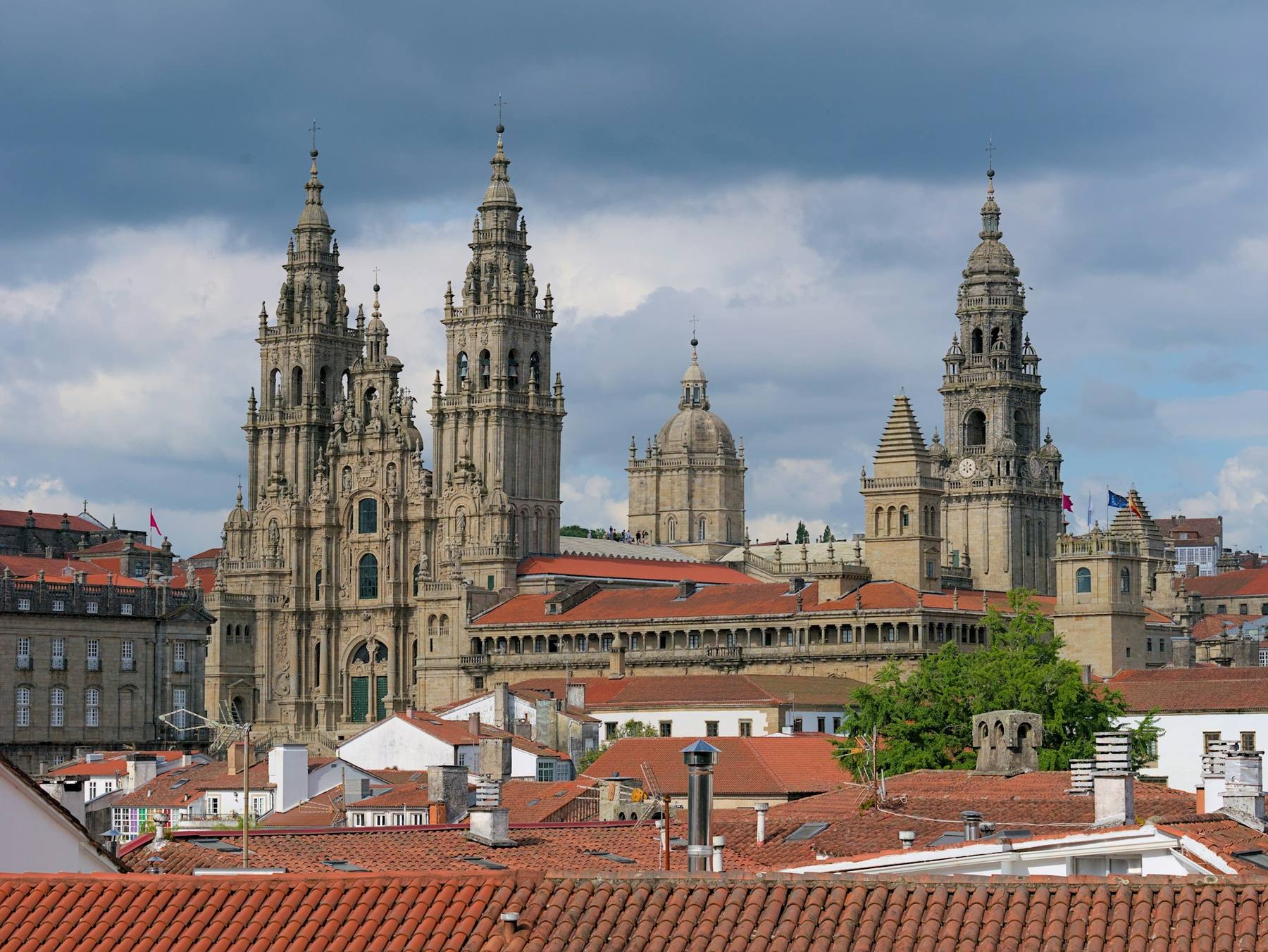
An early start (many pilgrims leave before sunrise) takes you through Monte do Gozo, the traditional first-glimpse point of the cathedral towers, and down into the old city. Arriving at Praza do Obradoiro in front of the cathedral is the emotional high point of the trip for most walkers. Afterward, head to the Pilgrim's Office to present your stamped credential and collect your Compostela. Go early if you can; the line and the midday heat both grow through the day.
Health prep for this trip
The single highest-leverage thing you can do before you land in Spain is break in your footwear. Fifty kilometers of real walking in the shoes or boots you plan to wear, not a treadmill test, catches most fit problems (a seam that rubs, a toe box that's too narrow, a sock combination that bunches) before they become a Camino problem three days from the nearest outfitter. Pair that with a Camino de Santiago travel medicine kit: azithromycin for bacterial traveler's diarrhea, prescription-strength ibuprofen for inflammation and overuse pain, and dicyclomine for the cramping that often comes with TD. All three should be prescribed by a licensed provider who knows your health history and any medications you're already taking, and none of them replace a clinician visit if symptoms are severe or don't improve.
CDC guidance for travel to Spain generally recommends only routine vaccinations plus Hepatitis A for some travelers, and Spain's tap water and food-safety standards are high by international norms. The practical risk on this route comes less from the country and more from the setup: five or six nights of shared albergue kitchens, communal bathrooms, and pilgrim-menu dinners eaten with whoever you're walking with that day. None of that requires alarm, it just means the timeline for reaching help is longer than it would be in Madrid or Barcelona, and a self-treat kit closes that gap.
If you take regular prescription medications, bring more than you think you'll need and keep them in original, labeled packaging. Spanish farmacias are well-stocked and staffed by pharmacists who can help with minor issues, but refilling a US prescription abroad usually requires a local clinic visit first.
What to pack
- Broken-in footwear, trail shoes or boots, sized to accommodate slight foot swelling on long days
- Moisture-wicking socks, ideally a thin liner sock under a wool or synthetic outer sock
- A basic blister kit: moleskin or blister pads, a small needle and antiseptic wipes, and a lubricant like petroleum jelly for friction-prone spots
- Your medication kit: azithromycin, ibuprofen, and dicyclomine, packed somewhere accessible, not at the bottom of your bag
- A lightweight rain shell: Galicia is one of the wetter regions of Spain even outside the winter months
- Sun protection: hat, sunscreen, and sunglasses for the exposed farmland stretches
- Your pilgrim credential and a pen, kept dry, for twice-daily stamps
Best time to go and what to avoid
Galicia's climate shapes this trip more than most people expect for a region known as "green Spain." Late spring and early autumn give the most comfortable walking conditions.
Season | Conditions | Notes |
|---|---|---|
Late April–June | Mild, 15-20°C, occasional rain | Good balance of comfortable temps and manageable crowds |
July–August | Hot, dry, crowded | Peak pilgrim season; book albergues ahead; walk early to beat the heat |
September–October | Mild, cooling, some rain | Popular alternative to summer; fewer crowds than peak |
November–March | Cold, frequently rainy | Fewer pilgrims, some seasonal albergues close, pack for wet, cold days |
If you're walking in summer, start each stage early to avoid the hottest hours and carry more water than feels necessary. If you're walking in the shoulder or off-seasons, plan for rain most days regardless of the forecast.
Cost expectations
This is one of the more budget-friendly multi-day treks you can do in Europe. A municipal or parish albergue bunk typically runs 10 to 15 euros a night, private albergues with fewer bunks per room run higher, and a pilgrim's menu dinner (often three courses with wine) runs 12 to 15 euros at most stops along the route. Optional luggage-transfer services, which move your main bag ahead to your next stop so you walk with a day pack, typically add a modest daily fee per stage. Beyond lodging and food, budget for transport to Sarria and from Santiago, entry or donation fees at a handful of churches and sites along the way, and whatever you spend celebrating with a group meal at the end.
This isn't a trip that requires a big upfront outlay for gear or guiding, which is part of why it draws such a wide range of travelers, from students walking on a tight budget to retirees treating it as a bucket-list week. The real budget line worth planning for in advance isn't lodging, it's the medical prep: a pre-trip provider visit and a filled prescription kit cost far less than a missed flight home or a walk cut short by day three.
Day-by-day plan
| Day | What you're doing | Health note |
|---|---|---|
| 1 | Arrive in Sarria, get your credential, ease into it Settle into Sarria, walk the old town, and get your pilgrim's passport stamped for the first time. | Break in your boots on the short evening walk, not tomorrow's 22 km stage. This is your last easy access to a full-service pharmacy before Portomarin. |
| 2 | Sarria to Portomarin (about 22 km) Cross rolling farmland and eucalyptus woods through Barbadelo and Morgade to the reservoir town of Portomarin. | Your longest walking day in months starts now. Check your feet at the first café stop and treat hot spots before they become blisters. |
| 3 | Portomarin to Palas de Rei (about 25 km) Steady climbs and descents through Gonzar, Ligonde, and Eirexe toward Palas de Rei. | Cumulative fatigue in feet and knees typically shows up on day three. This is the day most pilgrims start their ibuprofen for inflammation, not just pain. |
| 4 | Palas de Rei to Arzua (about 29 km) The longest stage of the week, through Melide (famous for pulperia-style octopus) and the riverside hamlet of Ribadiso. | Shared pilgrim-menu dining in Melide is exactly the exposure this kit is built for. Keep azithromycin accessible, not buried in your pack. |
| 5 | Arzua to O Pedrouzo (about 19 km) A shorter day through Galician eucalyptus forest, banking rest before the final push into Santiago. | Use the lighter mileage to reassess your feet, rehydrate, and sleep. Most pilgrims who drop out do it in the final 48 hours from accumulated fatigue, not a single bad day. |
| 6 | O Pedrouzo to Santiago de Compostela (about 20 km) An early start into Monte do Gozo, then the final descent to Praza do Obradoiro and the cathedral, followed by the Pilgrim's Office for your Compostela. | Start before sunrise if you can. Cooler temperatures and a shorter queue at the Pilgrim's Office both matter more than they sound. |
Frequently Asked Questions
A long weekend in Madrid would not typically justify a self-treat antibiotic, and CDC guidance treats Spain as a low baseline-risk destination. The Camino changes the exposure shape, not the country's risk category. You are sharing albergue bunks, kitchens, and pilgrim-menu dinners with a new group of walkers most nights, for five or six days straight, which behaves more like extended shared-facility travel than a city break. Most pilgrims who carry the kit never open it. The ones who need it are usually a day or two from the nearest pharmacy in a village of a few hundred people.
The Pilgrim's Office in Santiago requires at least two stamps per day in your pilgrim credential (credencial) for anyone completing the last 100 km on foot. Get yours stamped at cafes, albergues, churches, or town halls along the route, roughly once in the morning and once at your stop for the night. Sarria sits about 115 km from Santiago, comfortably clearing the 100 km minimum.
Tour operators and the Camino community typically divide the Sarria-to-Santiago stretch into five walking stages covering roughly 115 km, averaging about 20 to 25 km a day. Paired with an arrival day in Sarria, that's a 6-day itinerary. It's a realistic target for a reasonably fit first-timer who has broken in their footwear beforehand. The terrain is rolling farmland and forest, not mountains, but the daily mileage adds up. Most physical trouble comes from undertrained feet, not the route's difficulty.
Blisters and overuse injuries, not illness. Blisters are widely reported as the most common physical complaint on the Camino, typically from new or poorly broken-in footwear, moisture, and friction over consecutive long days. Foot care (properly fitted shoes, moisture-wicking socks, treating hot spots immediately) prevents more dropouts on this route than any medication does.
CDC guidance for Spain typically recommends only routine vaccinations plus Hepatitis A for some travelers. There's no yellow fever or malaria concern anywhere on this route. Talk to your provider about your personal vaccination history before you go, since recommendations vary by age, prior vaccination, and health history.
Most walkers feel meaningfully better within about a day of starting treatment. If you develop 3 or more loose stools in 24 hours, or diarrhea with fever, blood, or significant cramping, that's the threshold most providers use to start a self-treat antibiotic like azithromycin. Dicyclomine can help with the cramping that often comes with it. Hydrate with water and, if you can find it, an oral rehydration solution from a Spanish pharmacy. If symptoms don't improve or you notice blood, see a clinician rather than continuing to self-treat.
No. This is one of the gentler sections of the Camino Frances, mostly rolling Galician farmland, eucalyptus and oak forest, and small villages, without the mountain passes found earlier on the full route from Saint-Jean-Pied-de-Port. The challenge is cumulative distance and consecutive walking days, not elevation.
Mark Karam, PA-C is a board-certified Physician Associate with emergency and urgent care experience and co-founder of Wandr Health.