
The 10-Day Ethiopia Itinerary: Simien Mountains and Lalibela, The Health-Smart Version
This 10-day Ethiopia itinerary links Gondar's castle complex, a graded trek through the Simien Mountains, and Lalibela's rock-hewn churches, sequenced around one structural fact: nearly the entire route sits above 2,000 m, and the trek itself climbs from Sankaber (about 3,200 m) to viewpoints above 4,000 m. CDC guidance flags altitude illness risk above roughly 2,500 m and recommends gaining no more than 300-500 m of sleeping elevation per day past that point, so this plan spreads the climb to Chennek over three trekking days instead of two. Most of the route also sits above Ethiopia's malaria transmission band, which occurs predominantly below 2,000 m, so bite precautions matter most on the Addis Ababa arrival day and any lowland transfer, not on the trek itself.
Ethiopia doesn't fit the itinerary templates built for the rest of East Africa, and that's exactly the appeal. This ten-day route links three places that rarely appear together: Gondar's 17th-century castle complex, a graded trek through the Simien Mountains, and the rock-hewn churches of Lalibela, each carved downward into volcanic stone rather than built up from it. What makes the route health-smart is less about disease and more about geography. Addis Ababa sits above 2,000 m before the trip has properly started, the Simien plateau climbs past 4,000 m, and Lalibela sits high enough that acclimatization, not malaria prophylaxis, is the main clinical decision for most of the trip. The plan below sequences the ascent the way CDC's altitude guidance recommends, not the way a generic Ethiopia tour groups the stops.
Who this itinerary is for
This route suits travelers who want genuine trekking, not a bus tour with a few overlooks, and who are comfortable spending several consecutive nights at altitudes most people never sleep at outside of a handful of Andean or Himalayan trips. First-timers to Ethiopia get a real cross-section of the country: imperial history in Gondar, wilderness in the Simiens, and religious architecture in Lalibela that has no real equivalent elsewhere in East Africa. For general background on the country's health landscape beyond this specific route, the Ethiopia destination guide covers the broader picture; this itinerary narrows that down to the health decisions this particular ten-day plan actually requires. It's not a beach-and-safari trip, and pairing it with one on the same visit without extra recovery days is a fast way to arrive home exhausted rather than satisfied.
Fitness matters more here than prior altitude experience. The Simien days involve six to eight hours of walking on uneven escarpment trail, and pack animals typically carry gear, not people. Travelers with a cardiac or pulmonary history, or a prior episode of high-altitude cerebral or pulmonary edema, should talk through this specific itinerary with a travel medicine provider before booking, since the plan spends four consecutive nights above 3,000 m.
The route
Ethiopia's north loops naturally: Addis Ababa as the hub, Gondar and the Simiens to the northwest, Lalibela southeast of Gondar, and Addis again to close the loop. This itinerary follows that shape rather than backtracking, which keeps the trip to four manageable domestic flights.
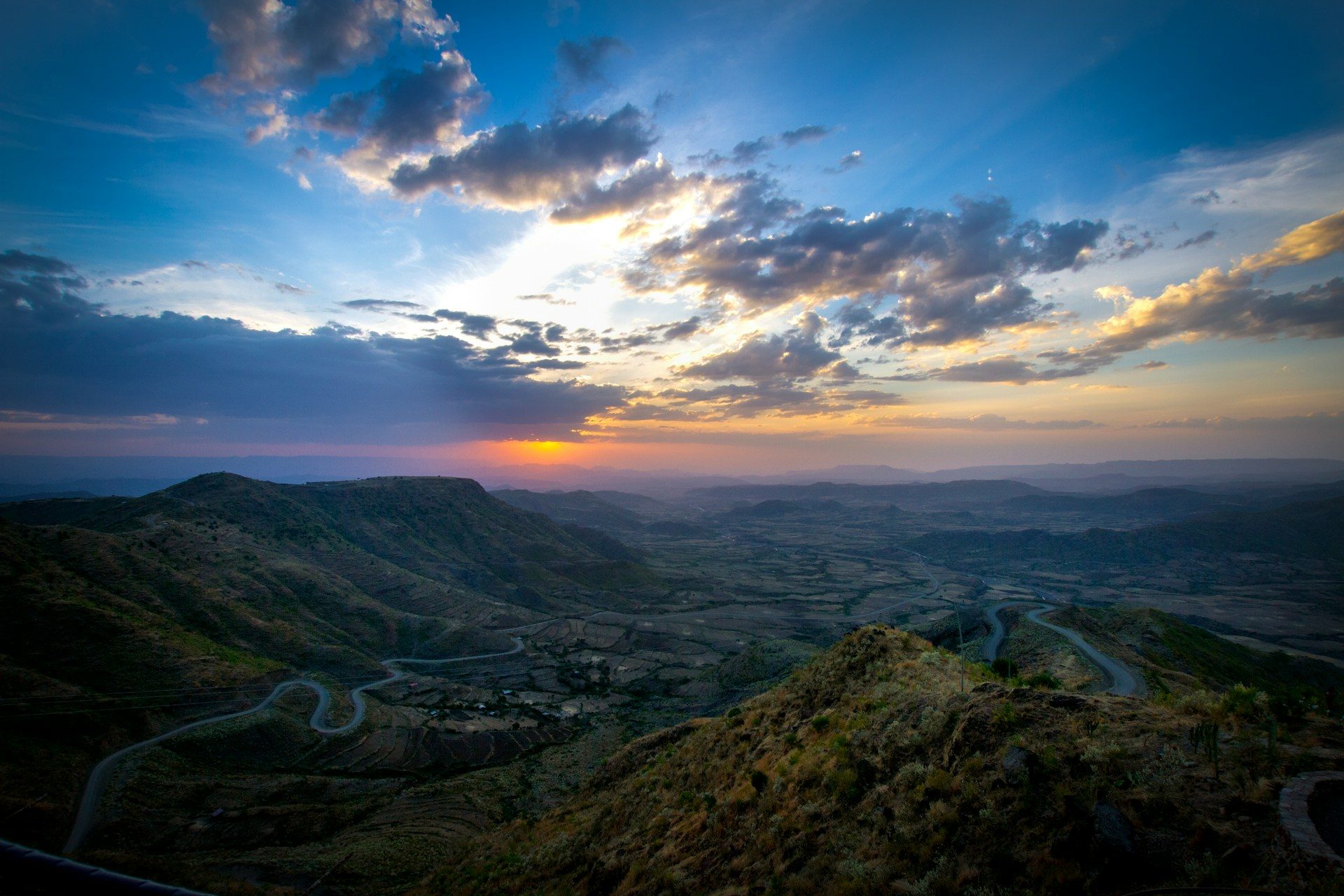
Day 1 stays in Addis Ababa, already above 2,000 m, before the trip asks anything more of your lungs. Day 2 moves to Gondar, a lateral shift in elevation that lets the body keep adjusting without a real climb. Days 3 through 6 cover the Simien Mountains, entered through Debark, where the park office assigns a scout and, depending on the route, an armed guide, a standard formality tied to wildlife and border-area protocol rather than a specific safety threat. The trek climbs in stages, Sankaber to Geech to Chennek, along an escarpment that drops more than 1,000 m into the lowlands on one side.
Days 7 through 9 shift east to Lalibela by way of Gondar, trading wilderness for the eleven monolithic rock-hewn churches that UNESCO lists as a single World Heritage property, carved from red volcanic rock starting in the 12th century. Day 10 returns to Addis Ababa to connect onward. The whole loop stays inside Ethiopia's highland core; the only real lowland exposure is Addis Ababa's airport transfers, and any pre- or post-trip extension into the Rift Valley or Omo Valley, which this itinerary doesn't include and which would change the malaria calculus considerably.
Day-by-day plan
Day 1: Arrive Addis Ababa. Land at roughly 2,400 m and keep the day deliberately easy. This is arrival-day altitude exposure before the trip has really begun, and CDC's guidance on graded ascent already applies at this elevation. Hydrate, skip alcohol, and let jet lag and altitude settle together rather than fighting both with a packed sightseeing schedule.
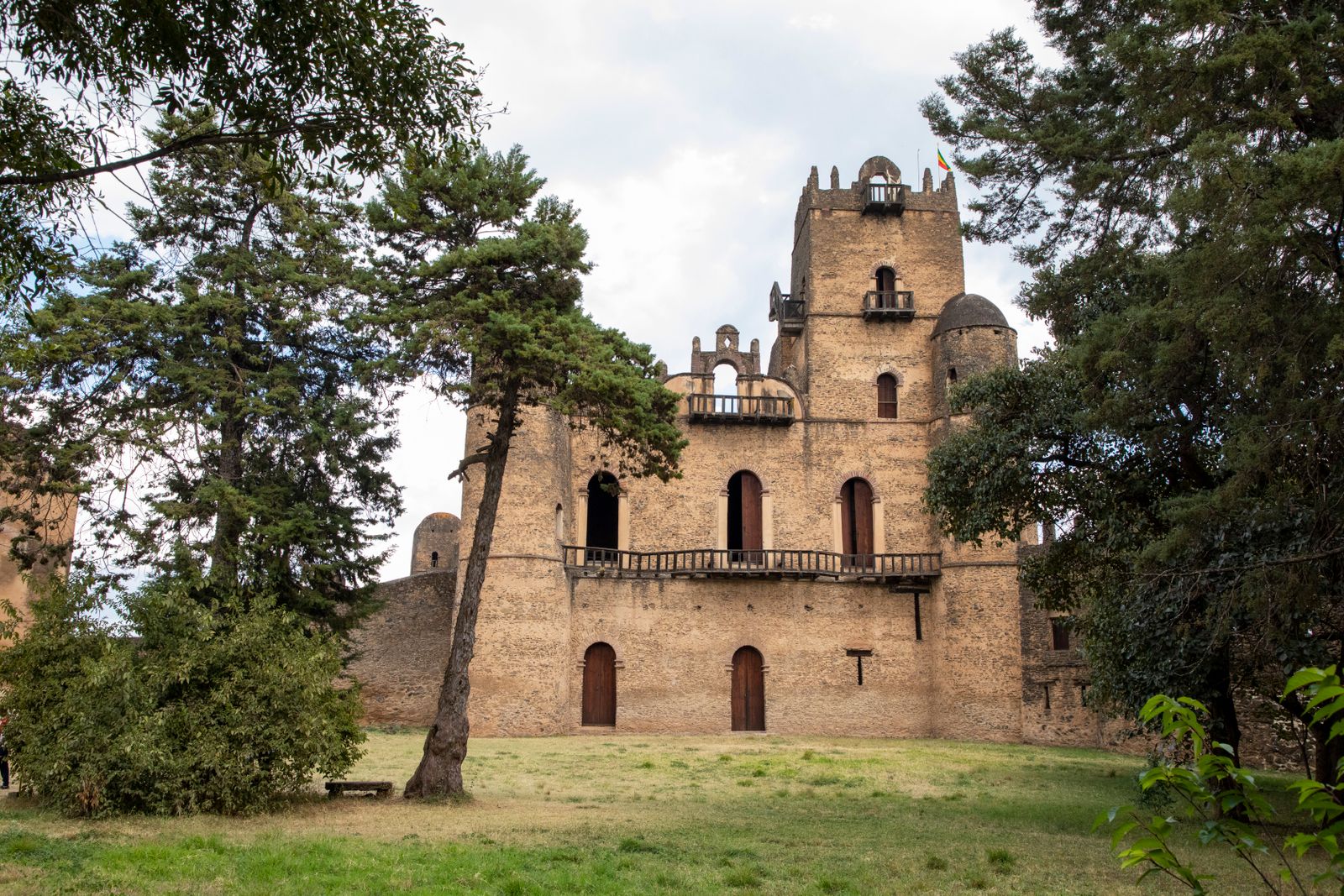
Day 2: Fly to Gondar. A short domestic flight covers the distance to Ethiopia's former imperial capital, home to the Fasil Ghebbi castle complex, sometimes called the "Camelot of Africa." Elevation here sits close to Addis Ababa's, so this is a lateral move rather than a climb, useful for continuing to acclimatize without adding stress.
Day 3: Gondar to Debark to Sankaber. The drive to Debark includes registering at the Simien Mountains National Park office, where a scout, and often an armed guide, joins the group. From there it's a further drive into the park to Sankaber camp, around 3,200 m. This is the trip's first real elevation jump, and it's built in deliberately rather than tacked onto a longer driving day.
Day 4: Sankaber to Geech. The ridge trail runs past Jinbar Falls to Geech, a traditional highland village near 3,600 m. The roughly 400 m gain sits within the range CDC's graded-ascent guidance targets for travel above 2,500 m: no more than 300-500 m of new sleeping elevation per day. Early AMS symptoms, headache, nausea, poor sleep, are worth flagging to guides rather than pushing through quietly.
Day 5: Geech to Chennek. The high day. The route crosses the plateau to the Imet Gogo and Inatye viewpoints, both above 3,900 m, before dropping to Chennek camp. This is the single highest-elevation exposure of the trek. Worsening AMS symptoms call for descent, not more medication, since acetazolamide reduces the odds of altitude illness but doesn't treat established high-altitude cerebral or pulmonary edema once it develops.
Want the health prep for Ethiopia?
Get a 60-second pre-trip check: the vaccines, prescriptions, and altitude/seasonality notes that change the plan — built for your exact dates.
Day 6: Chennek and the escarpment. A full day around Chennek gives space to watch gelada baboon troops feeding along the cliff edge, and for strong hikers, an optional approach toward the lower slopes of Ras Dashen, Ethiopia's highest peak at 4,550 m. The summit itself is a multi-day add-on most itineraries skip; anyone tempted to add it should treat it as its own acclimatization block rather than an extension of this one.
Day 7: Descend to Debark, transfer to Gondar. Descending out of the park resolves most residual altitude symptoms within a day. If the trek produced any traveler's diarrhea, this is also typically when people start the azithromycin course from their kit rather than trying to push through it on trail.
Day 8: Fly to Lalibela. A short flight and an afternoon at the first cluster of rock-hewn churches, including Bete Medhane Alem, believed to be the largest monolithic church in the world. Lalibela sits near 2,600 m, close to Gondar's elevation, so no new acclimatization is required here.
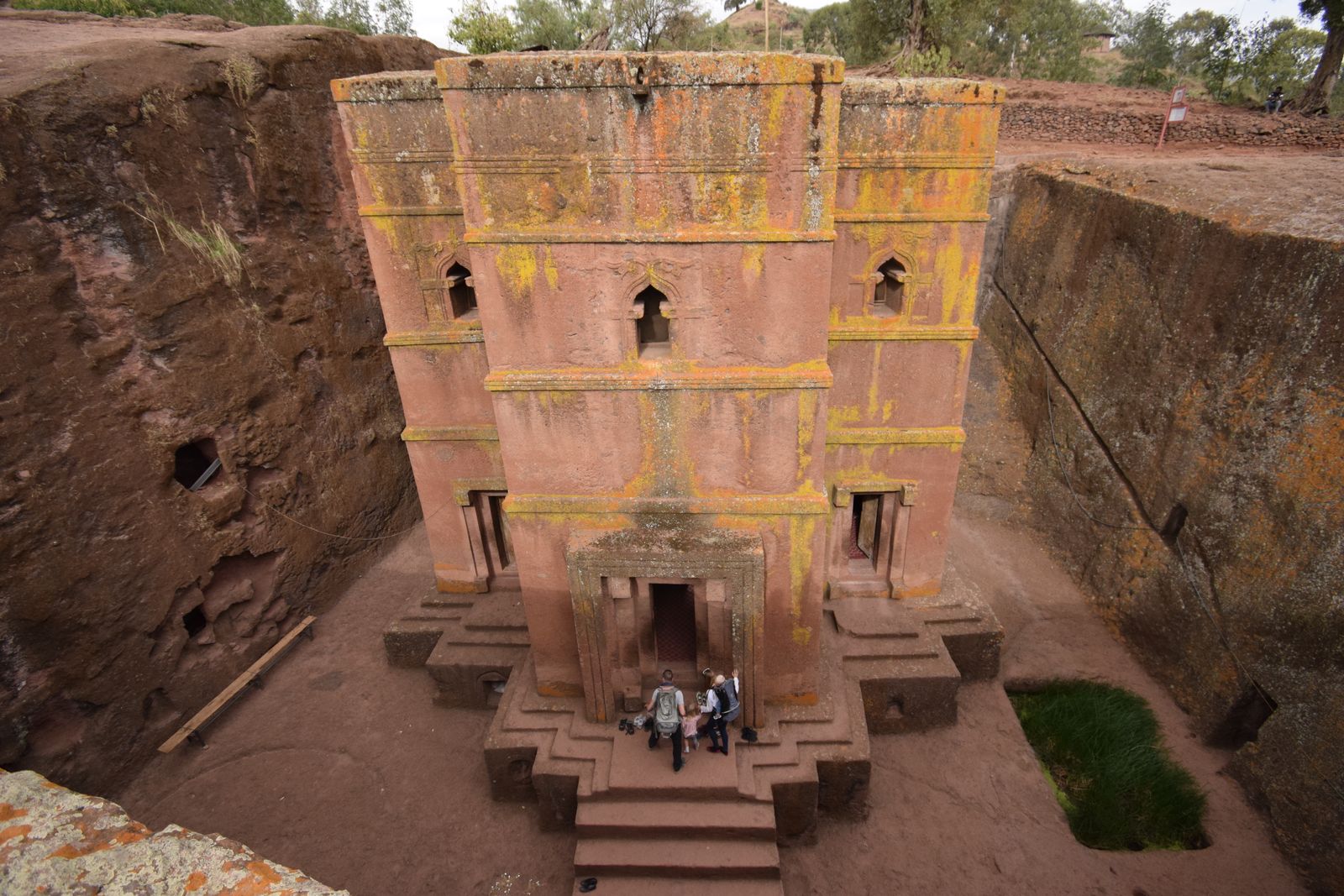
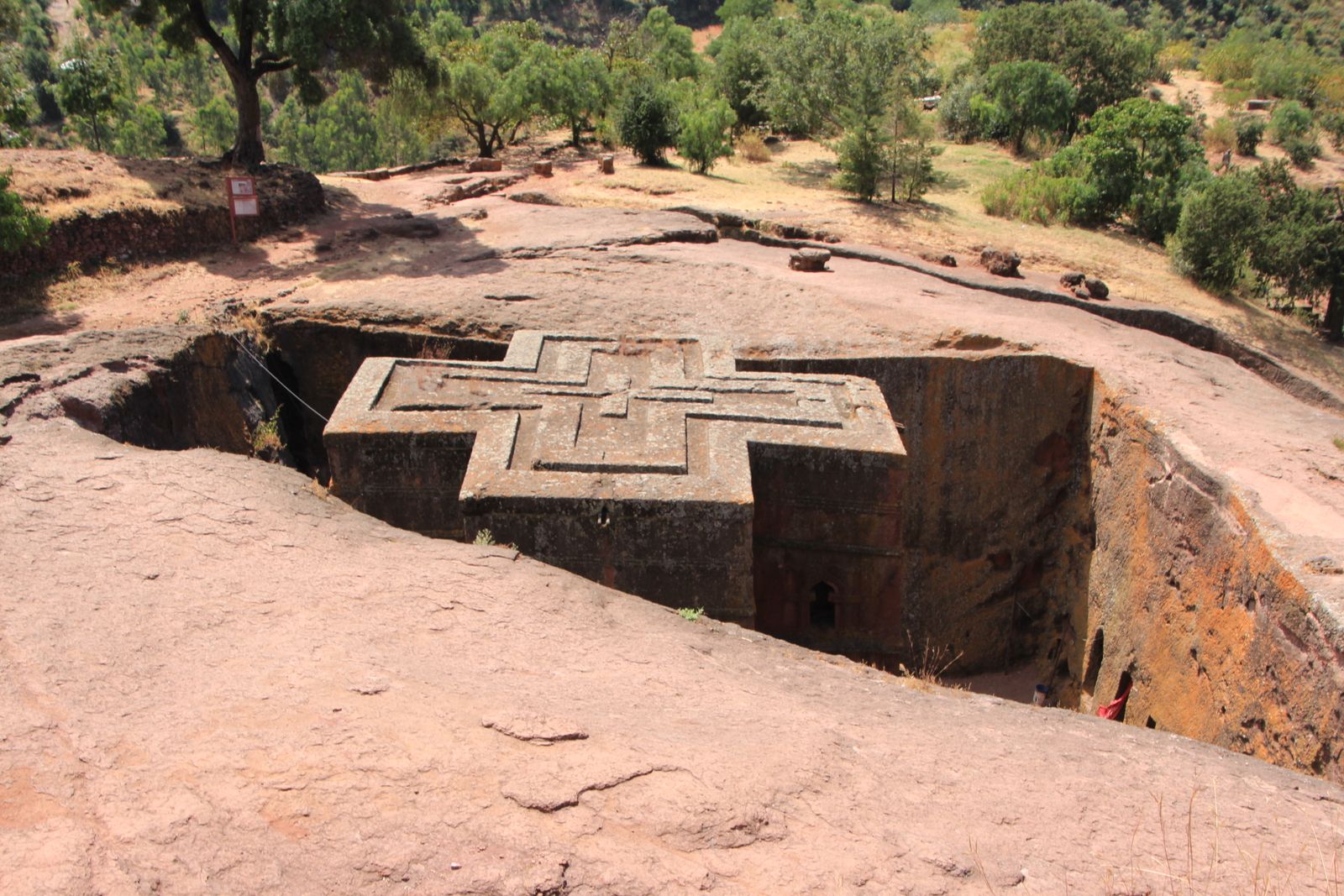
Day 9: Full day Lalibela. The eastern cluster centers on Bete Giyorgis, the cross-shaped Church of Saint George carved from a single block of volcanic stone, connected to the other churches by a network of trenches and tunnels still used for pilgrimage. This is a walking day, not a climbing day; sun exposure at this elevation is the bigger practical issue.
Day 10: Fly to Addis Ababa, connect for departure. The return flight closes the loop. Keep hydrating through the transit day, and treat any symptom that felt like routine trek fatigue but hasn't resolved, especially headache or breathlessness, as worth a conversation with a clinician before a long flight home.
Health prep for this trip
Start with a travel medicine visit roughly six weeks out. That visit should cover routine vaccines, an assessment of whether yellow fever vaccination applies to your specific itinerary and prior travel history, and a frank discussion of altitude risk given this route's four consecutive nights above 3,000 m. CDC notes yellow fever is present throughout Ethiopia, though vaccination is generally not recommended for travel limited only to the Afar and Somali regions; this itinerary doesn't visit either, but your personal requirement can still depend on where you're arriving from, so confirm it rather than assume it.
Typhoid vaccination is generally worth completing around four weeks out, given the food and water exposure across a multi-city, multi-camp route like this one. Malaria prophylaxis is the one piece of this kit that's genuinely route-dependent rather than automatic: because this itinerary stays almost entirely above Ethiopia's primary malaria transmission band, which sits predominantly below 2,000 m elevation, atovaquone-proguanil functions here more as a safety margin for the Addis Ababa transfers and any unplanned lowland time than as a daily necessity throughout the trip. A travel-medicine kit built for this route bundles acetazolamide, azithromycin, and atovaquone-proguanil together so the timing questions are answered before departure, not worked out at 3,200 m.
If acetazolamide is part of your plan, most protocols start it a day or two before the Sankaber ascent and continue it through the highest nights at Chennek. This is a conversation for your prescribing provider, not a fixed rule, since dosing and candidacy depend on your health history.
Two more items worth a mention rather than a full protocol: rabies pre-exposure vaccination is a reasonable conversation for this specific route, given the rural trekking days and the dog and wildlife contact that comes with village stops like Geech, though most travelers on a ten-day trip do not need it by default. Altitude aside, most CDC guidance also frames Ethiopia as routine food-and-water-precaution territory: stick to bottled or treated water, be selective about street food in smaller towns, and treat the azithromycin in your kit as a backup plan rather than something to reach for at the first loose stool.
What to pack
Layering matters more than any single piece of gear here. Highland days run cool and often windy, especially at Chennek's elevation, where overnight temperatures can drop close to freezing even in the dry season, while Addis Ababa, Gondar, and Lalibela can be warm at midday. A good trekking daypack, broken-in boots with ankle support for uneven escarpment trail, a warm layer and a proper sleeping bag rated for near-freezing camp nights, sun protection (the UV exposure at this elevation is significant even on cloudy days), a headlamp, and a basic first-aid kit rounded out with your prescribed travel-medicine kit cover most of what the route demands. Trekking poles are worth the extra bag space on the steeper escarpment sections, especially on the Geech to Chennek day. Cash in Ethiopian birr is worth carrying for the park fees, scout and guide tips, and smaller towns, since card access thins out quickly outside Addis Ababa.
Best time to go and what to avoid
The dry season also tends to bring the clearest views from Imet Gogo and Inatye, which is a meaningful part of why most operators default to it. Outside the trek itself, malaria seasonality in Ethiopia's lower-elevation zones tracks the rains, which is one more reason this itinerary's highland routing matters more than any single medication choice.
Cost expectations
This is a mid-range trip by East African standards: domestic flights, park fees, a trekking outfitter with guide, scout, and pack support, and several nights of camping gear add up faster than the food and lodging costs alone suggest. Most travelers find Ethiopia noticeably cheaper day-to-day than Kenya or Tanzania safari circuits, but the logistics of a four-flight, multi-region itinerary like this one mean it isn't a shoestring trip either. This isn't a budget-travel breakdown, just a heads-up that the trekking logistics, not the sightseeing, are where the cost concentrates.
Day-by-day plan
| Day | What you're doing | Health note |
|---|---|---|
| 1 | Arrive Addis Ababa, respect the altitude before you've done anything strenuous Land in Addis Ababa and settle into the highland capital without rushing into activity. | Addis Ababa sits at roughly 2,400 m, already above the elevation where CDC's graded-ascent guidance applies, so the arrival day is not a neutral one. Hydrate, skip alcohol, and keep the schedule light. |
| 2 | Fly to Gondar, walk the castle complex Short domestic flight to Gondar, Ethiopia's 17th-century imperial capital, then an afternoon at the Fasil Ghebbi castle complex. | Gondar sits close to Addis Ababa's elevation, so this is a lateral move rather than a climb. Use the easier day to keep acclimatizing before the park. |
| 3 | Gondar to Debark to Sankaber, enter Simien Mountains National Park Drive to Debark to register with the park office and pick up a scout and guide, then continue into the park to Sankaber camp. | Sankaber sits around 3,200 m, the trip's first real elevation jump. CDC recommends no more than 300-500 m of new sleeping elevation per day above 2,500 m; if you're taking acetazolamide, it should already be started. |
| 4 | Sankaber to Geech via the escarpment ridge and Jinbar Falls Trek the ridge trail past Jinbar Falls to Geech, a traditional highland village. | Geech sits near 3,600 m, roughly a 400 m gain, in range of the graded-ascent target. Watch for early AMS signs: headache, nausea, and poor sleep. |
| 5 | Geech to Chennek via Imet Gogo and Inatye The high day: cross the plateau to the Imet Gogo and Inatye viewpoints before dropping to Chennek camp. | This is the single highest-elevation exposure of the trek. Worsening AMS symptoms call for descent, not medication, since acetazolamide reduces risk but does not treat established high-altitude cerebral or pulmonary edema. |
| 6 | Chennek exploration, gelada troops on the escarpment A full day around Chennek: gelada baboon troops feeding on the cliff edge and, for strong hikers, an approach toward Ras Dashen's lower slopes. | Ras Dashen's summit, at 4,550 m, is a multi-day add-on most itineraries skip. Treat it as its own acclimatization block if you add it, not an extension of this one. |
| 7 | Descend to Debark, transfer to Gondar Descend out of the park to Debark, then drive back to Gondar for a rest night. | Descent typically resolves residual altitude symptoms within a day. If the trek produced traveler's diarrhea, this is also usually when people start the azithromycin course rather than pushing through it on trail. |
| 8 | Fly to Lalibela, first cluster of rock-hewn churches Short flight to Lalibela and an afternoon at the first group of churches, including Bete Medhane Alem. | Lalibela sits near 2,600 m, close to Gondar's elevation, so no new acclimatization is required. The uneven rock floors and low doorways are the bigger everyday hazard. |
| 9 | Full day Lalibela, Bete Giyorgis and the eastern cluster A full day exploring Lalibela's churches, including the cross-shaped Bete Giyorgis, and the pilgrimage paths that connect them. | This is a walking day, not a climbing day. Sun exposure at this elevation is the bigger issue: hat, sunscreen, and steady water intake. |
| 10 | Fly to Addis Ababa, connect for departure Return flight to Addis Ababa to connect with the international departure. | Keep hydrating through the transit day. Symptoms that felt like routine trek fatigue but haven't resolved by now, especially headache or breathlessness, are worth mentioning to a clinician before a long flight home. |
Frequently Asked Questions
Most travelers on this route sleep above 3,000 m for at least three consecutive nights, which is within the range where the CDC Yellow Book discusses acetazolamide prophylaxis, particularly for those ascending above 3,000 m or with a prior history of altitude sickness. Whether you need it depends on your acclimatization history and health background, so this is a conversation for a travel medicine provider, not a default yes.
It depends on elevation. Malaria transmission in Ethiopia occurs predominantly below 2,000 m, with epidemic potential extending toward 2,500 m in some mid-altitude zones. This itinerary stays in the highland core (Addis Ababa, Gondar, the Simiens, and Lalibela are all above that band), so the main exposure window is airport transfers and any lowland extension, not the trek itself. CDC has also flagged periods of increased malaria activity in parts of Ethiopia, which is worth checking closer to travel.
CDC notes yellow fever is present throughout Ethiopia, though vaccination is generally not recommended for travel limited only to the Afar and Somali regions, which this itinerary does not visit. Whether you personally need the vaccine also depends on where you're traveling from, since some countries require proof of vaccination on arrival. Confirm your specific requirement with a travel medicine provider at least a few weeks out, since the vaccine should be given at least 10 days before arrival.
Fitter than average. The Simien days involve six to eight hours of walking on uneven escarpment trail at altitude, on consecutive days. Pack animals typically carry gear, not people. Travelers with a cardiac or pulmonary history, or a prior episode of high-altitude cerebral or pulmonary edema, should discuss this specific itinerary with a provider before booking.
Yes. Lalibela sits at roughly 2,600 m, close to Gondar's elevation, so arriving there after the Simien trek doesn't require new acclimatization. Most travelers notice it more as thinner air on the walk between church clusters than as a distinct altitude concern.
It's possible. Addis Ababa sits at roughly 2,400 m, which is within the range where CDC guidance on altitude illness risk applies, even though most cases are mild at that elevation. Travelers who feel unusually short of breath, headachy, or nauseated on arrival should treat it as a real signal and keep day one light rather than pushing through it.
Most travelers should treat tap water as unsafe and stick to bottled or treated water throughout this itinerary, including for brushing teeth. Traveler's diarrhea is common enough on multi-city African itineraries that this route includes azithromycin in the kit; most travelers should speak with a provider about when to start it if symptoms develop.
Yes, and it isn't optional in practice. Simien Mountains National Park assigns a scout, and often an armed guide, to trekking groups at the Debark park office, a standard formality tied to wildlife and border-area protocol rather than a specific safety threat. Most operators build this into their itinerary automatically.
Treating the Simien trek like a generic multi-day hike instead of a genuine high-altitude trip. The most common issue isn't malaria or food-borne illness, it's pushing through early AMS symptoms because the trail itself isn't technically difficult. The route's built-in acclimatization days exist for a reason, and skipping them to save a day is where most avoidable altitude problems come from.
Alec Freling, MD is a board-certified emergency medicine physician and co-founder of Wandr Health with ER experience treating returning travelers.